The danger of using a cracked phone near your ear
As a Master Glazier with a quarter-century in the trade, I look at every piece of glass as a functional barrier, a precision-engineered shield that manages the violent transition between two distinct environments. Whether it is a ten-foot thermal pane in a skyscraper or the five-inch display in your pocket, the physics remains the same. When a client calls me about a hairline fracture in their device, they often treat it as a cosmetic nuisance. They are wrong. A cracked screen is a breached envelope, and continuing to press that compromised surface against your ear is an invitation for a structural and biological disaster.
The Condensation Crisis: A Master Glazier’s Perspective
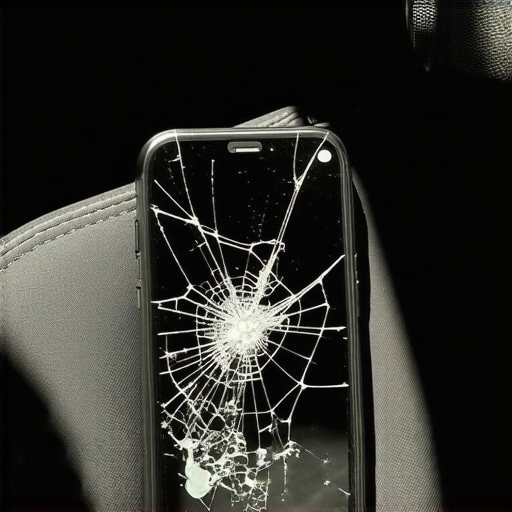
I recall a specific instance where a client brought me a high-end device they had been using for three weeks with a ‘spider-web’ crack across the earpiece. They were in a panic because the screen started ‘sweating’ from the inside, showing strange prismatic discolorations. I pulled out my hygrometer and measured the local humidity near their face during a simulated call. I had to explain that it wasn’t the device’s fault; it was a total failure of the internal environment. By pressing the fractured glass against their skin, they were creating a micro-climate where the dew point was reached inside the digitizer assembly. The moisture from their breath and skin was being pulled into the ‘rough opening’ of the crack via capillary action. It was exactly like a poorly flashed window in a humid summer; once the moisture gets behind the glazing bead, the system is doomed.
“Installation is just as critical as the window performance itself. A high-performance window installed poorly will fail.” – AAMA Installation Masters Guide
This industry standard applies perfectly to your mobile device. When you hire a professional glass installer for a same-day chip repair or mobile service, you aren’t just paying for the glass; you are paying for the restoration of the seal. Without that seal, the ‘shingle principle’—the basic architectural rule that water must always flow down and away from a sensitive opening—is violated. Your sweat, oils, and even atmospheric humidity bypass the perimeter and enter the sensitive internal components.
The Anatomy of the Breach: Why Your Ear is the Danger Zone
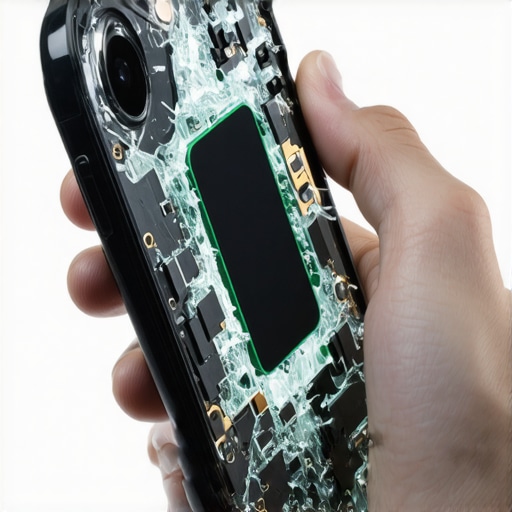
To understand the risk, we must perform an installation autopsy on a typical smartphone display. We aren’t dealing with simple soda-lime glass here. This is chemically strengthened aluminosilicate glass, designed to exist in a state of high surface compression. When you crack it, you are releasing that stored energy. The edges of those cracks are microscopic razors. When you press these against the soft tissue of your ear, you are not only risking physical lacerations but also ‘alkali attack’ from skin oils on the exposed glass core. In the glazing world, we worry about the Solar Heat Gain Coefficient (SHGC). In a mobile context, the SHGC is managed by the Low-E coatings on the internal surfaces of the glass. Once the screen is cracked, those coatings are exposed to oxygen and moisture, leading to rapid oxidation and the eventual death of the touch-sensing layer.
Surface Physics and the SHGC of Your Face
In hot, southern climates, we prioritize blocking radiant heat. Your phone is no different. The digitizer acts as a thermal sink, absorbing heat from both the internal processor and the external sun. A cracked screen disrupts the thermal uniformity of the glass. This leads to localized ‘hot spots’ where the SHGC fluctuates wildly across the surface. If you are using a mobile service for a same-day glass installer visit, they will tell you that a chip repair is about more than aesthetics; it is about restoring the thermal break. If the heat isn’t managed, the adhesive holding the glass to the frame—the glazing bead—will soften and fail, leading to delamination.
“The integrity of the fenestration assembly depends entirely on the continuity of the air and water barrier at the rough opening.” – ASTM E2112 Standard Practice
Water Management: The Sill Pan of Your Smartphone
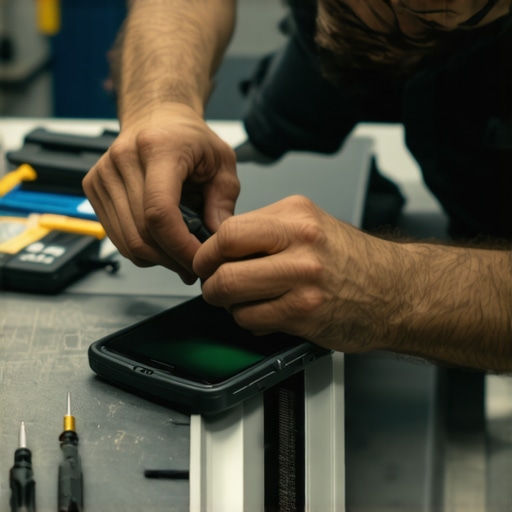
Every professional glazier knows the importance of a sill pan. It is the last line of defense, a flashed tray that catches any water that bypasses the primary seals and directs it back outside through a weep hole. Your phone has no weep hole. It is a sealed system. When a crack appears, the entire chassis becomes a collection vessel. The ‘Rough Opening’ created by the fracture allows contaminants to reach the motherboard. There is no flashing tape or drip cap to save you here. The only solution is a professional glass installer who can perform a full-frame replacement or a precision chip repair to restore the structural integrity of the envelope.
The Myth of the ‘Same-Day’ Quick Fix
Many ‘Tin Man’ salesmen in the mobile repair industry will tell you that a piece of plastic tape over the crack is enough. This is the ‘caulk-and-walk’ mentality of the window world, and it is dangerous. Using a cracked phone near your ear means you are subjecting your most sensitive nerves to glass shards and potential battery off-gassing if the breach is deep enough. You need a mobile service that understands the ‘Sash’ and ‘Muntin’ logic of the device—how the glass integrates with the frame to provide rigid support. A professional glass installer will ensure the new glass is seated properly with the correct tolerances, preventing future stress fractures from simple thermal expansion.
Conclusion: Don’t Compromise the Envelope
A window is a hole in the wall that manages heat, light, and water. Your phone screen is a window into your digital life, but it is also a physical barrier protecting a complex environment. Do not treat a crack as a minor issue. It is a structural failure of the most critical component. When the envelope is breached, the only logical step is a professional intervention. Seek a glass installer who offers mobile service and same-day chip repair to ensure your device—and your ear—remains protected from the unforgiving physics of fractured glass. Stay vigilant about your ‘Rough Opening’ tolerances and never settle for a ‘caulk-and-walk’ repair.