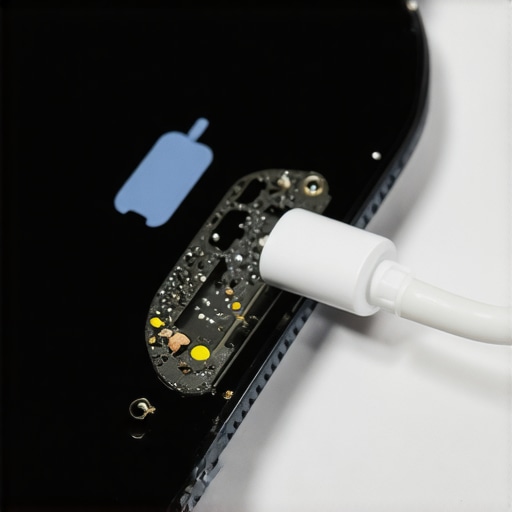
Is your phone charging slowly? Check the port first
When a homeowner asks me why their house feels like a furnace despite the AC running at full blast, I often use a simple analogy: Is your phone charging slowly? Check the port first. In the world of high-performance glazing, the ‘port’ is your window’s weep hole and the perimeter seal. If these are obstructed or the glass integrity is compromised, the entire system fails. A window is a complex thermal valve, and as a master glazier with a quarter-century in the field, I have seen how even a minor chip repair can save an entire insulated glass unit (IGU) from catastrophic seal failure.
The Condensation Crisis: A Master Glazier’s Diagnostic
A homeowner called me in a panic because their new windows were ‘sweating.’ I walked in with my hygrometer and showed them the humidity was 60 percent. It wasn’t the windows; it was their lifestyle. They were boiling pasta and running a humidifier while expecting the glass to remain crystal clear. However, this ‘sweat’ is also a warning sign. When moisture accumulates between the panes, the desiccant in the spacer bar has reached its saturation point. This is the ‘clogged port’ of the window world. Once that seal is breached, the insulating Argon gas escapes, replaced by moisture-laden air that kills your R-value. This is why a mobile service specializing in same-day glass inspection is critical. You cannot wait for the rot to set in. I have seen rough opening frames turned into sponges because a simple glazing bead was loose, allowing water to bypass the flashing tape and sit on the sill pan.
“Installation is just as critical as the window performance itself. A high-performance window installed poorly will fail.” – AAMA Installation Masters Guide
The Physics of the South: Why SHGC is King
In hot climates like Phoenix or Miami, the enemy is not the cold, but the radiant energy of the sun. We talk about the Solar Heat Gain Coefficient (SHGC). If you are looking at a glass installer’s quote and they aren’t discussing the placement of the Low-E coating, walk away. For a cooling-dominated climate, that silver-oxide sputtered coating must be on Surface #2. This reflects the long-wave infrared radiation back to the street before it ever crosses the thermal break of the frame. A low SHGC (ideally below 0.25) is the difference between a comfortable living room and an expensive greenhouse. When we perform a chip repair on these high-performance lites, we have to be incredibly precise. A chip isn’t just a cosmetic flaw; it is a point of concentrated thermal stress. In the 110-degree sun, the temperature differential between the center of the glass and the shaded edge under the glazing bead can exceed 50 degrees. That’s when a small chip becomes a ‘stress crack’ that zips across the entire sash.
The Anatomy of a High-Performance Window
Let’s talk about the ‘Rough Opening.’ When I shim a window, I’m looking for tolerances within 1/16th of an inch. If the frame is racked, the operable sash will never seat correctly against the weatherstripping. This creates an air bypass. You might as well leave a small hole in your wall. I always insist on using a non-expanding or low-expansion closed-cell foam around the perimeter. Why? Because the vinyl or fiberglass frame needs to move. Fiberglass is particularly impressive because its expansion rate is nearly identical to the glass it holds, meaning the seals are under less stress than with a standard vinyl unit.
“The fenestration rating is only valid if the perimeter seal remains intact and the structural integrity of the lite is uncompromised.” – NFRC Performance Manual
We also need to look at the muntins. While many people love the look of divided lites, true divided lites create more ‘edges’ and potential fail points for the IGU. I usually recommend simulated divided lites with a spacer bar between the glass to maintain that classic look without sacrificing the thermal integrity of a single large IGU.
Maintenance and the Mobile Service Advantage
The rise of mobile service for glass repair has changed the game for homeowners. In the past, a cracked pane meant weeks of waiting or a boarded-up window. Today, a qualified glass installer can perform same-day measurements and often temporary stabilization or full replacement of standard units. During these visits, I check the weep holes. These are the small ports at the bottom of the frame that allow water to exit the track. If these are clogged with dirt or debris, the water backs up, reaches the glazing bead, and eventually rots the interior casing. It is the most common ‘silent killer’ of windows I see. Just like cleaning the port on your phone, a five-minute maintenance check on your window’s drainage system can extend the life of your installation by a decade. When you hire a professional, you aren’t just paying for glass; you are paying for the technical knowledge of water management, thermal dynamics, and structural shimming. Don’t settle for a caulk-and-walk job; ensure your installer understands the shingle principle and the importance of a properly sloped sill pan.