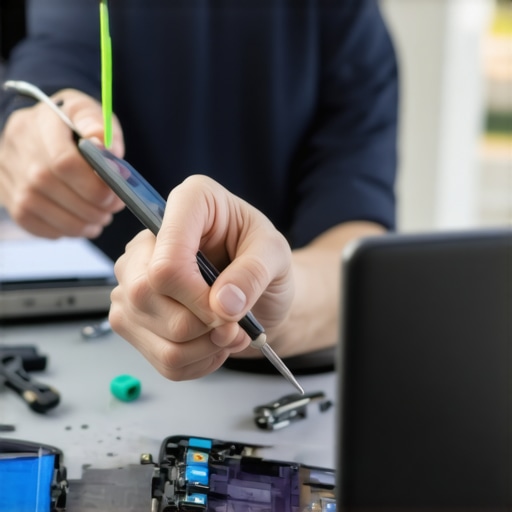
How we fix your shattered screen while you grab lunch
The sound of a stone hitting a window or a sudden stress crack appearing on a storefront is more than an aesthetic nuisance: it is a structural compromise of a complex thermal envelope. As a master glazier with a quarter-century in the field, I have seen too many homeowners and property managers treat a small chip as a cosmetic blemish that can wait until the next maintenance cycle. By the time they call me, that small chip has often spiderwebbed across the entire sash, turning a simple resin injection into a full-frame replacement. When we talk about fixing a shattered screen or a cracked pane while you grab lunch, we are not just talking about speed; we are talking about the precise application of material science to arrest a failure in progress.
The Condensation Crisis: A Diagnostic Narrative
A homeowner recently called me in a panic because their relatively new double-pane windows were sweating profusely on the interior surface during a cold snap. They were convinced the seal had failed and that I needed to replace every unit in the house. I arrived with my hygrometer and a thermal imaging camera. I walked through the house and showed them that the interior humidity was hovering at 60 percent while the outside temperature was fifteen degrees. I had to explain that it was not a window failure; it was their lifestyle and HVAC settings. The windows were actually performing their job by being the coldest surface in the room, but the lack of air movement was allowing the dew point to be reached right at the glass surface. This scenario highlights a critical truth in our trade: the glass is only one part of a systemic thermal equation. If we had just swapped the glass without addressing the humidity, the new panes would have looked just as bad within forty-eight hours.
“Installation is just as critical as the window performance itself. A high-performance window installed poorly will fail.” AAMA Installation Masters Guide
The Science of the Chip: Why Same-Day Mobile Service Matters
In a hot climate where the Solar Heat Gain Coefficient (SHGC) is the primary metric of concern, a chip is a ticking time bomb. The sun beats down on the exterior surface, which we call Surface #1. In a high-efficiency unit, we likely have a Low-E coating on Surface #2 to reflect that radiant heat back outside before it can cross the argon-filled gap. When a chip occurs, it disrupts the uniform tension of the glass. Glass is a supercooled liquid that behaves like a solid, but it remains under constant internal stress. The heat from a July afternoon causes the outer lite to expand. If there is a chip, that expansion is not uniform. The stress concentrates at the tip of the crack, which is why a chip can turn into a crack that spans four feet in the time it takes you to eat a sandwich. Our mobile service units are essentially rolling laboratories. We use anaerobic resins with a refractive index that matches the soda-lime glass almost perfectly. When we inject this resin into the rough opening of the chip, we are not just filling a hole; we are re-establishing the structural continuity of the glass surface. The resin is cured using a specific wavelength of ultraviolet light, creating a bond that can withstand the thermal cycling common in our region.
Decoding the NFRC Label During On-Site Repair
When we perform a same-day glass replacement, we cannot simply throw in any piece of clear float glass. We have to look at the NFRC label or, if it is gone, use a glass thickness gauge and a Low-E detector. If your original window had a U-Factor of 0.28, replacing it with standard clear glass will destroy the thermal balance of the room. The U-Factor measures the rate of non-solar heat loss. In colder months, you want a low U-Factor to keep the heat inside. This is achieved through the use of warm-edge spacers and gas fills like Argon. Argon is denser than air and reduces the convective currents within the Insulated Glass Unit (IGU). During a mobile repair, we must ensure the replacement unit matches these specifications. This involves checking the glazing bead for a proper seal and ensuring the weep holes in the frame are clear. If a weep hole is clogged, water will back up into the glazing channel, eventually rotting the sash or causing the secondary seal of the IGU to fail due to constant water immersion.
“The window assembly must be viewed as a system of interconnected components, where the failure of one element like the flashing or the sealant can lead to the failure of the entire fenestration.” ASTM E2112 Standard Practice
The glazing bead is the small strip of vinyl or wood that holds the glass in place against the sash. During a rapid repair, an amateur might manhandle this piece, causing it to warp. A master glazier knows how to pop the bead without compromising its profile. We also look at the shim placement. Shims are essential for centering the glass unit within the frame to allow for the natural expansion and contraction that occurs with temperature swings. If the glass is tight against the frame, the first time the temperature drops twenty degrees, the frame will squeeze the glass and cause a stress crack. This is why we always measure the rough opening and leave the industry-standard gap for expansion.
[IMAGE_PLACEHOLDER]
The Physics of Radiant Heat and Low-E Surfaces
Let us zoom into the microscopic level of the repair. Most modern residential glass uses a sputtered or pyrolytic Low-E coating. In our climate, we typically see this on Surface #2. This coating is a silver-based layer that is thinner than a human hair. Its job is to manage long-wave infrared radiation. When we are performing a chip repair on a coated surface, we have to be incredibly careful not to abrade the surrounding coating. If the coating is scratched, you will see a permanent ghosting effect around the repair. This is where the technical precision of a professional glass installer becomes apparent. We use specialized bridge tools to stabilize the injector over the chip without applying unnecessary pressure to the glass, which could cause the crack to bloom. We are managing the physics of light and heat in a mobile environment, ensuring that the repaired area maintains the same thermal characteristics as the rest of the pane. This is the difference between a patch job and a professional restoration.
Final Integration and Moisture Management
The final step of any mobile glass service is not just cleaning the glass but ensuring the perimeter seal is intact. We look at the sash and the frame interface. If the window is operable, we check the weatherstripping. A common mistake is replacing the glass but ignoring a worn-out bulb seal or pile weatherstrip. This leads to air infiltration, which makes the new, high-performance glass feel like a failure because the homeowner still feels a draft. We treat the entire opening as a water management system. From the drip cap at the top of the window to the sill pan at the bottom, every component must work in harmony to direct water away from the interior of the wall. When we finish a repair, we are confident that the structural integrity, the thermal performance, and the water-shedding capabilities of the window are equal to or better than the original installation. Don’t settle for a caulk-and-walk technician when you can have a glazier who understands the molecular bond of the glass they are fixing.