How to tell if your phone water seal is intact
The Glazier Perspective on the Modern Glass Sandwich
As a master glazier with over two decades in the trade, I look at a modern smartphone and I do not see a gadget. I see a high-performance architectural glass assembly. It is a miniature curtain wall. In the world of commercial glazing, we manage the building envelope to keep the elements out. Your phone uses the exact same principles. It has a rough opening (the aluminum or steel chassis), a glazing bead (the thin adhesive gasket), and the glass itself (the display). When people ask if their water seal is intact, they are asking about the integrity of the flashing system. If that seal fails, you are looking at catastrophic internal rot, just on a microscopic scale.
I have spent years diagnosing why a triple-pane window in a high-rise failed, and the physics are no different than why a device fails after a simple chip repair or a drop. It all comes down to the bond between the substrate and the glass. If that bond is compromised even by a fraction of a millimeter, the capillary action will draw moisture into the internal components faster than you can say ‘mobile service’.
“Installation is just as critical as the window performance itself. A high-performance window installed poorly will fail.” – AAMA Installation Masters Guide
The Case of the Foggy Lens: A Narrative of Seal Failure
A few months ago, a client came to me after a same-day screen replacement from a cut-rate shop. They were in a panic because their camera lenses were ‘sweating’ after they walked from their air-conditioned car into the humid afternoon air. I pulled out my hygrometer and took a look. It was the same condensation crisis I see in residential homes with poor vapor barriers. I had to explain that it was not just ‘humidity’ inside the phone; it was a total failure of the internal glazing bead. The previous installer had not cleaned the rough opening properly. They left a microscopic bit of old adhesive, which acted like a shim, propping the glass up just enough to break the airtight seal. The phone was breathing, and in my world, an operable window is good, but an operable phone seal is a death sentence for the motherboard.
This is why I am so particular about the ‘caulk-and-walk’ mentality. In the glazing industry, we know that if you do not have a perfect sill pan and proper flashing tape, the water will find a way. In a phone, that ‘flashing’ is the chemical adhesive. Once you break the factory seal for a chip repair, you need a master glass installer to restore that vacuum. Anything less is just a facade of protection.
The Physics of Hydrophobic Barriers and Pressure Testing
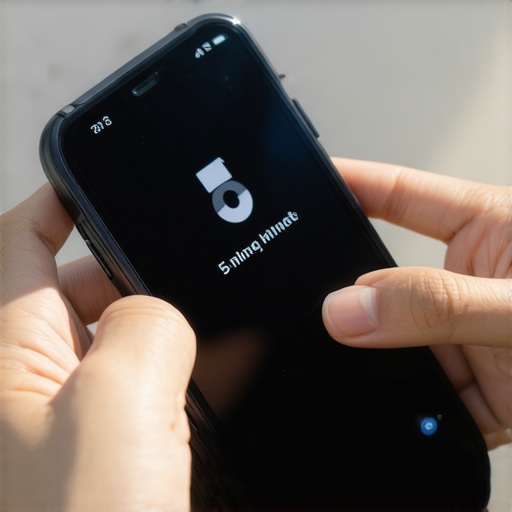
When we talk about IP68 ratings in phones, we are really talking about the U-factor and SHGC equivalent of electronics. We are measuring how well the unit resists the pressure of the environment. If you want to know if your seal is intact, you have to understand the pressure differential. Many modern devices have internal barometers. You can actually test the seal by opening a barometer app and pressing down firmly on the screen. If the pressure spikes and then slowly drops, your seal is compromised. If it stays high as long as you are pressing, the ‘window’ is still airtight. It is the same way we test for air leakage in a building envelope using a blower door test.
The enemy here is the dew point. If the seal is broken, the air inside the phone carries moisture. When the glass cools down rapidly, that moisture hits its saturation point and turns into liquid on the underside of the glass. In the glazing trade, we see this in failed IGU (Insulated Glass Units) where the desiccant is saturated and the spacer has failed. On a phone, you do not have a desiccant. You only have the seal. If you see fog, the seal is gone. There is no middle ground.
“Testing for water penetration requires specific pressure differentials that mimic real-world environmental stress.” – ASTM E331 Standard Test Method
Signs of a Compromised Glazing Bead
How do you tell if the seal is intact without a lab? Look at the muntin lines of your frame. If there is even a hair-thin gap between the glass and the frame, the seal is non-existent. Over time, heat cycles cause the materials to expand and contract. This is why we use thermally broken frames in commercial buildings. Your phone is constantly heating up during charging and cooling down in your pocket. This thermal cycling can cause ‘seal creep’ where the adhesive slowly migrates or dries out.
If you have recently had a chip repair, the risk is even higher. A mobile service might be convenient, but if they are not using a vacuum press to reseal the glass, they are just using stickers. Real glazing requires even pressure across the entire surface area to ensure the adhesive wicks into the micro-pores of the metal. If the glass installer did not use a primer or a proper cleaning agent like isopropanol to remove skin oils, the new seal will fail within weeks. Skin oil is the ultimate enemy of glazing sealants; it acts as a bond-breaker, preventing the chemical ‘handshake’ between the glass and the chassis.
The Math of Water Management
In the world of windows, we have weep holes. These are intentional openings that allow water that gets past the first line of defense to exit the system. A phone has no weep holes for its internal chassis. It is a closed system. This means the ROI on a professional reseal is much higher than on a residential window. A window might rot a stud over ten years; a phone will short out a capacitor in ten seconds. When you are looking for a glass installer for your device, you need to ask about their same-day protocol. Do they use a pre-cut adhesive gasket or do they use a liquid dispense system? Pre-cut gaskets are like flashing tape—they are reliable but only if the surface is perfectly flat. Liquid systems are like high-grade silicone caulk—they can fill irregularities but require a master’s touch to avoid clogging ports.
Do not be fooled by the marketing of ‘waterproof’ cases or ‘same-day’ fixes that do not include a pressure test. If they cannot prove the device holds pressure, they have not finished the job. It is like installing a beautiful bay window and forgetting to put the drip cap on. It looks great until the first storm hits. In my 25 years, I have seen every kind of leak imaginable, and the lesson is always the same: respect the glass, respect the seal, and never trust a bond you did not prep yourself.