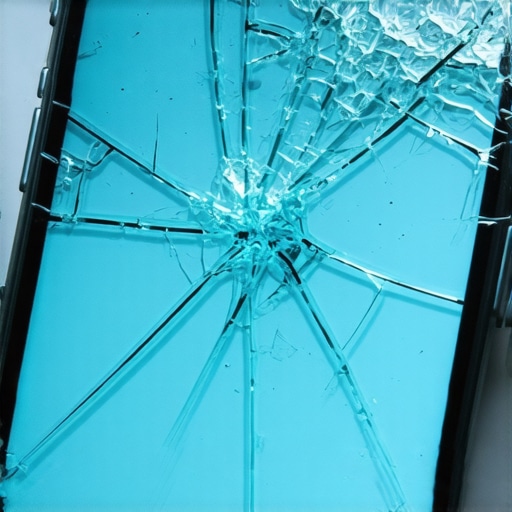
The truth about DIY phone repair kits
The Truth About DIY Phone Repair Kits: Why Professional Glazing Standards Matter
In my twenty-five years as a master glazier and window installation specialist, I have handled everything from four-hundred-pound tempered panels in high-rise curtain walls to the delicate restoration of historic wood sash frames. I have spent my career understanding that glass is not just a static barrier; it is a complex material that manages heat, light, and structural pressure. When I see the current trend of DIY phone repair kits flooding the market, I see the same ‘caulk-and-walk’ mentality that ruins a perfectly good rough opening in a luxury home. People assume that because the glass is small, the science is simple. They are wrong. A smartphone screen is a high-performance glazing system that requires the same technical precision as a triple-pane, argon-filled architectural unit.
I remember a specific case that perfectly illustrates the folly of amateur mobile glass repair. A client came to my shop in a state of panic because their recently ‘self-repaired’ phone screen was ‘sweating’ from the inside. I walked in with my hygrometer and a thermal imaging camera, tools I usually reserve for detecting air infiltration in a drafty January window. I showed them that the humidity trapped inside the device was at sixty percent. It was not a faulty component; it was their lifestyle and their lack of installation discipline. They had performed the repair in a high-humidity kitchen, failing to realize that by sealing the glass without a controlled environment, they were essentially building a miniature greenhouse. The moisture was trapped, and as soon as the processor heated up, the dew point was reached against the underside of the glass. Professional glass installer standards exist for a reason: we manage the environment, not just the material.
“Installation is just as critical as the window performance itself. A high-performance window installed poorly will fail.” – AAMA Installation Masters Guide
The core of the problem lies in the material science of these DIY kits. Most consumers do not realize that the glass provided in a twenty-dollar kit is often basic soda-lime glass, which lacks the chemical strengthening of the original aluminosilicate or ion-exchange glass. In the glazing trade, we talk about the U-factor and the Solar Heat Gain Coefficient (SHGC). In a mobile device, the glass must act as a thermal bridge, dissipating the intense heat generated by the internal components while reflecting the radiant heat from the sun. Professional mobile service providers use glass that has been treated to maintain these specific thermal properties. If you install a low-quality ‘slug’ of glass, you are effectively reducing the thermal efficiency of the device, leading to CPU throttling and shortened battery life. This is the same principle we use when choosing a Low-E coating on Surface #2 for a home in a hot climate like Texas or Florida; we want to block the heat before it enters the system.
When we examine the ‘Rough Opening’ of a smartphone, the tolerances are measured in microns, not the quarter-inch margins we might allow for a standard window shim. The frame of the phone acts as the sash, and the adhesive is the glazing bead. A DIY kit typically provides a generic double-sided tape that is supposed to act as both the structural bond and the environmental seal. This is a recipe for disaster. In professional glass installation, we use Optically Clear Adhesive (OCA) or specialized Liquid Optically Clear Adhesive (LOCA) that is cured under specific UV frequencies. This ensures that there is no air gap between the glass and the digitizer. An amateur repair often leaves a microscopic ‘shim’ of air, which not only ruins the optical clarity but also creates a point of failure for impact. Without a solid bond, the glass cannot distribute the energy of a drop across the entire frame, making it far more likely to shatter again.
“A glass surface is never truly flat; it is a landscape of microscopic peaks and valleys that must be managed to ensure optical clarity and structural integrity.” – NFRC Technical Bulletin
Furthermore, the ‘Shingle Principle’ of water management is completely ignored in DIY kits. In window installation, we ensure that every layer of flashing tape and every sill pan is designed to direct water down and out. A smartphone has no weep hole to drain moisture. The seal must be absolute. Most amateur repairs fail to properly clean the substrate, leaving behind oils and old adhesive that prevent a proper ‘flashing’ of the new seal. This leads to delamination, where the glass begins to lift away from the frame. This is not just a cosmetic issue; it allows dust and skin oils to enter the sensitive ‘digital muntin’ grid of the digitizer, leading to ‘ghost touching’ and eventual total failure of the touch interface. A same-day chip repair or full glass replacement by a professional glazier includes a level of decontamination that simply cannot be replicated on a kitchen table.
We must also discuss the myth of the ROI on these kits. A high-pressure salesman might tell you that you are saving hundreds of dollars by doing it yourself. However, the real cost of a failed DIY attempt is often the total loss of the device. If the adhesive seeps into the internal components because you didn’t use a proper sill pan or containment method, you risk a short circuit on the logic board. Professional mobile service is not just about the glass; it is about the insurance of technical expertise. When you hire a professional glass installer for your phone, you are paying for the same-day assurance that the thermal and structural integrity of your device remains intact. Do not buy the hype of the kit; buy the numbers and the experience of a master glazier.