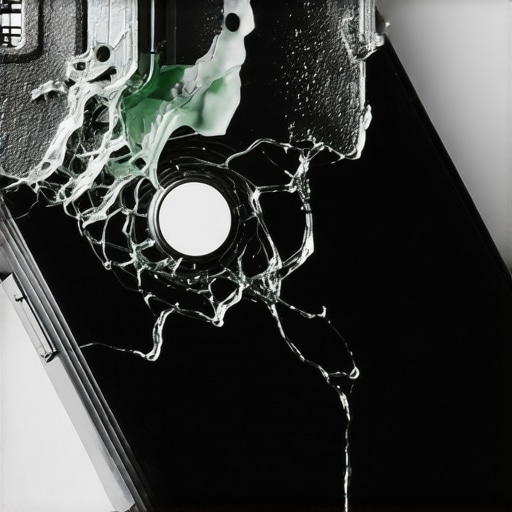
Why you should never use a cracked screen in the rain
The Intersection of Moisture and Structural Integrity
I have spent over a quarter of a century dealing with the complexities of glass, from high-pressure curtain walls to the delicate muntin of a historic window. In those twenty-five years, I have seen every possible failure mode, but few are as predictably disastrous as the combination of rain and a compromised glass surface. When a homeowner or driver sees a small star-break or a bullseye, they often think of it as a cosmetic annoyance. A Master Glazier sees a ticking clock. A homeowner called me in a panic because their glass was clouding after a minor storm. I walked in with my hygrometer and showed them the humidity levels trapped behind the glazing bead were nearly 90 percent. It wasn’t just the rain; it was their lifestyle of delay. They had ignored a small impact point, and the atmospheric pressure changes during the storm had driven water deep into the laminate. This is why immediate intervention via a mobile service is not a luxury, but a structural necessity.
The Molecular Sabotage: How Water Destroys Glass Integrity
To understand why you should never allow a cracked screen or pane to be exposed to rain, we must look at the physics of capillary action. Glass is not a static solid in the way most people imagine; it is an amorphous solid that reacts violently to thermal shifts. When a chip occurs, it creates a series of microscopic fissures that extend far beyond what the naked eye can see. When rain hits that surface, the surface tension of the water pulls it into those microscopic voids. This is not just a wet surface; it is a contamination event. Once H2O molecules inhabit the crack, they bring with them microscopic debris, road salts, and minerals. A professional glass installer knows that once these contaminants are lodged in the fracture, the refractive index of the repair resin will never perfectly match the glass, leaving a permanent scar. Furthermore, water is a lubricant. In a structural sash, the glass is held under specific tension. Water entering the crack reduces the internal friction of the glass layers, allowing the crack to propagate or bloom across the entire surface at an exponential rate.
“Installation is just as critical as the window performance itself. A high-performance window installed poorly will fail.” – AAMA Installation Masters Guide
The Climate Logic: Cold Fronts and the Hydraulic Wedge
In northern climates where the mercury frequently dips, the danger of a wet crack is magnified by the laws of thermodynamics. If water enters a chip during a rainy afternoon and the temperature drops below freezing at night, the water undergoes a phase change. As it turns to ice, it expands by approximately nine percent. In the confined space of a glass fissure, this expansion acts as a hydraulic wedge. It exerts thousands of pounds of pressure per square inch against the jagged edges of the crack. This is often the cause of the mysterious morning crack where a small chip has suddenly transformed into a foot-long fracture that spans the entire operable sash. Using a same-day mobile service to seal the break before the freeze-thaw cycle begins is the only way to prevent a total replacement. We talk about the U-Factor and heat loss in these scenarios because a compromised glass unit loses its ability to manage the dew point. Once the seal is breached and moisture enters, the insulating properties of the argon or krypton gas fill are replaced by humid air, leading to internal condensation that can never be wiped away.
The Science of the Chip Repair
When I perform a chip repair, I am not just filling a hole. I am performing a surgical extraction of air and moisture. The process involves a vacuum-pressure cycle. First, the glass installer must ensure the rough opening of the crack is bone dry. This is why repairing glass in the rain is a fool’s errand. If there is even a trace of moisture, the anaerobic resin will not bond to the silicate structure of the glass. The resin is designed to mimic the light-bending properties of the glass, but it is hydrophobic. If it encounters water, it will fail to polymerize. I often have to use a specialized heating element to drive out latent moisture before the injection can begin. This is the difference between a high-quality professional repair and a DIY kit. We look at the glazing bead and the sill pan to ensure that no water has migrated into the frame. If the water has reached the flashing tape or the shim spaces, we are no longer looking at a simple glass repair; we are looking at a potential rot situation in the rough opening.
“The moisture management system of a fenestration product is only as strong as its weakest point, which is often the interface between the glass and the glazing bead.” – ASTM E2112 Standard Practice
The Fallacy of the Pocket Replacement
Many homeowners are talked into a pocket replacement or a quick fix when their glass is damaged. But as a specialist, I advocate for a full-frame autopsy if moisture has been present for more than forty-eight hours. If you have an operable window that has been leaking through a crack, the weep holes in the frame may be clogged with debris carried by the rain. A same-day service ensures that the glass installer can clear these channels. If the water sits, it will eventually bypass the sill pan and begin to deteriorate the structural headers of your home. I have seen vinyl frames expand and contract so aggressively that they actually put more stress on a pre-existing crack, causing it to snap during a heavy wind event. This is why we prioritize the SHGC (Solar Heat Gain Coefficient) even in damaged glass; the radiant heat of the sun on a wet, cracked surface creates a localized greenhouse effect within the glass itself, further destabilizing the chemical bonds of the laminate. Do not wait for the next storm. The cost of a mobile service today is a fraction of the cost of a full frame replacement and the associated remediation of the rough opening tomorrow. Knowledge of the dew point and thermal stress is what separates a master glazier from a mere laborer. Protect the integrity of your glazing system by keeping it dry and sealed.