The risk of using a phone with a cracked home button
As a master glazier with over two decades of experience handling everything from monolithic curtain walls to high-performance laminated assemblies, I have learned one universal truth: glass is never just a surface. It is a structural component of a pressurized system. Whether you are looking at a ten-thousand-dollar storefront or the five-inch display in your palm, the physics of glazing remain constant. When a homeowner or a device user overlooks a hairline fracture or a chip near the home button, they are not just dealing with an aesthetic blemish. They are looking at a compromised structural aperture. I have seen countless instances where a minor flaw, left unaddressed by a professional glass installer, resulted in a total system failure. The home button area is essentially the most vulnerable rough opening in the entire device chassis. Like a window sill that has not been properly flashed, a crack here is an invitation for environmental stressors to wreak havoc on the delicate internals.
“Installation is just as critical as the window performance itself. A high-performance window installed poorly will fail.” – AAMA Installation Masters Guide
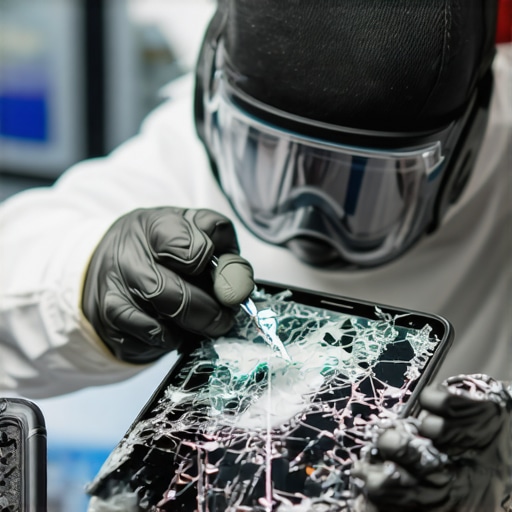
This principle applies perfectly to mobile glazing. I once pulled a digitizer assembly out of a device in a coastal environment where the user thought a small crack near the button was harmless. I found the internal mid-frame was completely oxidized and covered in a white powdery corrosion. Why? Much like the rot repair I performed on a residential header where the installer relied on a nailing fin instead of proper flashing tape, the device’s seal had been breached. The capillary action of simple humidity had drawn salt-laden air through the crack, bypassing the internal gaskets and turning the logic board into a graveyard of short-circuited components. In our trade, we call this a failure of the building envelope, or in this case, the device envelope. When you delay a chip repair, you are allowing the glass to undergo a process of stress propagation. Mobile glass, often a chemically strengthened aluminosilicate, is under immense internal tension. The ion-exchange process that makes it tough also makes it volatile. A chip at the home button acts as a stress concentrator. Every time you press that button, you are applying mechanical load to the tip of that crack. In a coastal or high-humidity climate, the enemy is not just the impact, but the moisture ingress and salt-air corrosion. You need an expert glass installer who understands the shingle principle. Water and particulates always follow the path of least resistance. Without a same-day intervention, that path leads directly to the flex cables and the integrated circuits. We talk about the U-Factor and Solar Heat Gain Coefficient (SHGC) in residential windows to manage energy, but in mobile glass, we are managing the structural integrity of the seal. A cracked home button creates an unintended weep hole that works in reverse, sucking in contaminants instead of letting them out. This is why mobile service is not just a convenience; it is a tactical necessity for triage. A professional mobile service technician can perform a chip repair or a full assembly replacement before the dew point shifts and internal condensation begins to form behind the glass.
“Water management is the single most important factor in the longevity of any glazed opening. If the flashing system fails, the structure fails.” – ASTM E2112 Standard Practice
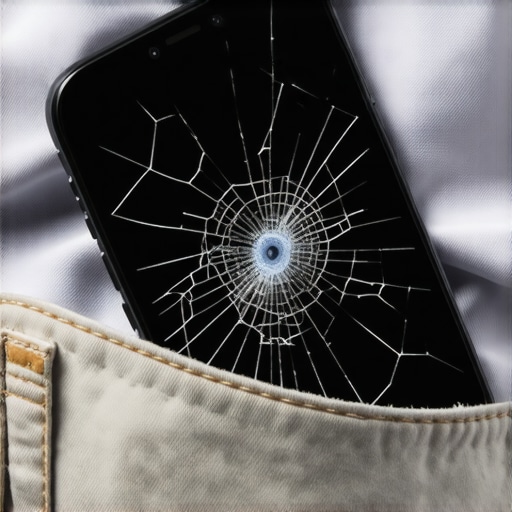
When you look at the rough opening of a home button, you have to realize it is a point of maximum deflection. The glass is thinner at the cutouts, and the edge stress is higher. If the glazing bead (the adhesive seal) is compromised by a crack, the entire sash (the screen assembly) loses its ability to resist torsion. You might think you can shim your way out of a problem with a screen protector, but a protector only masks the symptom. It does not stabilize the crack tip. A master glazier knows that once the surface compression layer is breached, the tension core is exposed. It is only a matter of time before a thermal shock, perhaps just moving from an air-conditioned room to the humid outdoors, causes the crack to spider across the entire field of vision. This is the same reason we use thermally broken frames in hot climates. We must manage the expansion and contraction of materials. In a mobile device, the frame expands at a different rate than the glass. A cracked home button removes the glass’s ability to distribute that load evenly, leading to a catastrophic blowout of the display. Do not wait for the black spots of oxidation to appear on your LCD. Treat your device like a high-performance building. When the envelope is breached, the only solution is a professional glass installer who can restore the seal and the structural integrity of the assembly. Whether it is a same-day chip repair or a full mobile service replacement, the goal is the same: keep the environment out and the functionality in. Water management is a science, and in the world of glazing, there is no room for a ‘caulk-and-walk’ approach to a cracked home button.