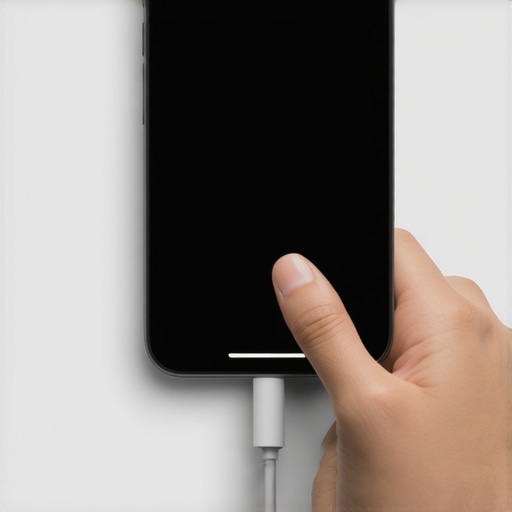
Why your touchscreen stops working when the phone is plugged in
The Glazier Science of Capacitive Interference
In twenty-five years of handling high-performance glazing, I have learned that glass is never just a passive barrier. Whether it is a fifteen-foot curtain wall or the six-inch slab of aluminosilicate glass in your pocket, glass is a dynamic substrate for complex electrical interactions. When a homeowner asks why their touchscreen stops responding or begins registering ghost touches the moment it is plugged into a charger, they are witnessing a failure of electromagnetic shielding. This is not a software glitch. It is a fundamental disruption of the capacitive field that modern glass installers and engineers work tirelessly to stabilize. To understand this, we must look at the Indium Tin Oxide (ITO) layer. This transparent conductive coating is sputtered onto the glass surface at a molecular level, creating a grid that senses the electrical charge from your fingertip. When you use a low-quality charger or a damaged cable, it introduces common-mode noise. This electrical interference overwhelms the delicate signals of the ITO grid, making the glass unable to distinguish between your touch and the background radiation. It is the same reason why high-tech glass in smart buildings requires meticulous grounding; without a stable electrical environment, the glass loses its functionality.
“Installation is just as critical as the window performance itself. A high-performance window installed poorly will fail.” – AAMA Installation Masters Guide
The Condensation Crisis: A Diagnostic Lesson
I remember a call from a homeowner in a panic because their brand-new, high-performance windows were sweating. They were convinced the glass was defective or the seals had blown within a week of the install. I walked in with my hygrometer and showed them the interior humidity was sixty percent while it was ten degrees outside. I had to explain that it was not the windows; it was their lifestyle. They were running a whole-house humidifier while boiling water for pasta in a home we had just made airtight. The windows were simply doing their job, providing a surface at the dew point for that excessive moisture to land on. This is why a professional glass installer must be more than a laborer; they must be a diagnostician. If you do not understand the relationship between the rough opening, the interior climate, and the thermal break, you are just a guy with a caulk gun. Whether it is a chip repair on a storefront or a full-frame replacement, the physics of the environment dictate the success of the installation. A same-day mobile service might swap a pane, but they rarely stop to measure the environmental variables that cause long-term failure.
The Glass Class: Decoding Performance Labels
When selecting glass for a hot climate, like Texas or Arizona, the Solar Heat Gain Coefficient (SHGC) is the only number that truly matters. I see so many salesmen pushing triple-pane units with high U-factors in the South, which is a complete waste of the homeowner’s money. In these regions, we are fighting the sun’s radiant energy, not just the air temperature. We want a Low-E coating on Surface Number 2, the inner face of the outer pane. This position allows the coating to reflect long-wave infrared radiation back toward the street before it ever crosses the argon-filled gap. This is the difference between a room that stays cool and a room that feels like an oven even with the AC running full blast. For those looking for a same-day mobile service for a chip repair, keep in mind that structural integrity depends on the resin’s ability to bond with the laminated interlayer. If the glass installer does not properly clean the rough opening or fails to account for thermal expansion, that repair will fail the next time the sun hits it. We look at the NFRC labels to ensure the Visible Transmittance (VT) remains high while the SHGC stays below zero-point-twenty-five. That is the sweet spot for southern glazing.
“The NFRC rating system is designed to provide accurate information on the energy performance of fenestration products.” – NFRC Certification Manual
Why Mobile Service Often Fails Technical Glass
The allure of a same-day mobile service is strong, but technical glass requires controlled conditions. When a mobile glass installer attempts a chip repair in a dusty driveway or in direct sunlight, they are fighting the elements. A proper chip repair involves injecting a UV-curable resin that must match the refractive index of the glass perfectly. If the temperature of the glass is too high, the resin will not cure evenly, leading to optical distortion or a visible scar. In my shop, every piece of glass is treated with the respect a structural component deserves. We look at the sash, the muntin, and the glazing bead to ensure everything is aligned. We do not just slap some flashing tape on and call it a day. We ensure the sill pan is sloped to the exterior so that any moisture reaching the weep hole is evacuated immediately. This is how you prevent the rot I have seen in so many failed installations where the previous contractor relied on the nailing fin rather than a proper water management system. If the rough opening is not square, you cannot just shim your way to a perfect seal; you have to address the underlying structure.
Technical Specifications and Thermal Logic
Modern glass is a marvel of engineering that incorporates layers of silver and metal oxides to manage heat. In our Southern climate context, we are looking to block the sun. This means the glass installer must be aware of the orientation of the house. A north-facing window might not need the same heavy tint as a west-facing window that takes the brunt of the afternoon heat. When we talk about an operable window, we have to consider the air infiltration rates. A window can have the best glass in the world, but if the weatherstripping is cheap or the sash is not seated properly in the frame, the energy savings are gone. We focus on the shim process to ensure the frame does not bow, which would prevent the locks from engaging and create a gap for hot air to pour in. The goal is always to create a thermal envelope that is as close to a solid wall as possible while still providing the beauty of natural light. This requires a deep understanding of the physics of heat transfer and a commitment to the craft that goes beyond a quick turnaround. Do not buy the marketing hype; buy the numbers and the expertise of someone who knows what a sill pan is for. If your mobile service technician cannot explain the difference between a U-factor and an SHGC, they probably should not be touching your glass.