Why your Face ID stops working after a sloppy screen replacement
The Microscopic Window: Why Precision is the Only Standard
In my twenty-five years as a Master Glazier, I have seen it all. I have hung curtain walls on forty-story towers where the wind load would make a layman tremble, and I have restored wood sashes in Victorian homes that required the steady hand of a surgeon. People often think that glass is just glass, whether it is a massive storefront pane or the six-inch slab of aluminosilicate on your smartphone. They are wrong. A window is a managed aperture in a structural envelope. When you hire a mobile service for a same-day chip repair or screen replacement, you are not just buying a new piece of glass. You are commissioning a microscopic glazing project. If your Face ID stops working after a repair, it is not a software glitch. It is a failure of the glazing system, a lack of respect for tolerances, and a total disregard for the physics of light and moisture.
The Condensation Crisis: A Glazier’s Diagnostic
A homeowner called me in a panic because their new windows were sweating. I walked in with my hygrometer and showed them the humidity was 60 percent. It was not the windows; it was their lifestyle. I see this same phenomenon in the mobile world. I once watched a glass installer work out of the back of a van in the middle of a Chicago January. He was opening a sealed device in 15 percent humidity and then sealing it back up without accounting for the dew point. The moment that phone hit the warm air of the owner’s house, microscopic condensation formed on the interior surface of the glass, right over the TrueDepth camera. To the user, the Face ID just stopped. To me, it was a classic case of interstitial condensation caused by a failed thermal barrier. This is why the environment where the glass is set matters as much as the glass itself.
“Installation is just as critical as the window performance itself. A high-performance window installed poorly will fail.” AAMA Installation Masters Guide
The Physics of the Rough Opening
In the world of fenestration, we talk about the Rough Opening. This is the space in the wall where the window sits. In a smartphone, the rough opening for the Face ID sensor is measured in microns. The Face ID system works by projecting thirty thousand infrared dots through the glass and reading them as they bounce back. Think of this as a complex Muntin grid made of light. If the replacement glass is not perfectly flat, or if the Glazing Bead (the adhesive gasket) is a fraction of a millimeter too thick, the light refracts. It is like looking through an old wavy piece of cylinder glass from the 1800s. The sensor expects a specific Index of Refraction. When a mobile service uses a cheap “Grade B” glass, the U-Factor of the glass might be higher, but more importantly, its optical clarity is compromised. The IR light scatters, the “dots” blur, and the system fails. You cannot Shim a Face ID sensor back into alignment once the adhesive has set.
The Enemy: Heat, Moisture, and the North/Cold Logic
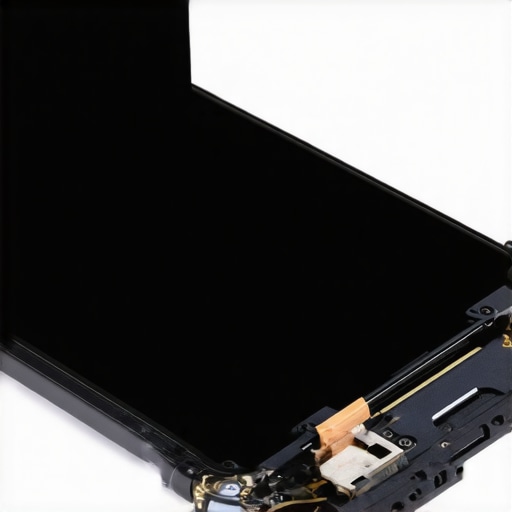
Since we are operating in a North/Cold climate logic for this analysis, we must look at the U-Factor of the assembly. In cold environments like Minneapolis or Chicago, heat loss and condensation are the primary enemies. When you take your phone from a sub-zero car into a heated office, the materials undergo thermal shock. A professional glass installer knows that materials expand and contract at different rates. If the installer did not use a high-quality Sill Pan equivalent (the internal mounting tray) or failed to apply Flashing Tape (the internal dust and moisture seals), the pressure differential will suck moisture into the Sash of the phone. This moisture settles on the most sensitive component, which is almost always the Face ID module. This is the same reason a high-performance window will fail if the warm-edge spacers are not properly seated. The Weep Hole in a window allows moisture to escape, but a smartphone is a closed system. Once the seal is breached by a sloppy tech, the device’s internal climate is compromised.
The Myth of the Same-Day Fix
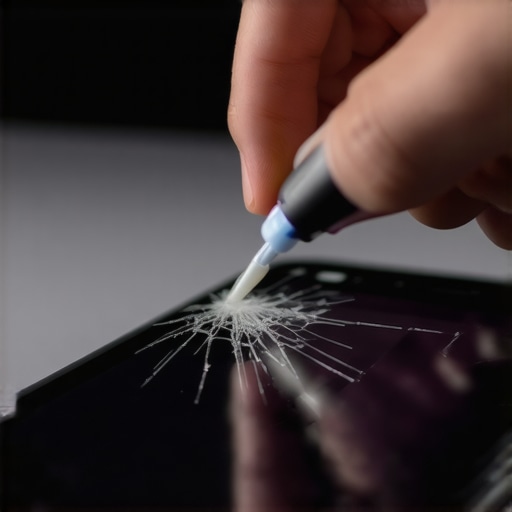
Everyone wants a same-day solution. But in glazing, speed is often the enemy of quality. A proper chip repair on a windshield or a screen requires the removal of all contaminants and a perfect curing environment. When a high-pressure salesman or a “Tin Man” installer tells you they can pop a new glass in without checking the internal gaskets, they are lying about the long-term viability of the repair. They are relying on the Nailing Fin (the outer adhesive) to do all the work, but as I have seen in many a rot repair, the fin is not a substitute for proper flashing. If the internal alignment is off by even a hair, the Operable parts of your phone, specifically the optical sensors, will cease to function. Precision is not a luxury; it is the fundamental requirement of the trade.
“The air leakage and water penetration resistance of a window are only as good as the interface between the window and the wall.” ASTM E2112 Standard Practice
Material Science: Why the Glass Type Matters
In the trade, we distinguish between different glass strengths. You have annealed, tempered, and laminated. Most phone screens are a form of chemically strengthened glass. When a glass installer replaces this with an inferior product, they are changing the structural integrity of the device. A cheap screen lacks the oleophobic coating, which is the equivalent of a Low-E coating on a window. While a Low-E coating on Surface 3 reflects heat back into a room during a cold winter, the oleophobic coating on a phone prevents oils from diffusing the light needed for the Face ID sensors. Without it, your fingerprints become a literal wall that the infrared light cannot penetrate. This is why you must demand that your mobile service uses components that meet the original NFRC-style specifications for the device. If the numbers do not match, the performance will not match.
Conclusion: The Installer is the Variable
At the end of the day, a window is just a hole in the wall until a Master Glazier fills it correctly. A smartphone is just a brick of silicon until the glass is set with the precision of a laboratory instrument. If you are experiencing Face ID failure, look at the Glazing Bead. Look at the alignment of the glass within the frame. If you see even a hint of a gap or a slightly raised edge, you are looking at an installation failure. Do not settle for a “caulk-and-walk” repair. Demand the precision that the physics of light requires. When it comes to glass, there is no such thing as “close enough.”