How a mobile technician works in a cramped driveway
The Precision of the Driveway Surgeon
In the world of professional glass installation, we often talk about controlled environments, shop-grade lighting, and level floors. But the reality for a master glass installer is rarely a pristine bay. It is more often a narrow, asphalt strip tucked between a brick house and a rusted chain-link fence. This is the realm of the mobile technician, where the ‘rough opening’ is not just a gap in a wall but a logistical challenge that tests the limits of technical skill and patience. When you are performing a same-day chip repair, you are not just a glass installer: you are a materials scientist working in a micro-climate. I remember one specific call on a Tuesday afternoon. A homeowner called me in a panic because their new glass was ‘sweating’ and a small bullseye chip was rapidly spidering. I walked in with my hygrometer and showed them the humidity was 60 percent. It wasn’t just the glass: it was their environment and the thermal shock of their driveway. This was not a window failure: it was a lifestyle and climate interaction. Most people see a chip as a cosmetic blemish, but a seasoned glazier sees it as a breach in a pressurized system. To fix it correctly in a mobile context, you must understand the physics of the Hertzian cone, the chemical bonding of anaerobic resins, and the brutal reality of Solar Heat Gain Coefficient (SHGC) on a 100-degree day.
“Installation is just as critical as the window performance itself. A high-performance window or glass unit installed poorly will fail regardless of its initial rating.” – AAMA Installation Masters Guide
The Physics of the Chip: More Than Meets the Eye
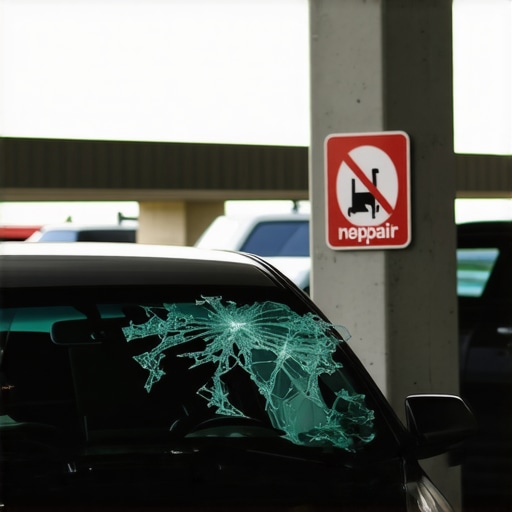
When a stone strikes a glass surface, it creates what we call a Hertzian stress cone. This is a technical term for the way energy dissipates through the silica structure. As a glass installer performing a same-day mobile service, my first job is to diagnose the fracture type: is it a star break, a bullseye, or a partial moon? Each requires a different approach to resin viscosity. If I am working in a cramped driveway in the South, the SHGC is my primary enemy. The glass surface can reach temperatures exceeding 140 degrees Fahrenheit. If I inject resin into a hot chip, the material will boil and thin, failing to create a structural bond. I have to manage the thermal load. I often use a mobile shade or even the technician van itself to block the direct radiant heat. We are looking at Surface #1 of the glass, the exterior face. In high-heat climates, the Low-E coatings on Surface #2 or Surface #3 can actually trap heat within the laminate, making a chip repair more volatile than it would be in a colder environment. This is why we focus on cooling the ‘rough opening’ of the fracture before the bridge is ever mounted.
The Logistics of the Cramped Workspace
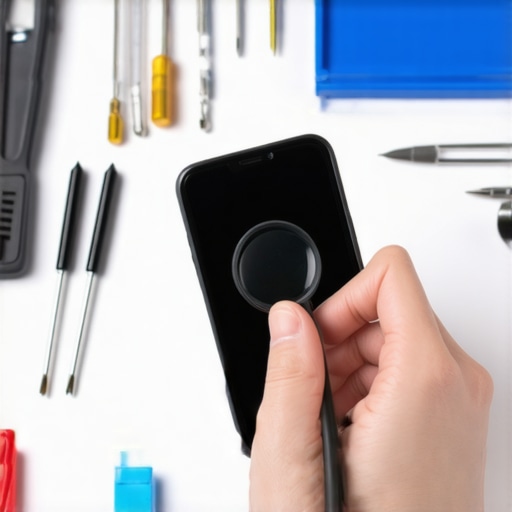
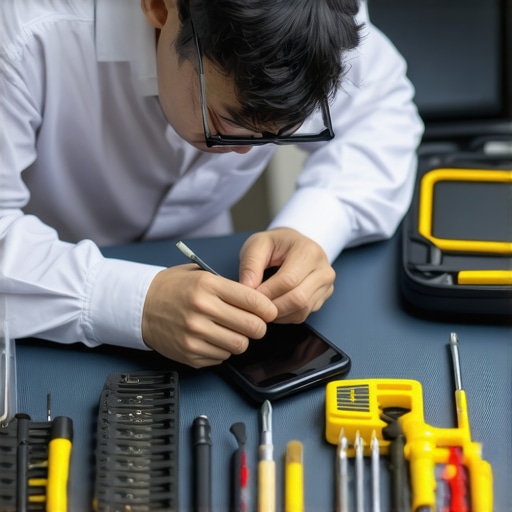
Working in a tight driveway requires a specific dance. You cannot just ‘caulk and walk.’ You have to set up your mobile rig within inches of the vehicle or window frame without making contact. This is where the trade cant comes into play. I might not be installing a sash or a muntin in this specific chip repair, but I am treating the glass edge as a critical boundary. I use suction-cup bridges that act as a temporary ‘sash’ to hold the injector in place. Every shim must be perfectly leveled to ensure the resin is pushed into the break at a perpendicular angle. If the bridge is slightly off-kilter because the driveway is slanted, the resin will bypass the break and pool under the seal. This is why we use high-grade leveling screws, essentially shimming the tool itself to the glass. We must also clear the ‘weep holes’ of the chip. Dust, moisture, and car wax act as contaminants. If I do not use a vacuum-pressure cycle to extract the air, the repair will have a visible air pocket, which is a structural failure in waiting.
“The integrity of the glass surface is paramount for structural safety. Even a minor chip can compromise the tension-compression balance of a tempered or laminated unit.” – NFRC Glass Performance Handbook
Chemical Bonding and UV Curing
The resin we use in same-day mobile service is an ultraviolet-curing acrylic. It is designed to match the refractive index of glass, which is approximately 1.52. This is what makes the repair ‘disappear.’ However, in a mobile setting, UV management is a double-edged sword. On a sunny day, the sun provides free UV light, but it is uncontrolled. If the resin cures too fast as it is being injected, it will shrink and pull away from the edges of the fracture. A master glass installer uses a UV shield to keep the repair in the dark while the pressure cycle is active. Only when the resin has fully permeated the fracture do we remove the shield and allow the cure to begin. We don’t use ‘seamless’ as a buzzword: we use it to describe the molecular transition between the original glass and the cured polymer. This is not a simple ‘fill’: it is a structural reinforcement. If the chip is near the edge of the glass, near where a glazing bead or sill pan would sit in a residential window, the stress is even higher. Edge cracks are the most likely to spread due to the way the glass is held in tension by the frame or the ‘rough opening’ of the vehicle body.
The Energy Savings Myth and Structural Reality
People often ask if a chip repair helps with energy efficiency. In a technical sense, a single chip doesn’t drastically change the U-Factor of a window. However, a crack that is allowed to spread will eventually compromise the seal of an Insulated Glass Unit (IGU). Once that seal is broken, the argon or krypton gas escapes, and you are left with a foggy, inefficient ‘glazing bead’ of moisture. By providing same-day mobile service, we are preventing the need for a full frame replacement. We are keeping the original factory seal intact. This is the true ROI of a repair. You aren’t just saving the cost of the glass: you are saving the integrity of the entire installation. Whether it is a wood sash in a historic home or a modern windshield, the principle remains: manage the water, manage the heat, and maintain the structural tension. A chip is a point of weakness where water can enter and freeze, or where heat can cause uneven expansion. In my 25 years as a glass installer, I have seen ‘tiny’ chips turn into three-foot cracks because a homeowner waited until the first frost. The ice expanded in the break, acting like a wedge, and the glass simply gave up. Same-day service isn’t just about convenience: it is about stopping the physics of failure before they start.
Conclusion: The Master’s Touch
Don’t be fooled by high-pressure sales tactics that claim every chip requires a total replacement. But also, don’t trust a technician who doesn’t understand the SHGC of the glass they are working on or the specific resin viscosity needed for a star break. A real professional understands that a cramped driveway is a laboratory. They manage the shade, they manage the pressure, and they treat every ‘rough opening’ with the respect it deserves. When the job is done, the glass should not only look better: it should be restored to its original structural capability. That is the difference between a ‘caulk-and-walk’ amateur and a master glazier. We don’t just fix glass: we manage the interface between your environment and your comfort, one millimeter at a time.