The cost of waiting to fix a cracked smartphone lens
The Physics of Glass Failure: Why a Chip is Never Just a Chip
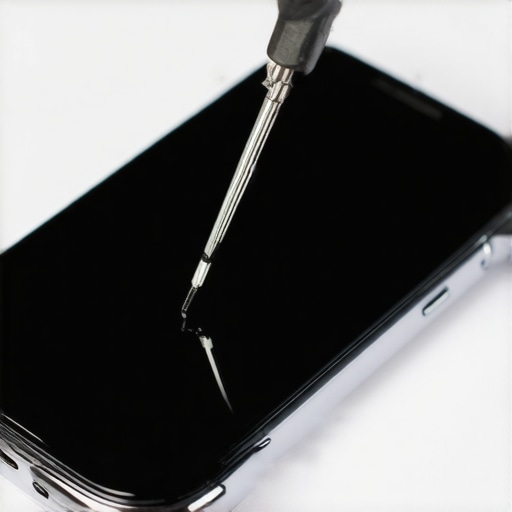
In my 25 years as a master glazier, I have seen every form of silicate failure imaginable, from the shattering of massive tempered storefronts to the insidious creeping of a crack across a high-rise curtain wall. While a smartphone lens might seem like a minor piece of glass compared to an insulated glass unit (IGU) in a skyscraper, the physics of structural integrity remain identical. When you ignore a chip in your mobile device, you are not just living with a cosmetic flaw: you are overlooking a breach in a precision-engineered barrier. Glass is a brittle material that performs exceptionally well under compression but fails catastrophically under tension. A small chip acts as a stress concentrator, a technical ‘Rough Opening’ where the structural load of the glass is no longer distributed evenly. In the glazing world, we call this the propagation of a fracture front. Every time you tap that screen or subject it to a thermal shift, you are feeding energy into that fracture. Just as a small nick in a car windshield can spiderweb overnight, the ion-exchange strengthened glass of a modern device is under immense internal tension. Delaying a mobile service call for a chip repair is essentially waiting for a total structural collapse of the sash assembly.
“Installation is just as critical as the window performance itself. A high-performance window installed poorly will fail.” – AAMA Installation Masters Guide
The Condensation Crisis: A Master Glazier’s Perspective on Moisture Infiltration
I recall a specific incident where a homeowner in Chicago called me in a panic because their new high-efficiency windows were ‘sweating’ between the panes. I walked in with my hygrometer and showed them the humidity in their home was nearly 60 percent. It was a lifestyle and ventilation issue, not a window defect. However, that same principle applies to your cracked mobile glass. I recently examined a device where the owner had waited three weeks to address a hairline fracture. When I opened the casing, the internal components were covered in a fine layer of oxidation. Why? Because that crack had bypassed the factory seal. In the glazier trade, we focus on the ‘Shingle Principle’: water must always flow down and away from the sensitive interior. A crack in your glass creates a capillary action that literally sucks ambient moisture and skin oils into the sensitive layers of the digitizer. Once that moisture reaches the interior, you are no longer looking at a simple glass replacement: you are looking at a full system failure. A professional glass installer knows that the seal is the only thing standing between functionality and a paperweight. Using a same-day repair service is the equivalent of applying a sill pan to a window rough opening: it is the primary defense against the inevitable ingress of the elements.
Thermal Expansion and the Cold Climate Threat
If you are operating in a northern climate like Minneapolis or Montreal, the cost of waiting to fix glass is multiplied by the laws of thermodynamics. Glass and the metal or plastic frames they are seated in have different Coefficients of Thermal Expansion (CTE). In the winter, your phone experiences rapid temperature swings as you move from a 70-degree interior to a sub-zero exterior. This creates a massive amount of thermal stress on the glass. A Master Glazier understands that the U-Factor, or the rate of heat transfer, is king in these environments. A cracked lens has a compromised thermal profile. The air trapped in the fracture expands and contracts, acting like a wedge that drives the crack deeper into the substrate. This is why a chip repair must be performed immediately. If you wait, the frost-thaw cycle of your daily commute will turn that ‘small nick’ into a shattered mess. Our industry relies on ASTM E2112 standards for a reason: because water management and thermal control are precise sciences. When you bypass a mobile service professional, you are gambling against the physics of the dew point. A same-day mobile technician uses high-viscosity resins that match the refractive index of the glass, effectively ‘welding’ the fracture before the next cold snap can finish the job.
“The window must be integrated into the weather-resistive barrier to ensure long-term performance and prevent moisture-related damage to the wall assembly.” – ASTM E2112 Standard Practice
The Anatomy of the Repair: Beyond the Surface
When a glass installer approaches a repair, whether it is a residential window or a mobile lens, we are looking at the ‘Glazing Bead’ and the seating of the material. A professional mobile service does not just slap a piece of glass on; they ensure the ‘Sash’—the frame holding the glass—is free of debris and that the ‘Rough Opening’ is perfectly calibrated. If the frame is even slightly warped from a drop, a new glass install will fail within days due to uneven pressure. This is technical work that requires shims and precision alignment. Many people think they can ‘caulk-and-walk’ a DIY repair, but they fail to account for the weep holes and venting requirements of the device. Professional chip repair involves a vacuum-pressure process that removes air from the fracture and replaces it with an optically clear adhesive. This restores the structural integrity of the glass to nearly 95 percent of its original strength. If you wait, the fracture edges become contaminated with dust and oils, making it impossible for the resin to bond at a molecular level. This is why a glass installer emphasizes ‘same-day’ intervention. The window for a perfect repair is narrow, and once it closes, the only option left is a costly full-frame tear-out and replacement.
The Real ROI: Why Mobile Service is an Investment
We often talk about the ROI of triple-pane windows in terms of energy savings, but the ROI of a mobile glass repair is measured in the avoidance of total device loss. A small chip might cost a fraction of the price of a new OLED assembly. As a Glazing Specialist, I have seen people try to save a few dollars by using tape or inferior glues, only to find that the adhesive has permanently etched the Surface #2 of their glass, ruining the visible transmittance. Professional mobile service providers offer a level of precision that mirrors the installation of a high-performance storefront. They understand that the glass is an integral part of the device’s structural box. By fixing a chip early, you are maintaining the factory-pressurized seal that protects the interior from the ‘Condensation Crisis’ mentioned earlier. Do not be swayed by the ‘Tin Man’ salesmen of the tech world who tell you that a cracked screen is just a cosmetic issue. It is a structural failure waiting to happen. Trust the technical standards of the glass industry: manage your glass, or the glass will manage your wallet.