Why mobile technicians use specialized tents in the rain
The Invisible Enemy: Moisture and the Mobile Glass Repair Environment
In the world of professional glazing, whether we are talking about a forty-story curtain wall or a same-day chip repair on a windshield, moisture is the ultimate saboteur. Most vehicle owners see a mobile service van and think of convenience, but for a master glazier, that van represents a struggle against the elements. I remember a call where a homeowner was adamant about a same-day fix during a torrential downpour. I walked out with my digital hygrometer and showed them that even though the glass looked dry under their garage overhang, the relative humidity was sitting at 85 percent. I explained that it wasn’t the windows failing; it was their lifestyle expectations clashing with the laws of chemistry. Trying to inject resin into a rock chip when the air is saturated is like trying to paint a house during a hurricane. You can do it, but the bond will fail before the check clears. This is why a specialized tent isn’t just a luxury; it is a critical piece of technical equipment designed to create a controlled rough opening in an uncontrolled environment.
“Installation is just as critical as the window performance itself. A high-performance window installed poorly will fail.” AAMA Installation Masters Guide
The Molecular Physics of Chip Repair and Surface Tension
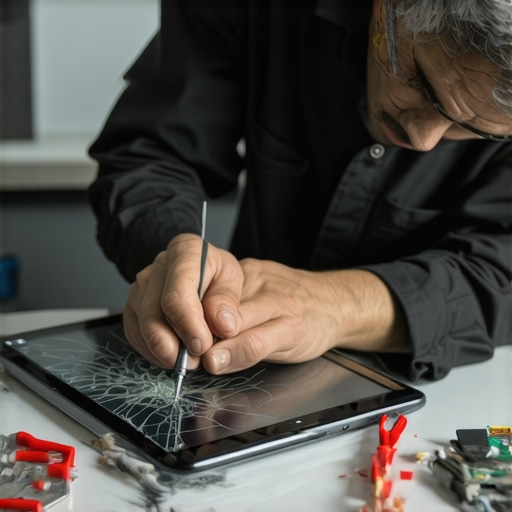
When a mobile service technician performs a chip repair, they are not just filling a hole. They are performing a structural reinforcement of the glass matrix. The resin used in these repairs is formulated to have a specific viscosity that mimics the light refractive index of the glass. However, these resins are often hydrophobic, meaning they repel water at a molecular level. If even a microscopic amount of latent moisture is trapped within the break, the resin cannot achieve total wetting of the glass surface. This leads to a phenomenon called delamination, where the repair looks good for an hour but begins to shimmer and fail as the temperature fluctuates. A specialized tent creates a localized micro-climate where the glazier can use a heat gun or moisture evaporator to drive out every molecule of H2O from the rough opening of the impact point before the bridge and injector are shimmed into place.
The Thermal Barrier: Managing the Dew Point Under the Canopy
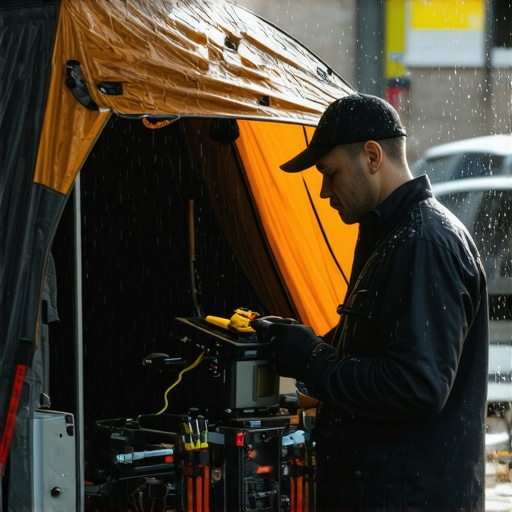
In colder, rainy climates like those found in the North, the primary enemy is the dew point. When warm, moist air hits the cold surface of the glass, it reaches its saturation point and condenses. For a glass installer, this is a nightmare. If you apply a new glazing bead or a structural urethane seal while the glass is below the dew point, you are essentially sealing a layer of water between the adhesive and the substrate. The specialized tents used by high-end mobile technicians are often weighted and sealed to the vehicle or the work area to prevent the ambient wind from introducing new moisture. This allows the technician to stabilize the glass temperature, ensuring that the U-factor of the repair area remains consistent. Without this environmental control, the same-day service promise becomes a liability rather than a benefit.
“The presence of moisture on a substrate during the application of sealants is a primary cause of adhesive failure in the field.” ASTM E2112 Standard Practice
Structural Integrity: Why Weep Holes and Sill Pans Matter Even in Mobile Service
You might wonder what a sill pan or a weep hole has to do with a mobile chip repair. In architectural glazing, we use these to manage water that inevitably gets past the first line of defense. In a mobile service scenario, the tent acts as the primary flashing system. It directs water away from the work zone, ensuring that the cowl and the drainage areas of the vehicle do not become overwhelmed while the glass is being prepped. If a glass installer is forced to work in the rain without a tent, water can track down the glass, bypass the temporary seals, and enter the interior of the vehicle or the frame. This leads to the same kind of rot I have seen in countless wood sashes where the installer relied on caulk rather than proper flashing tape. A professional technician understands that water management is a science, not a matter of luck.
The ROI of Professionalism: Why the Tent Saves You Money
Many high-pressure salesmen will tell you that a little rain won’t hurt a chip repair. They are selling you a lie to keep their schedule full. The reality is that the ROI of a properly executed repair is calculated in years, not days. A repair done in the rain without a specialized tent will likely yellow, crack, or spread, leading to a full replacement that could cost ten times the original repair price. By using a tent, the mobile service provider is ensuring that the UV curing process is not interrupted by raindrops which can act as tiny lenses, distorting the light and causing an uneven cure in the resin. It is the difference between a repair that disappears and one that becomes a permanent eyesore on your glass. When you see a glazier setting up a tent, you are seeing a technician who respects the material science of their trade.