Why your wipers might be scratching your new glass
The Anatomy of an Invisible Crisis
As a master glazier with a quarter-century of experience handling everything from monolithic plate glass to high-performance laminated automotive units, I have learned one fundamental truth: glass is not the impenetrable barrier people think it is. To the naked eye, a windshield appears as a smooth, solid plane. To a specialist, it is a complex silicate structure that is highly susceptible to mechanical abrasion and chemical stressors. When a client complains about scratches on brand-new glass, they often suspect a manufacturing defect. However, the reality is almost always found in the interface between the wiper blade and the glass surface. I once pulled a vinyl window out of a house where the header was completely black with rot because the previous installer relied on the nailing fin instead of proper flashing tape. That same lack of technical foresight is what destroys a windshield. People ignore the hygiene of their wipers until the light of a low winter sun reveals a spiderweb of arcs that have permanently etched the substrate.
“The Auto Glass Safety Standard (ANSI/AGSC/ROLY 001-2022) addresses the procedures for the replacement of any glass that is an essential part of the structural integrity of the vehicle, yet its longevity is dictated by the maintenance of the auxiliary components like wiper systems.” – AGSC Safety Guidelines
The Microscopic Battlefield: Silica vs. Road Debris
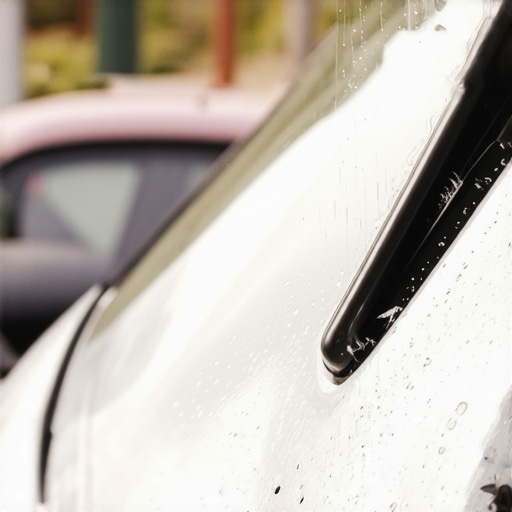
To understand why your wipers are scratching your new glass, we must perform an installation autopsy on your maintenance habits. Most scratches are not caused by the rubber itself, but by the particulate matter trapped underneath the blade. In cold climates, such as those found in Chicago or Minneapolis, the enemy is road salt and calcium chloride. These minerals are incredibly hard. When you activate your wipers to clear a thin layer of frost, you are effectively using those minerals as an abrasive media. This is the same principle as using a sanding block on a wood sash. The glass has a Mohs hardness of about 5.5 to 6.5, but road grit containing quartz or granite particles can reach a hardness of 7. This allows the debris to physically displace the silicate molecules, creating a permanent furrow in your glazing.
The Thermal Dynamics of Glass Damage
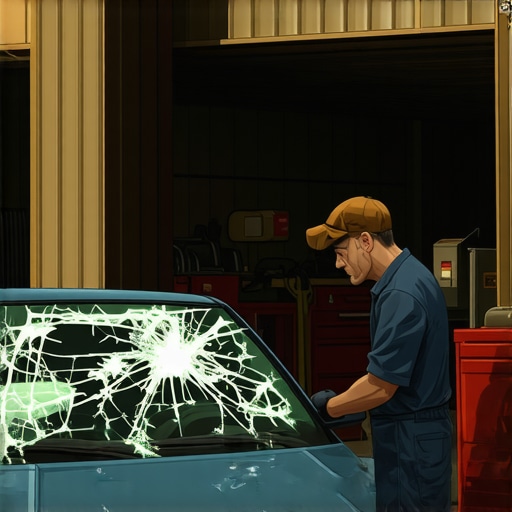
In northern climates, the U-Factor is king in residential windows, but in automotive glass, we focus on the thermal shock and the coefficient of thermal expansion. When you have a small stone chip, the integrity of the laminated structure is compromised. This is where chip repair becomes a critical, time-sensitive intervention. If moisture enters that chip and freezes, the expansion of the water can cause the crack to propagate across the entire span. A mobile service is often the only way to catch this before the damage requires a full replacement. As a glass installer, I tell my clients that a same-day repair is the difference between a thirty-minute resin injection and an expensive afternoon in the shop. A chip acts like a flaw in a rough opening; if you don’t shim it properly and stabilize the load, the entire structure will eventually fail under stress.
“A chip or crack that is not repaired promptly can be contaminated with dirt and moisture, making a high-quality repair impossible and compromising the safety of the vehicle’s occupants.” – NGA (National Glass Association) Standard Practice
The Failure of the Glazing Bead and the Shingle Principle
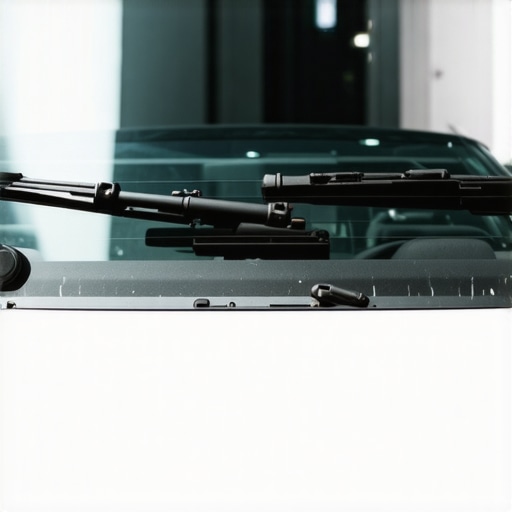
In residential glazing, we use a glazing bead to secure the glass within the frame. In an automobile, the wiper arm acts as a dynamic pressure applicator. If the wiper arm’s tension is too high, it increases the friction coefficient, especially if the glass is dry or coated in a film of hydrofluoric acid residue from certain car washes. This friction generates heat, which can soften the wiper’s rubber and cause it to deposit carbon black into the micro-scratches, making them even more visible. We also have to consider the shingle principle: water should always flow down and away from the critical seals. If your wipers are worn, they don’t wipe; they smear. This smearing allows water to dwell on the surface, which can lead to calcification and hard water spotting that mimics the appearance of scratches. Just as we use a sill pan and flashing tape to manage water in a building, your wiper system must be clear of obstructions to manage water on your glass.
The Myth of the Permanent Surface
Many homeowners believe that if they buy the most expensive triple-pane unit or the highest-grade windshield, it will be impervious to damage. This is a fallacy. Whether it is a muntin in a decorative window or the frit on an automotive windshield, every component has a lifespan. When the rubber of a wiper blade degrades through UV exposure, it becomes brittle. The once-pliable edge that was designed to be operable and smooth becomes a jagged scraper. It is at this point that the metal claw of the wiper arm can make contact with the glass. This is the equivalent of a window sash sagging and rubbing against the frame; it is a mechanical failure that requires immediate attention.
Choosing the Right Intervention
If you find yourself with a scratched windshield, do not fall for the DIY kits that promise to polish out deep grooves. Polishing glass is a precision task that can create optical distortion. You can end up with a lens effect that makes driving dangerous. Instead, consult a professional who understands the structural necessity of the glass. In my years of experience, I have seen that the best defense is a proactive offense. This means replacing wiper blades every six months, regardless of how they look. It means ensuring that your weep holes in the cowl are clear of leaves so that moisture doesn’t build up and contribute to humidity-related glass issues. Just as a poorly installed window will leak air even if the glass is perfect, a high-performance windshield will fail if the surrounding system is neglected. If you notice a chip, utilize a mobile service immediately. The same-day response of a qualified glass installer for chip repair is the only way to maintain the structural safety of your vehicle. Remember, the glass is more than a window; it is a shield. Treat it with the technical respect it deserves, and it will provide clarity and protection for years to come.