The truth about liquid glass screen protectors
The Molecular Reality of Liquid Glass Protection
As a master glazier with a quarter-century in the field, I have seen every ‘revolutionary’ coating that has hit the architectural and automotive glass markets. From self-cleaning titanium dioxide coatings to advanced hydrophobic polymers, the science of glass surface modification is a massive part of my daily life. When people ask me about liquid glass screen protectors, they are usually looking for a miracle. They want to know if a wipe-on liquid can truly replace a physical layer of tempered glass. To understand the answer, we have to stop looking at glass as a smooth, solid surface and start seeing it as a landscape of microscopic peaks and valleys.
The Narrative of the Misplaced Humidity
A homeowner called me in a panic because their new high-performance windows were ‘sweating’ on the exterior surface. I walked in with my hygrometer and showed them the humidity was 60% inside, but more importantly, I had to explain the physics of surface temperature and dew point. It wasn’t the windows; it was their lifestyle and the environment. This same misunderstanding applies to liquid glass. People apply a liquid protector and expect it to act like a structural buffer, then they are shocked when the substrate fails. They blame the product, but they don’t understand the molecular bond—or lack thereof—that occurred at the interface.
“Installation is just as critical as the window performance itself. A high-performance window installed poorly will fail.” AAMA Installation Masters Guide
What is Liquid Glass?
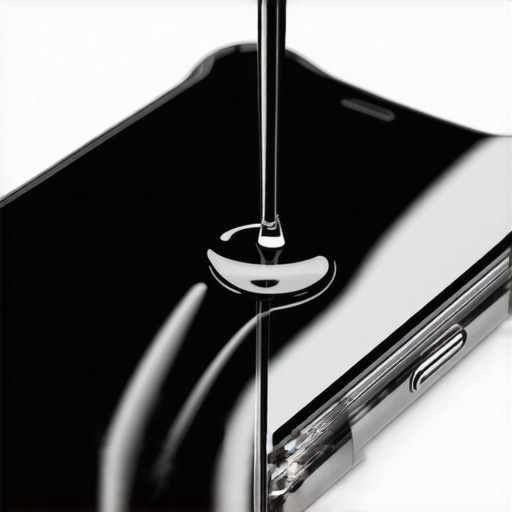
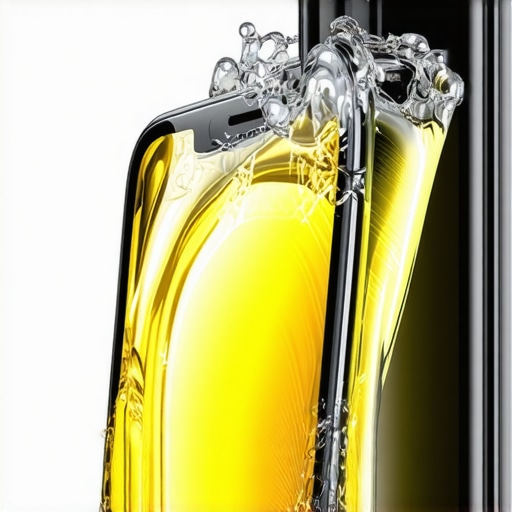
In the trade, we refer to this as SiO2 or Silicon Dioxide. It is essentially glass in a liquid solvent. When you apply it to a smartphone or a window pane, the solvent evaporates, leaving a nano-scale layer of silica that fills the microscopic pores of the glass. This is not a new concept; we have used similar technology in high-rise curtain walls to reduce maintenance costs. However, a liquid protector is only about 100 to 500 nanometers thick. For perspective, a human hair is about 80,000 nanometers wide. You are applying a layer that is functionally invisible and nearly weightless. This coating increases the surface hardness on the Mohs scale slightly, but it does nothing to improve the structural integrity of the Rough Opening of your device’s frame.
The Physics of Impact and Chip Repair
When a glass installer approaches a chip repair, they aren’t looking to coat the surface; they are looking to stabilize the fracture. In my mobile service, I use high-viscosity resins that cure under UV light to bridge the gap in the glass matrix. Liquid glass screen protectors are too thin to provide this kind of structural support. If you drop your phone, the force of the impact travels through the liquid layer and into the main glass body. Because the liquid glass is chemically bonded to the surface, it doesn’t act as a sacrificial layer like a tempered glass protector would. In architectural terms, it’s the difference between a thin coat of paint and a Sill Pan. One is for aesthetics and minor abrasion; the other is for structural water management.
The Thermal Logic of Surface #1
In the glazing world, we number glass surfaces from the outside in. Surface #1 is the exterior. Liquid glass is a Surface #1 treatment. In cold climates like Chicago or Minneapolis, we worry about the dew point and the U-Factor. A liquid coating can actually alter the surface tension of the glass, causing water to bead and roll off. This is great for visibility, but in a same-day repair scenario, these coatings can actually make it harder for repair resins to bond. If you have a chip and you’ve applied a heavy-duty liquid protector, the hydrophobic nature of the Glazing Bead area might repel the very resin meant to save the screen.
“Glass strength is significantly influenced by surface condition. Even microscopic scratches can reduce the load-bearing capacity of a lite by over 50%.” ASTM E2112 Standard Practice
The Myth of Hardness
Marketing teams love to talk about 9H hardness. As a glazier, I find this misleading. 9H refers to a pencil hardness test, not the Mohs scale. Traditional glass sits around a 5 or 6 on the Mohs scale. A liquid glass coating might push that up slightly by filling in the pores, making it harder for sand or keys to find a ‘grip’ on the surface to start a scratch. But don’t be fooled; this isn’t a Sash replacement. It won’t stop a point-load impact from a concrete floor. If you want real protection, you need mass. You need a sacrificial layer of tempered glass that can shatter to dissipate energy, leaving the primary substrate intact.
Why Mobile Service Professionals Care
When you call for a mobile service to handle a chip repair, the technician has to clean the surface thoroughly. If a liquid glass protector is present, it can interfere with the vacuum seals used in repair bridges. It is a persistent chemical bond that often requires a cerium oxide polish to remove. For the average user, the same-day convenience of a liquid application is tempting, but for the longevity of the glass, it’s a secondary defense at best. It’s like putting a wax coating on a car; it looks great and helps with minor friction, but it won’t stop a dent.
Final Professional Assessment
Is liquid glass a scam? No. Is it a replacement for a professional glass installer’s work? Absolutely not. It is a chemical enhancement that improves the tactile feel and minor scratch resistance of your device. However, if you are prone to dropping your phone, you need a physical barrier. In my shop, we don’t rely on coatings to keep a building dry; we rely on Flashing Tape, proper Muntin alignment, and structural integrity. Treat your mobile devices with the same logic. Use the liquid for the ‘feel’ and the oleophobic properties, but keep a real piece of tempered glass on top if you want to avoid a costly trip to the repair shop. Understanding the limits of silica is the first step in becoming an informed consumer in the glazing world.