How to protect your phone during a beach trip
As a Master Glazier with over 25 years spent handling everything from 500-pound tempered storefront lites to delicate historic restorations, I view the world through the lens of silica science. When most people head to the shore, they see a place for relaxation; I see an abrasive, corrosive, and thermally volatile environment that is hostile to any glass-based technology. If you are wondering how to protect your phone during a beach trip, you have to stop thinking of it as a gadget and start thinking of it as a precision-engineered glazing unit. The same physics that govern whether a high-rise curtain wall survives a hurricane apply to the aluminosilicate glass in your pocket. I once pulled a vinyl window out of a house in a coastal town where the header was completely black with rot. Why? The previous installer relied on the nailing fin instead of proper flashing tape, allowing the salt-laden air to bypass the primary seal. That same salt air is currently looking for any way to bypass the ‘glazing bead’ of your phone’s screen and compromise its internal components.
The Abrasive Reality: Sand vs. Silica
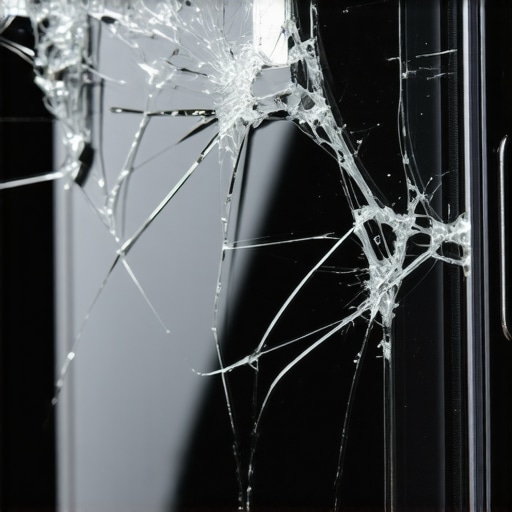
The first thing you need to understand is the Mohs scale of mineral hardness. Most modern smartphone screens are made of chemically strengthened glass that sits somewhere around a 6.5 on the scale. Beach sand is primarily composed of quartz, which is a solid 7. In the world of glass installation, we never let quartz-based materials come into contact with a finished sash without a protective barrier. When you drop your phone in the sand, you aren’t just getting it dirty; you are introducing a material harder than your screen that will create micro-fissures. These microscopic scratches act as stress concentrators. Just as a small chip in a windshield eventually leads to a full crack due to thermal expansion, those tiny sand scratches will eventually cause your screen to fail under the slightest pressure. This is why same-day chip repair is a concept we advocate for in the automotive glass world, and it is why preventing that initial abrasion on your phone is non-negotiable. You wouldn’t leave a rough opening for a window unprotected during a sandstorm, so do not leave your phone screen exposed to the wind-blown quartz of the dunes.
“Installation is just as critical as the window performance itself. A high-performance window installed poorly will fail.” – AAMA Installation Masters Guide
The logic of the AAMA guide applies perfectly here. You can buy the most expensive screen protector on the market, but if you do not install it in a dust-free environment with a perfect seal, it will fail to protect the underlying substrate. If sand particles get trapped underneath the protector, they act like grit on sandpaper, grinding into the glass every time you tap the screen. In my years as a glass installer, I have seen more damage caused by poorly fitted ‘protective’ measures than by no protection at all.
The Coastal Context: Salt, Humidity, and Corrosion
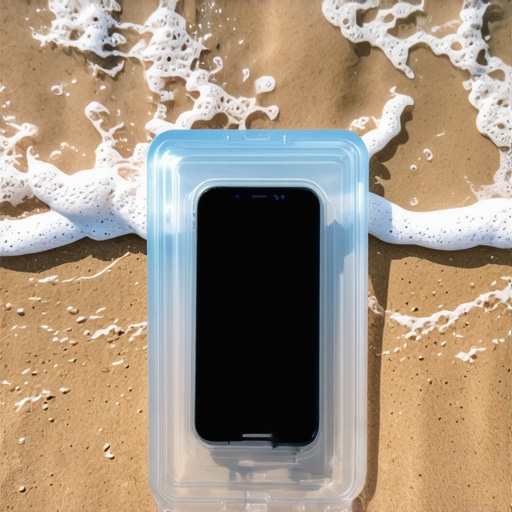
In a coastal environment, the enemy isn’t just the physical impact of sand; it is the chemical assault of salt spray. Salt is hygroscopic, meaning it attracts water. When salt crystals lodge themselves in the weep holes of a window frame or the charging port of a mobile device, they begin to pull moisture from the air. This creates a concentrated electrolytic solution that accelerates the corrosion of metal components. For a window, this means the operable hardware like casement cranks or sash locks will seize up. For your phone, it means the delicate logic board is at risk of a short circuit. This is why a mobile service for glass or tech repair is so frequently called to beach communities. The salt air migrates everywhere. Even if you don’t drop your phone in the water, the humidity levels at the beach can reach 80 percent or higher. This high vapor pressure forces moisture into every crevice. In the glazing industry, we use a sill pan to ensure that any water that bypasses the primary seals is directed back outside. Your phone lacks a sill pan. Your only defense is a truly hermetic seal, such as a vacuum-sealed waterproof pouch.
Thermal Stress and the Glass Molecule
Temperature management is another area where beachgoers fail. You might notice your phone gets hot in the sun, but do you understand the physics of the thermal shock? A phone sitting on a towel in 95-degree heat can reach internal temperatures of 120 degrees or more. If a rogue wave hits that hot glass, or if you take the phone from the hot sun into a freezing cold air-conditioned car, you are creating massive internal tension. As a glazier, I deal with this through ‘thermal breaks’ in aluminum frames, preventing the heat from the exterior from reaching the interior. Glass expands and contracts at a different rate than the metal or plastic body of the phone. When the temperature changes rapidly, the stress on the glazing bead or adhesive holding the screen in place can cause it to delaminate. This is why same-day attention to any pre-existing chips is vital; the heat of the beach will make those chips expand into full-blown cracks within hours.
“Glazing systems must be designed to accommodate the thermal expansion and contraction of all components without compromising the weather-tight seal.” – ASTM E2112 Standard Practice
The Master Glazier’s Protection Protocol
If you want to protect your tech like a pro, you need to follow a multi-layered defense strategy. First, use a mobile service or a professional glass installer to ensure your screen is free of any existing micro-fractures before your trip. A compromised screen is a doomed screen in the heat of the sun. Second, think about your ‘flashing.’ In window installation, flashing tape ensures a watertight transition between the window and the wall. For your phone, a high-quality case with port covers acts as your flashing, preventing sand and salt from entering the ‘rough opening’ of the device ports. Third, treat your phone like an operable window that must stay closed. Use Bluetooth earbuds so you can keep the phone sealed inside a dry bag while still using it. This eliminates the need to touch the screen with sandy or salty fingers, preserving the oleophobic coating. This coating is the phone’s equivalent of a Low-E coating on a window; it’s a microscopically thin layer that manages surface energy, and it is easily stripped away by the abrasive action of salt and sand. By following these glazing-industry principles, you can enjoy the sun and surf without worrying about the structural integrity of your glass tech.