Why your phone’s autofocus might fail after a hard vibration
The Physics of Precision: Why Your Optical Geometry Matters
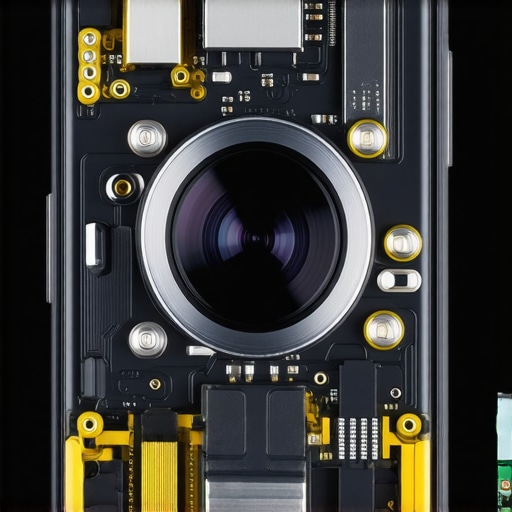
When you spend twenty five years in the glazing industry, you stop seeing windows as just glass. You see them as complex assemblies of thermal barriers, gaskets, and structural tolerances. I have spent my career looking at how Rough Opening specifications dictate the success of a high performance curtain wall, and the same fundamental physics apply to the tiny glass assembly in your smartphone. When you experience a hard vibration, like dropping your device on a concrete floor or mounting it to the handlebars of a high torque motorcycle, you are not just risking a cracked screen. You are subjecting the Operable components of your camera to G-forces that can shift the internal Sash of the lens assembly out of alignment. Most people think a camera is a solid block, but it is actually a suspended system. When that system is jarred, the mechanical integrity of the autofocus motor, which relies on microscopic springs and magnets, can be permanently compromised.
“Installation is just as critical as the window performance itself. A high-performance window installed poorly will fail.” – AAMA Installation Masters Guide
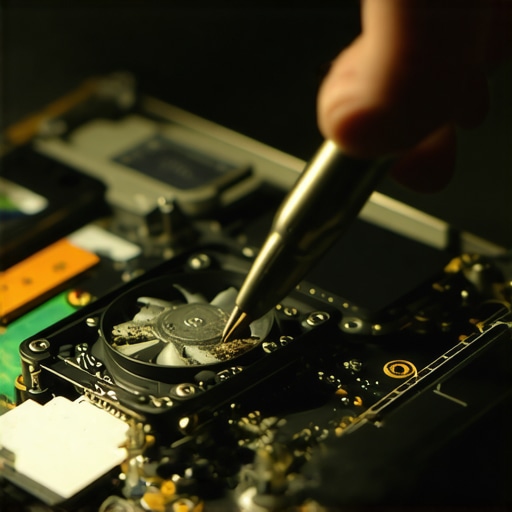
This industry standard is usually applied to residential fenestration, but the logic is identical for mobile optics. I have seen countless homeowners opt for a cheap mobile service or a same-day fix where the glass installer simply slapped a new piece of glass over a dirty frame. This is what I call a caulk and walk job. In my experience, if the Rough Opening of the camera housing is not perfectly clear of debris before the new lens is set, the autofocus will hunt indefinitely. The vibration might have knocked the Voice Coil Motor (VCM) off its Shim, or it might have introduced a microscopic fracture in the Glazing Bead that holds the lens elements in place. If that assembly is even one tenth of a millimeter off, your photos will be soft because the focal plane no longer matches the sensor.
The Condensation Crisis: A Narrative of Failed Seals
A client recently brought me a high-end device after a chip repair performed by a cut-rate shop. They were in a panic because their camera was ‘sweating’ and the autofocus had stopped working entirely after a weekend of vibration on their dashboard. I walked in with my hygrometer and showed them the humidity inside the camera housing was nearly 60 percent. It was not the glass itself; it was the fact that the previous technician had ignored the Sill Pan principle. In structural glazing, a sill pan ensures that any moisture that bypasses the primary seal is directed back to the exterior through a Weep Hole. In a phone, there is no weep hole. If the technician does not use proper Flashing Tape equivalents or high-grade adhesives to create a hermetic seal, the hard vibration from the car’s engine will eventually pump humid air into the lens cavity. Once that moisture hits the internal electronics of the autofocus motor, the system shorts out or the lubricants inside the lens barrel become gummy, leading to a permanent failure. This is why a same-day mobile service must be performed with clinical precision, not just speed.
Thermal Stress and Surface Coatings
In the South, where the heat is relentless, we deal with extreme Solar Heat Gain. We often place a Low-E coating on Surface #2 of a double pane unit to reflect infrared radiation before it can penetrate the home. Your phone’s camera glass uses similar coatings to prevent flare and manage light. However, when you combine a hard vibration with the 140 degree temperatures found on a car dashboard in Phoenix or Houston, the Glazing Bead adhesive can soften. This allows the lens assembly to shift within its Rough Opening. As the adhesive cools and re-hardens, the lens is trapped in a tilted position. This is known as sensor tilt, and it is the primary reason why your camera might focus on the left side of the image but stay blurry on the right. You need a glass installer who understands that the expansion and contraction rates of aluminum, glass, and plastic are all different. Without accounting for these thermal dynamics, a chip repair is just a temporary bandage on a structural wound.
“Water management is not an option; it is a requirement for any glazed assembly that expects to survive its warranty period.” – ASTM E2112 Standard Practice
Why Professional Glass Installation Matters
Most consumers do not realize that the mobile service technician who replaces their screen or camera glass is essentially performing a micro-scale window installation. If they do not use a proper Sill Pan approach to moisture management or if they fail to Shim the internal components correctly after a hard vibration, the device is doomed. We see this in the trades all the time. A contractor uses the wrong Flashing Tape on a Muntin heavy window and two years later the wall is rotten. With phone optics, the failure happens faster. The vibration weakens the bond, the heat expands the gap, and the moisture finishes the job. When looking for a glass installer for your tech, you should demand the same level of expertise you would for a 30,000 dollar window package. You want someone who knows that the Rough Opening must be pristine and that the Operable parts of the camera require a stable, vibration-dampened environment to function. Don’t settle for a caulk and walk repair when your ability to capture memories is on the line.