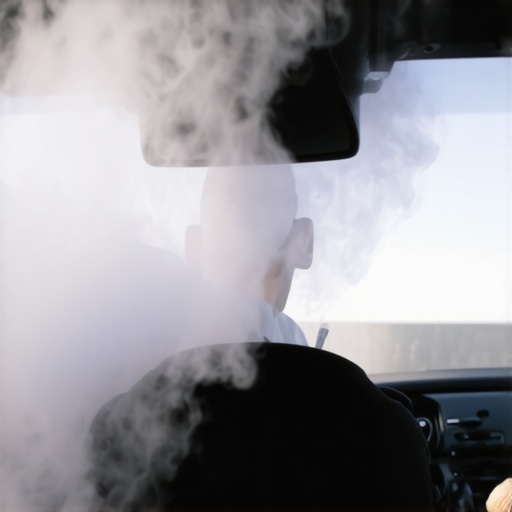
Why your car’s windshield is blurry at night
The Science of Nighttime Visual Impairment Through Automotive Glass
When you are behind the wheel at midnight and the oncoming LED headlights transform into a blinding kaleidoscope of starbursts and halos, you are not necessarily looking at a failure of your vision. You are looking at a failure of the glass. As a master glazier with over two decades in the trade, I have seen every iteration of glazing failure, from structural delamination in high-rise curtain walls to the subtle micro-pitting of a commuter car windshield. That blurry, hazy veil that obscures your path is the result of specific physical phenomena that occur when light interacts with a compromised glass surface. To understand why your windshield is failing you, we must look past the surface and into the molecular and mechanical reality of automotive glazing.
The Condensation Crisis: A Narrative of Surface Tension
I recall a specific instance where a driver brought their vehicle to my shop in a state of high anxiety. They insisted their new windshield was ‘defective’ because it remained perpetually blurry despite constant cleaning. I did not reach for a bottle of window cleaner; I reached for my digital hygrometer. I sat inside the cabin and showed the owner that the interior humidity was spiking at 70 percent. It was not the glass itself that was the enemy; it was the moisture trapped within the cabin from a leaking cowl seal. This moisture was condensing into a microscopic layer of ‘fog’ that the defroster could not touch because the surface tension of the glass had been compromised by cheap, silicone-based ‘protectants.’ This wasn’t a glass defect; it was a lifestyle and maintenance conflict. When the dew point inside the car matches the temperature of the glass, visibility vanishes. This is the first lesson in glazing: the environment around the aperture is just as critical as the glass itself.
“Installation is just as critical as the window performance itself. A high-performance window installed poorly will fail.” – AAMA Installation Masters Guide
The Physics of the Blur: Pitting and Light Scatter
What most drivers describe as a ‘dirty’ windshield is often a surface that has undergone thousands of microscopic impacts. Over years of driving, sand, salt, and road debris act like a sandblaster on your glass. This creates ‘pitting’—tiny craters in the float glass surface. During the day, the human eye can often focus past these pits. However, at night, when a concentrated light source like a xenon headlight hits these craters, the light undergoes Mie scattering. Instead of passing through the glass in a straight line, the light is refracted in multiple directions. This is why you see ‘rays’ or ‘halos’ around lights. Each pit acts as a tiny prism, bending the light away from its intended path and directly into your retina. If you have been searching for a glass installer to fix this, understand that these pits cannot be buffed out without creating optical distortion. Replacement is the only path to restoring the original refractive index of the aperture.
The Laminated Sandwich: PVB and Delamination
Your windshield is not a single piece of glass. It is a sophisticated laminate consisting of two layers of annealed glass bonded by a Polyvinyl Butyral (PVB) interlayer. This construction is designed for safety, ensuring that upon impact, the glass adheres to the plastic rather than showering the cabin with shards. However, this interlayer can be the source of your night blurriness. If the seal around the edge of the glass—the area we professionals call the glazing bead or the urethane track—is compromised, moisture can enter the laminate. This causes delamination. When the PVB begins to separate from the glass, it creates a milky, hazy appearance that is particularly prominent under artificial light at night. This is often caused by installers who skip the essential step of applying a proper primer to the pinchweld, leading to a ‘caulk-and-walk’ failure that endangers the structural integrity of the entire vehicle roof.
The Mobile Service Myth: Temperature and Urethane Chemistry
Many people opt for a mobile service because of the convenience of same-day repairs. While mobile service is a staple of our industry, it is subject to the laws of chemistry. The urethane used to bond your windshield to the rough opening of the car frame requires specific temperature and humidity ranges to cure. If a glass installer attempts a same-day replacement in freezing temperatures or high humidity without the proper high-viscosity, fast-cure adhesive, the bond will be weak. A weak bond allows for microscopic vibrations. Over time, these vibrations can cause the glass to rub against the frame, creating ‘frit’ dust that migrates into your field of vision, contributing to that nighttime haze. Furthermore, if the glass is not perfectly leveled with a shim during the setting process, the stress on the laminate can cause optical birefringence, where the glass actually twists the light waves as they pass through, creating a disorienting ‘shimmer’ at night.
“The glass is a structural component of the vehicle’s safety system. Any compromise in the integrity of the installation or the material itself is a compromise in passenger safety.” – ASTM E2112 Standard Practice
Chip Repair: The Science of Resin and Refraction
When you seek a chip repair, you are essentially asking a technician to perform a microscopic structural graft. We use a specialized resin that is injected into the ‘bullseye’ or ‘star’ break. The goal is to fill the void and evacuate all air. The reason your windshield might still look blurry after a chip repair is a mismatch in the refractive index. High-quality resins are engineered to match the light-bending properties of float glass exactly. If a technician uses a cheap, generic resin, the repair will act as a permanent smudge, catching the light of streetlamps and creating a visual distraction. Proper chip repair is a vacuum-sealed process; it is not merely dabbing glue into a hole. It requires cleaning the weep hole of the break and ensuring the resin reaches the very edges of the fracture to prevent the crack from ‘running’ across the sash.
Water Management and the Sill Pan Principle
Even in automotive glass, the ‘Shingle Principle’ applies. Water must be shed away from the interior. Many night-blurriness issues stem from a failed cowl or a clogged drain at the base of the windshield. When water pools near the bottom of the glass, it increases the local humidity and can lead to the growth of microscopic mold in the dust that accumulates at the edge of the glass. This creates a film that is incredibly difficult to remove with standard cleaners. A professional glass installer knows that the installation is not just about the glass; it is about the entire water management system of the front of the vehicle. If the drip cap is not correctly aligned, or if the flashing tape equivalent in an automotive context—the molding—is not seated perfectly, you will forever be fighting a losing battle against the blur.
Conclusion: Don’t Buy the Hype, Buy the Numbers
When selecting a glass installer for your replacement or repair, do not be swayed by the lowest price or the promise of a fifteen-minute fix. Quality glazing is a slow, methodical process. You want to ensure they are using glass that meets or exceeds OEM standards for optical clarity. Look for glass that has a high Visible Transmittance (VT) rating and a low U-factor if you live in colder climates like Chicago or Minneapolis to prevent interior frosting. In the south, the Solar Heat Gain Coefficient (SHGC) is more important, but for nighttime clarity, the surface hardness and the quality of the PVB interlayer are the ultimate metrics of success. Your safety depends on your ability to see the road clearly. Don’t let a poorly installed, low-grade piece of glass turn your nighttime commute into a guessing game. Demand precision, demand the right chemistry, and never settle for a ‘good enough’ installation.