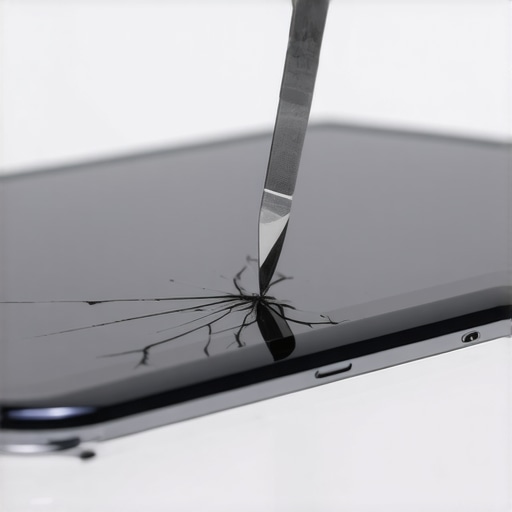
Why we never use metal pry tools on an iPad
When you see a mobile service van pulled up to a high-rise or a suburban home, the first thing I examine is not the logo on the door, but the contents of the installer’s tool belt. In the world of high-stakes glazing, your choice of tools is the primary indicator of your competence. Just as a technician would never dream of using metal pry tools on an iPad because of the absolute certainty of fracturing the delicate aluminosilicate glass, a professional glass installer understands that steel and glass are natural enemies. In my twenty-five years as a glazier, I have seen more glass destroyed by improper handling than by actual accidents. Whether you are dealing with a chip repair or a full-scale residential window replacement, the physics of surface tension remain the same. Metal tools create point-load stresses and microscopic nicks that serve as the birthplace for structural failure. This is especially true in the South, where the relentless sun turns every tiny flaw into a catastrophic crack.
The Anatomy of a Failed Mobile Repair
I remember a specific case in Austin, Texas, where a homeowner called me to inspect a series of failed window units that had been replaced only a year prior by a same-day mobile service. The windows were top-of-the-line, featuring advanced Low-E coatings and argon gas fills. However, as I began my autopsy of the installation, the reality became clear. The previous technician had used a common metal screwdriver to pry the glazing bead out of the frame during a routine glass repair. As I pulled the vinyl window out of the rough opening, the header was not rot-blackened yet, but the glass edge told the real story. There was a tiny, nearly invisible nick on the edge of the pane where the metal tool had made contact. In the intense Texas heat, where the Solar Heat Gain Coefficient is the most critical metric for comfort, that glass pane was subjected to massive thermal expansion. That tiny nick, a Griffith flaw in technical terms, became the focal point for a stress fracture that eventually blew the seal of the insulated glass unit. This is why we never rely on the ‘caulk-and-walk’ method. A master glazier knows that the rough opening must be respected, and the tools must be as soft as the glass is hard.
“The presence of edge damage, such as nicks or chips, significantly reduces the edge strength of glass and can lead to breakage when the glass is subjected to thermal or mechanical loads.” – ASTM E2112 Standard Practice for Installation of Exterior Windows
The Physics of Glass and Thermal Stress in Hot Climates
In a Southern climate like Florida or Arizona, the enemy is not the cold, but the radiant energy of the sun. This is where the physics of the Solar Heat Gain Coefficient (SHGC) becomes the king of all metrics. When we perform a chip repair or a window replacement, we have to consider where the Low-E coating is placed. In the South, we always place the coating on Surface #2. This is the inward-facing side of the outermost pane. By doing this, we reflect the long-wave infrared radiation back toward the street before it even has a chance to cross the air gap. If a mobile service technician uses a metal tool and scratches this coating, the energy performance of the entire unit is compromised. The glass installer must understand that modern glazing is not just a piece of silica; it is a complex sandwich of silver layers and dielectric spacers. When you use metal tools, you risk scratching these layers, leading to oxidation and the dreaded ‘blue haze’ that ruins the view and the R-value.
Why Precision Matters: From iPads to Architecture
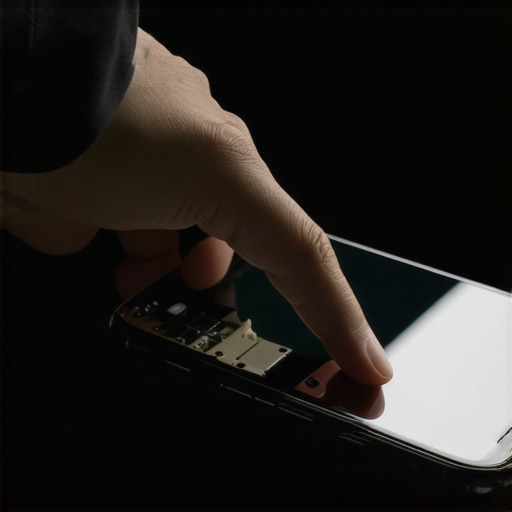
The comparison to an iPad is not just a metaphor. The glass in your tablet is chemically strengthened, much like the tempered glass we use in operable sashes or patio doors. When you apply a metal pry tool to the edge of an iPad, you are introducing a localized stress that exceeds the compressive strength of the glass surface. The same thing happens when a glazier uses a metal pry bar to adjust a shim in a window frame. We use nylon or wood blocks because they distribute the load. If the rough opening is not square, the installer must use a shim with surgical precision. If you force a window into an opening using metal tools, you are setting the stage for a pressure crack. The glass needs room to breathe. It expands and contracts with every degree of temperature change. If it is pinned against a metal fastener or nicked by a steel tool, it has nowhere to go but to break.
“Installation is just as critical as the window performance itself. A high-performance window installed poorly will fail to meet energy expectations and will likely suffer premature structural failure.” – AAMA Installation Masters Guide
Managing the Dew Point and Vapor Pressure
Another critical aspect of professional glazing is the management of the dew point. In a humid, hot climate, the difference between the indoor air-conditioned temperature and the outdoor swelter is a recipe for condensation. A proper glass installer ensures that the weep hole system is clear and that the sill pan is perfectly flashed. If water gets trapped against the edge of the glass because of a blocked weep hole, it can lead to edge desaturation. This is where the moisture attacks the primary seal of the IGU. If that seal has already been weakened by a nick from a metal tool, the failure happens in months rather than decades. We focus on the ‘Shingle Principle,’ ensuring that every layer of flashing tape and every drip cap is oriented so that water is shed away from the rough opening. Without this attention to detail, you are not just installing a window; you are installing a future mold problem.
The Value of Mobile Service and Same-Day Repair
While the ‘same-day’ promise of many mobile services is attractive, it must be balanced with the technical requirements of the job. A chip repair is not just about filling a hole with resin; it is about restoring the structural integrity of the pane. In a mobile environment, the glazier must control the temperature of the glass before beginning the repair. If the glass is too hot from the sun, the resin will not cure properly. If the technician uses a metal probe to clean the chip, they risk spreading the damage. A master uses a specialized vacuum tool to pull the air out of the fracture before injecting the polymer. This level of care is what separates a professional from a tinkerer. Whether it is a muntin that needs replacing or a full sash swap, the tools of the trade should be non-marring and high-precision.
Conclusion: The Installer is the Warranty
At the end of the day, you can buy the most expensive window on the market with the lowest U-factor and the best SHGC rating, but if it is installed by someone who doesn’t understand the fragility of the glass edge, you have wasted your money. The installer is the true warranty. We use nylon tools, we respect the rough opening tolerances, and we never, ever use metal pry tools on a surface as delicate as glass. Whether you are fixing a screen on a tablet or a curtain wall on a skyscraper, the rules of glazing are written in the physics of the material. Respect the glass, use the right tools, and the installation will last a lifetime.