The trick to getting a perfect seal on a phone’s back glass
Beyond the Surface: Why Most Back Glass Seals Fail
When most people think of a phone repair, they think of a screen swap. But as a master glazier with a quarter century in the trade, I look at the back glass of a modern smartphone and I see a specialized curtain wall system. It is a structural element that must manage thermal expansion, moisture ingress, and mechanical stress. The average mobile service technician treats it like a sticker. They peel, they stick, and they hope. But hope is not a technical specification. In my twenty five years of handling everything from oversized tempered units in skyscrapers to delicate stained glass restorations, I have learned that the seal is where the engineering succeeds or fails. If you do not understand the physics of surface energy and the shear strength of your bonding agent, you are just a part swapper, not a glass installer.
The Condensation Crisis: A Master Glaziers Tale
A homeowner called me in a panic because their new windows were sweating. I walked in with my hygrometer and showed them the humidity was 60 percent. It was not the windows; it was their lifestyle. I see the exact same thing in the mobile device world. A client once brought me a flagship phone that they had repaired by a same-day shop. Within a week, the camera lens was clouded with internal fog. The previous technician had performed the repair in a high humidity environment without considering the dew point. By sealing the back glass in those conditions, they effectively trapped a micro-climate inside the chassis. As soon as the phone was taken into the cold air of an office building, that moisture condensed on the coldest surface, the glass. It is a classic failure of environmental control during the installation process. You cannot just slap glass on in the back of a humid van and expect a factory grade result.
The Anatomy of the Rough Opening: The Chassis as a Frame
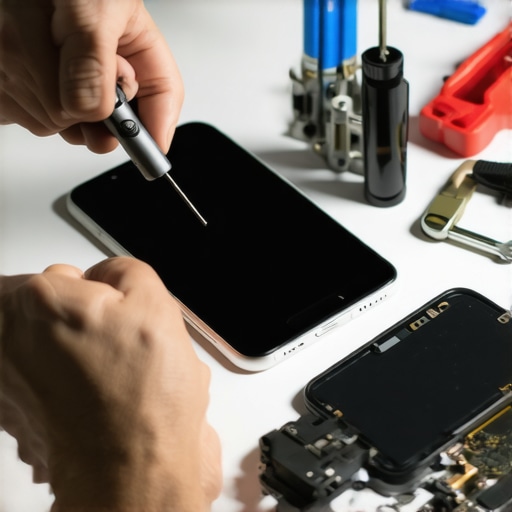
In the architectural world, we talk about the Rough Opening. This is the space where the window sits. In a phone, the chassis is your rough opening. It must be perfectly square and devoid of any microscopic debris. If the frame is even a fraction of a millimeter out of true, you are creating a point of stress. I have seen installers try to shim a back glass with extra adhesive. That is a recipe for a stress crack. You need to treat the perimeter like a Glazing Bead. Every trace of the old epoxy or PSA (Pressure Sensitive Adhesive) must be chemically removed to reach the bare substrate. If you are bonding to old adhesive, you are bonding to a failure point. We use an isopropyl alcohol solution of at least 99 percent purity to ensure no residue remains. This is the same level of care we take when preparing a commercial storefront for structural silicone glazing.
“Surface preparation is the single most important factor in the longevity of any glass to metal bond. Contaminants at the molecular level can reduce adhesive strength by over 80 percent.” – ASTM E2112 Standard Practice for Installation
The Physics of the Seal: Adhesives and Thermal Expansion
The trick to getting a perfect seal is not just about the glue. It is about understanding the Coefficient of Thermal Expansion. Glass and aluminum expand at different rates. If you use a rigid cyanoacrylate, the first time that phone gets hot from fast charging, the seal will shear. You need a polymer that remains elastic. I prefer a cold press adhesive or a high grade polyurethane. These materials act like a miniature Flashing Tape, allowing for movement while maintaining a water tight barrier. Think of it like a Sill Pan in a window installation. The sill pan is the last line of defense. In a phone, that internal adhesive gasket is your only defense. If that gasket is not compressed with a minimum of 50 PSI for at least 20 minutes, the cross linking of the polymers will never reach its full potential. This is why same-day mobile service requires specialized clamping jigs, not just rubber bands.
The Shingle Principle in Micro-Glazing
In roofing and window installation, we follow the Shingle Principle: water must always flow down and away from the interior. While a phone is a sealed box, the principle of water management still applies. The back glass sits in a recess. If the adhesive is not flush with the edge of the frame, you create a trough. This trough collects skin oils, pocket lint, and moisture. Over time, these contaminants act as a solvent, breaking down the seal. A professional glass installer ensures that the adhesive bead is continuous with no gaps. We look for a tiny amount of squeeze out. If you do not see a uniform bead under a microscope, you have a Weep Hole where you do not want one. An Operable window needs a weep hole to drain the track, but a phone is a static system. Any gap is a portal for disaster.
“Installation is just as critical as the window performance itself. A high-performance window installed poorly will fail.” – AAMA Installation Masters Guide
The Myth of the Same-Day Chip Repair
When people ask about chip repair for back glass, they are usually looking for a quick fix. But back glass is tempered. You cannot repair a chip in tempered glass the way you can in a laminated windshield. Once the surface tension of a tempered lite is compromised, it is a ticking time bomb. The only real solution is a full replacement. For those offering mobile service, the challenge is maintaining a clean room environment. I have seen technicians do this work in a parking lot. Dust is the enemy. A single speck of dust on the adhesive track is a bridge for water. It acts like a wick, drawing moisture into the heart of the electronics via capillary action. If you are not using a HEPA filtered ionized air blower before you drop that glass, you are not doing a professional job. You are just doing a fast job.
The Final Inspection: Beyond the Visual
A seal is not a seal just because it looks closed. We use a vacuum pressure test to verify the integrity of the repair. This is the equivalent of a blower door test on a house. We pull a slight vacuum on the internal cavity and monitor the rate of decay. If the pressure drops, the seal is compromised. This is the difference between a glazier and a tinkerer. We do not guess. We measure. We check the Muntin alignment of the internal components to ensure nothing is pressing against the glass from the inside. We ensure the Sash of the battery is not swollen, which would put outward pressure on our new seal. It is a holistic approach to glass installation. When you treat a phone repair with the same technical rigor as a multi million dollar glazing contract, you get a result that lasts. Do not settle for a caulk and walk repair. Demand a seal that is backed by the laws of physics.