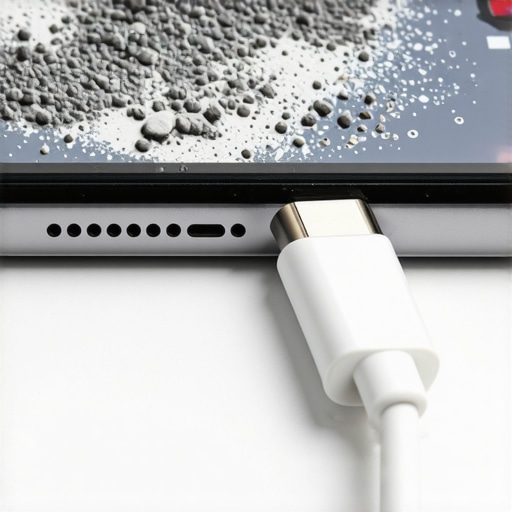
The reason your phone won’t charge even with a new cable
Think about the frustration of a dead device. You buy a premium cable, plug it in, and nothing happens. You assume the cable is faulty, but the reality is often found within the port or the internal charging circuit. This diagnostic failure is the exact same phenomenon I see every day as a master glass installer. Homeowners spend thousands on high-end triple-pane glass units only to find their rooms still drafty and their energy bills still climbing. The reason your phone won’t charge even with a new cable is the same reason your brand new window is failing: you are focusing on the peripheral instead of the system. In the world of glazing, the glass is your cable, but the rough opening and the installation method are your charging port. If the port is compromised, the best cable in the world is just a length of expensive plastic and copper.
“Installation is just as critical as the window performance itself. A high-performance window installed poorly will fail.” – AAMA Installation Masters Guide
The Condensation Crisis: A Master Glazier’s Diagnosis
A homeowner called me in a panic because their new windows were ‘sweating.’ I walked in with my hygrometer and showed them the humidity was 60%. It wasn’t the windows; it was their lifestyle and the failure of the house to breathe. They had just replaced their old, leaky wood windows with tight, high-performance vinyl units. Suddenly, the air that used to escape through the gaps in the sash was trapped. The moisture from their morning showers and boiling pasta had nowhere to go, so it hit the coldest surface: the glass. In this cold northern climate, when the outside temperature drops to zero, even the best Low-E coating on surface number three cannot prevent condensation if the interior humidity is high enough to reach the dew point. I had to explain that their ‘mobile service’ glass installer from the big box store forgot to mention that a tighter house requires a different approach to ventilation. They didn’t need a chip repair or a new window; they needed a dehumidifier and perhaps a heat recovery ventilator.
The Installation Autopsy: Why Most Windows Fail
When I perform an autopsy on a leaking window, the culprit is rarely a manufacturing defect in the glass. It is almost always a violation of the ‘Shingle Principle.’ Water must always be directed down and out. If your glass installer does not understand how to properly layer flashing tape, the window is doomed before the first shim is driven. We start with the rough opening. In our cold climate, the thermal bridge between the window frame and the house framing is a massive source of heat loss. I have seen ‘same-day’ installers just shove some fiberglass batt insulation around the frame and call it a day. That is a crime in my book. Fiberglass does not stop air; it’s a filter. You need low-expansion closed-cell foam that acts as both an insulator and an air seal.
The Science of the Sill Pan and Water Management
The most critical part of the installation is the sill pan. This is a pre-formed or site-fabricated flashing that sits at the bottom of the rough opening. Its job is to catch any water that gets past the primary seals and direct it out through the weep holes. If your installer is just ‘caulk-and-walking,’ they are likely blocking those weep holes with silicone. This traps water against the wood framing, leading to the black rot that destroys headers and jack studs. ASTM E2112 is very clear on this.
“Standard Practice for Installation of Exterior Windows, Doors and Skylights requires a continuous air barrier and proper integration with the water-resistive barrier to ensure long-term building envelope integrity.” – ASTM E2112 Summary
This is why a mobile service specializing in chip repair is not the same as a master glazier. One fixes a symptom; the other manages a system.
Thermal Dynamics: Surface Coatings and U-Factor
In the North, the enemy is heat loss. We focus on the U-Factor, which measures the rate of non-solar heat flow. The lower the number, the better the window stays warm. This is achieved through multi-layered silver coatings known as Low-E. For cold climates, we place this coating on surface number three (the inward-facing side of the inner pane). This reflects the long-wave infrared heat back into your living room. We also look at the spacer, the material that keeps the glass panes apart. Old-school aluminum spacers conduct cold like a heat sink. Modern warm-edge spacers use structural foam or stainless steel to break that thermal bridge, preventing the edge-of-glass condensation that leads to mold on the glazing bead.
The Math of Real Performance
People often ask if they should go for the same-day chip repair or a full frame replacement. If your frames are solid and level, a pocket replacement (or insert) might work, but you lose glass area. If there is any sign of moisture damage, a full frame tear-out is the only path. This allows us to inspect the rough opening, install a proper sill pan, and ensure the flashing tape is integrated with the house wrap. It is more expensive, but it is the only way to guarantee that your ‘charging port’ is ready for that ‘new cable.’ Don’t buy the marketing hype about ‘energy savings’ that pay for the windows in three years. It won’t happen. Buy the windows for the comfort, the silence of a high STC (Sound Transmission Class) rating, and the peace of mind that your wall isn’t rotting behind the siding. In the end, a window is a hole in your house that wants to let the outside in. My job is to make sure it only lets in what you want.