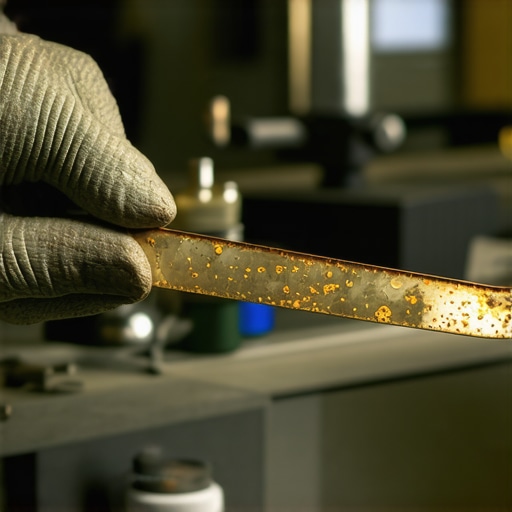
How to tell if your glass tech used a rusty blade
In the world of high-stakes glazing, there is a massive difference between a professional glass installer and a caulk-and-walk amateur who prioritizes speed over the structural integrity of your home. After twenty-five years in the trade, I have seen every shortcut in the book, but few are as insidious as the use of poorly maintained tools. If you are hiring a mobile service for a same-day chip repair or a full pane replacement, you must understand that the quality of the cut determines the life of the glass. A rusty blade is not just a sign of a sloppy tech: it is a harbinger of future seal failure and spontaneous breakage.
The Condensation Crisis: A Cautionary Tale
A homeowner recently called me in a panic because their new windows were ‘sweating’ only six months after installation. I walked in with my hygrometer and found the indoor humidity was a reasonable 35 percent, yet the interior glass surfaces were dripping. I pulled my specialized LED loupe out and inspected the edge of the glass under the glazing bead. What I found was a classic case of tool neglect. The glass tech had used a rusted cutting wheel that left a series of jagged conchoidal fractures along the edge. These microscopic chips had compromised the edge integrity, allowing the argon gas to escape and moisture to infiltrate the insulated glass unit. It was not a lifestyle issue: it was a failure of the installer to respect the physics of the glass edge. When I showed the homeowner the orange oxidation transfer on the glass margin, the look of betrayal was palpable. They had paid for a high-performance solution and received a ticking time bomb.
“Installation is just as critical as the window performance itself. A high-performance window installed poorly will fail.” – AAMA Installation Masters Guide
The Molecular Science of a Clean Score
To understand why a rusty blade is so damaging, you have to look at glass as a material. Glass is an amorphous solid that responds to tension. When a glass installer scores a pane, they are not actually cutting it in the traditional sense: they are creating a controlled fissure. A sharp, clean tungsten carbide wheel creates a precise line of tension that allows the glass to ‘snap’ cleanly along the molecular bond. However, when a blade is rusted or pitted, the wheel does not roll smoothly. It skips and chatters across the surface. This creates ‘venting,’ which are small, lateral cracks that move away from the score line. A rusty blade also introduces iron oxide particles into these micro-cracks. These impurities act as wedges, and as the glass expands and contracts due to thermal changes, these wedges drive the cracks deeper until the entire pane fails. This is especially critical in northern climates where the temperature differential between the interior and exterior can be seventy degrees or more. In these environments, U-Factor is the most important metric. A low U-Factor indicates better insulation, but that rating is only valid if the glass remains intact. If the edge is compromised by a bad cut, the thermal stress will eventually cause the glass to crack from the edge inward, a phenomenon known as a thermal stress fracture.
Four Red Flags of Poor Glazing Workmanship
You do not need to be a master glazier to spot a tech who is cutting corners. First, listen to the sound of the cut. A professional score sounds like a crisp, consistent ‘zip.’ If you hear a grinding or crunching sound, that blade is either dull or rusted. Second, inspect the waste glass. If the edges are jagged or look like they have been chewed, the tech is using a bad tool. Third, look for orange or brown staining along the glazing bead or the edge of the glass before it is set into the sash. This is a clear sign of rust transfer. Finally, check the alignment within the rough opening. An installer who does not care about their blades rarely cares about using proper shims or ensuring the sill pan is level. If the window is not plumb and square, the glass will be under constant twisting pressure, which exacerbates any micro-fractures caused by the rusty blade.
“Edge seal durability is directly impacted by the quality of the glass cut. Micro-cracks at the perimeter significantly increase the risk of seal failure and Argon gas dissipation.” – NFRC Technical Manual
The Physics of the North: Why Edge Integrity Matters
In cold climates like Minneapolis or Chicago, we fight a constant battle against heat loss and condensation. We use triple-pane glass with argon or krypton gas fills and Low-E coatings on Surface #3 to reflect heat back into the room. This technology relies on a perfect, airtight seal. When a mobile service tech rushes a chip repair or a pane replacement with a rusty blade, they are compromising that seal. The rough opening of your window is a dynamic environment. The wood or vinyl frame expands and contracts, and the glass must be able to move slightly within the glazing bead. If the edge of the glass is covered in micro-fractures from a bad blade, those cracks will grow every time the wind blows or the temperature drops. A clean cut ensures that the stress is distributed evenly. A jagged, rusted cut creates stress concentrators. This is why we insist on using stainless steel hardware and high-quality cutting oils to keep our tools in peak condition. We also pay close attention to the weep hole placement in the frame. If water cannot escape the frame, it will sit against the glass edge, and if those rusty micro-cracks are present, capillary action will pull that water into the seal, leading to premature fogging.
The Myth of the Cheap Same-Day Fix
Everyone wants a bargain, but in the glazing trade, you get what you pay for. A cheap mobile service often skips the critical steps of preparation. They might not use flashing tape or a proper drip cap because those materials cost money and take time to install correctly. They might use a ‘universal’ caulk instead of a high-grade silicone that is compatible with the spacer bar. But the most common shortcut is tool maintenance. A high-quality glazing wheel costs money, and a tech who is only charging fifty dollars for a service call cannot afford to replace their blades regularly. They will use that same rusted wheel until it literally stops turning. As a homeowner, you must demand better. Ask to see their tools. A professional glazier will be proud of their kit. They will have a clean, oiled glass cutter and a variety of shims to ensure the sash is perfectly balanced. They will understand the importance of the sill pan and the shingle principle of water management. Remember, your windows are a hole in your wall that is designed to keep the elements out. If the glass installer treats that hole with a rusty blade and a lack of respect for physics, you will be the one paying for it for years to come.


![3 Red Flags to Spot Before Your Glass Installer Starts [2026]](https://windshieldfixpro.com/wp-content/uploads/2026/02/3-Red-Flags-to-Spot-Before-Your-Glass-Installer-Starts-2026.jpeg)