Why your phone screen looks yellow after a mall kiosk repair
When you hand over your high-end mobile device to a mall kiosk technician, you are often participating in a high-stakes gamble with glass chemistry. As a master glazier with a quarter-century in the trade, I have seen the same failures in skyscraper curtain walls that I see in the jaundiced, yellow glow of a botched phone screen repair. The glass might look smooth, but beneath that surface, a battle of molecular stability is being lost. Most people assume a yellow tint is a software glitch or a ‘warm’ display setting, but the reality is often much more mechanical. It is the signature of a cheap polymer failing under thermal stress.
I remember sitting across from a mobile glass installer who was trying to pitch a high-volume contract for a local fleet. He was bragging about his same-day chip repair technique using a generic resin he bought in bulk. I had to pull out my own kit and explain why his ROI was actually a long-term liability. He was using a single-component epoxy that lacked UV stabilizers, which is the equivalent of using interior-grade caulk on an exterior window in the Arizona sun. Within three months, every one of those ‘repairs’ would turn the color of old parchment. The homeowner or vehicle owner thinks they got a deal, but they actually just bought a ticking clock of optical degradation.
“Installation is just as critical as the window performance itself. A high-performance window installed poorly will fail.” – AAMA Installation Masters Guide
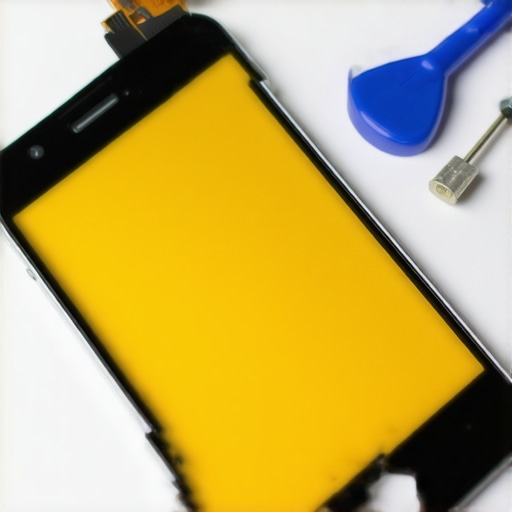
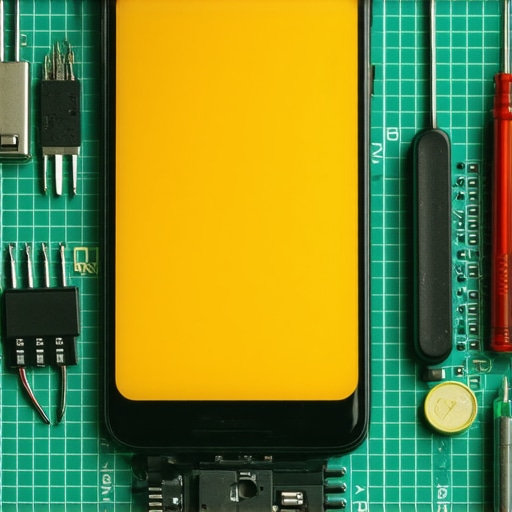
The primary culprit behind the yellowing of a repaired screen is the Liquid Optically Clear Adhesive, or LOCA. In professional glazing, we deal with laminates that must maintain clarity for decades. A phone screen is essentially a miniature laminated glass unit. When a mobile service technician performs a same-day glass installer task, they are often using a UV-curable adhesive to bond the new glass to the digitizer. High-quality LOCA is engineered to have a specific refractive index that matches the glass perfectly. This ensures that light passes through the layers without bending or scattering. However, cheap kiosk-grade resins often contain low-grade photoinitiators. When these chemicals are exposed to the heat of the phone’s battery or the UV rays from the sun, they undergo a process called photodegradation. The polymer chains break down and reform into chromophores, which absorb blue light and reflect yellow light. This is why the screen looks like it has been dipped in tea.
In the world of structural glazing, we look at the Rough Opening as the foundation of any installation. If the Rough Opening is not square, the glass will be under constant tension. Similarly, if a screen repair is not done in a clean-room environment, microscopic contaminants are trapped between the glass and the sensor. A master glass installer knows that even a single skin cell or a speck of dust can act as a seed for adhesive failure. When the phone heats up during a fast charge, the different rates of thermal expansion between the glass and the cheap adhesive cause microscopic pockets to form. These pockets reflect light inconsistently, further exacerbating the yellowing effect. We call this ‘delamination’ in the architectural world, and it is the death knell for any glass unit.
“Optical distortion and haze are the primary metrics for assessing the quality of a laminated glass assembly after environmental exposure.” – ASTM E2112 Standard Practice
If you are in a hot, high-UV climate like Phoenix or Miami, this problem is magnified. The Solar Heat Gain Coefficient (SHGC) of your phone glass is remarkably high because it is designed for visible transmittance, not heat rejection. This means the internal components can reach temperatures that would melt the glazing bead on a standard vinyl window. A cheap adhesive is not built to withstand that thermal cycle. It starts to ‘outgas,’ and those gases are trapped under the glass, creating a hazy, yellowed appearance that no software update can fix. When I inspect a window for a fail, I look at the weep hole to see if moisture is escaping. In a phone, there is no weep hole for the gases to escape. They stay trapped, cooking the adhesive from the inside out.
The mobile service appeal is strong because everyone wants their device back within the hour. But speed is often the enemy of precision. A proper chip repair or glass replacement requires a specific curing duration under a precise 365nm UV wavelength. Many mall kiosks use handheld lamps with declining bulb intensity. If the adhesive is under-cured, it remains chemically active and sensitive to ambient light. If it is over-cured, it becomes brittle. Both scenarios lead to the dreaded yellow tint. As a glazier, I never shim a window without checking the level three times. Most kiosk repairs don’t even check the alignment of the glass to the frame, leading to stress points that eventually cause the adhesive to pull away from the edges.
When choosing a glass installer, whether for your home or your handheld device, you must look past the same-day promise. Ask about the brand of resin they use. Ask if they use a vacuum chamber to remove air bubbles before curing. If they look at you like you are speaking a foreign language, they are a ‘caulk-and-walk’ technician. They are there to make the glass look good long enough for you to walk out of the mall. True glass mastery is about the long-term physics of light and heat. Do not settle for a jaundiced screen when the science of clear glazing is readily available to those who know what to ask for. Your mobile service should be more than a quick fix; it should be a restoration of the original engineering tolerances.