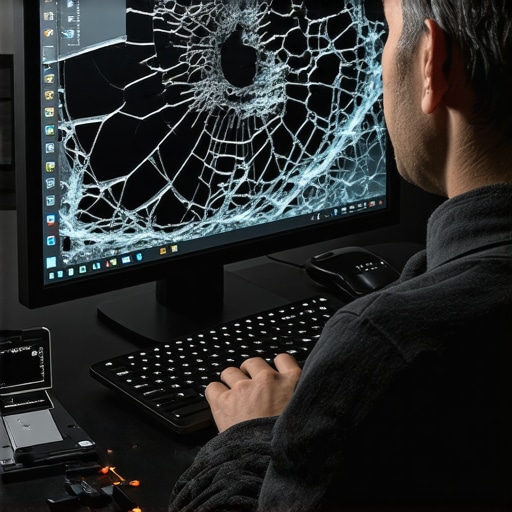
The danger of using superglue on phone glass
The Instinctive Mistake: Why a Quick Fix Often Becomes a Total Loss
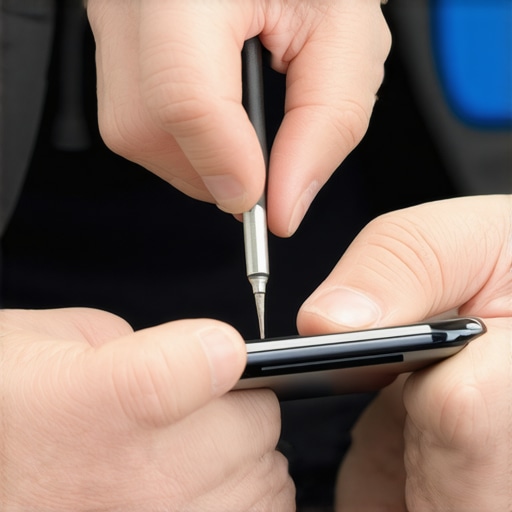
I walked into a local coffee shop last week and saw a regular customer hunched over his smartphone, meticulously dabbing a toothpick into a bottle of off-the-shelf superglue. He was trying to fill a hairline fracture that spanned the top corner of his device. I watched for a moment, the same way I watch a DIYer try to caulk over a rotted windowsill without addressing the flashing. I had to step in. I told him about a homeowner I dealt with recently who tried a similar stunt with a cracked tempered glass sidelite on his front door. He thought he could ‘stabilize’ the crack. Instead, the cyanoacrylate—the technical name for superglue—reacted with the laminate interlayer, turned the entire corner of the glass an opaque, milky white, and eventually caused the pane to shatter due to uneven thermal tension. Mobile phone glass, typically aluminosilicate, is far more temperamental than your standard residential float glass, and applying a rigid, moisture-sensitive adhesive to it is a recipe for catastrophic failure.
The Chemistry of Failure: Cyanoacrylate vs. Modern Glass
When we talk about professional chip repair, we are looking at the molecular compatibility of the filler and the substrate. Superglue is a monomer that polymerizes when it hits moisture. In the glazing world, we understand that moisture is everywhere, even in the ‘Rough Opening’ of a tiny screen crack. The moment you apply superglue to that phone glass, it begins an exothermic reaction. While you might not feel the heat, the localized thermal stress at the tip of the crack is significant. Furthermore, cyanoacrylate is notoriously brittle. Glass is a material that, despite its appearance, is constantly under stress and subject to thermal expansion. In a southern climate where your phone might go from a 70-degree air-conditioned room to 105-degree radiant heat outside, the expansion coefficient of the glass and the glue will never match. The glue will pull at the edges of the crack as it hardens, often acting as a wedge rather than a bridge, effectively driving the crack further across the ‘Sash’ of your device.
“Installation is just as critical as the window performance itself. A high-performance window installed poorly will fail.” – AAMA Installation Masters Guide
This principle from the American Architectural Manufacturers Association applies perfectly here. The ‘installation’ of a repair material determines the longevity of the glass. Using the wrong material is the same as using the wrong ‘Glazing Bead’—it might hold for an hour, but it will fail the moment the environment shifts.
The Refractive Index Mismatch and ‘Blooming’
One of the most frustrating aspects of using superglue for a chip repair is the visual ruin. Professional glass installers use specialized UV-cured resins that are engineered to match the refractive index of the glass. This means light passes through the repair at the same angle it passes through the glass, making the crack nearly invisible. Superglue has a completely different refractive index. When light hits the repair, it scatters, highlighting the crack rather than hiding it. In high-humidity environments, you also face the ‘blooming’ effect. The vapor from the cyanoacrylate reacts with the moisture in the air and settles back onto the glass as a white, powdery residue. Unlike a ‘Weep Hole’ in a window frame designed to let moisture escape, your phone is a sealed environment. Once that vapor gets under the glass or into the bezel, it can fog the front-facing camera or the proximity sensors, turning a simple glass repair into a hardware nightmare.
The Structural Reality: Why Mobile Service and Proper Resins Matter
When a professional glass installer performs a same-day chip repair, they aren’t just ‘gluing’ the glass. They are using a vacuum-injection process to remove the air from the fracture. In the glazing trade, we know that trapped air is the enemy of clarity and strength. By removing the air and replacing it with a low-viscosity, high-tensile resin, the structural integrity of the glass is partially restored. Superglue is too thick; it ‘caps’ the crack, trapping air and dirt inside. This trapped air acts as a point of failure. If you drop the phone again, the ‘Sill Pan’ or frame of the phone will flex, and that trapped air pocket will expand, causing the crack to spider-web instantly. A mobile service professional uses tools to ensure the resin reaches the very tip of the fracture, something a toothpick and a bottle of hardware-store glue can never achieve.
“The use of improper sealants or adhesives in a glazing system can lead to premature failure of the glass and surrounding components due to chemical incompatibility.” – ASTM E2112 Standard Practice
Environmental Logic: Why Your Climate Dictates the Repair
If you are in a hot, humid climate, the danger of superglue is even higher. High humidity accelerates the curing process of cyanoacrylate to a point where it becomes unstable. In places like Florida or Texas, the Solar Heat Gain on a black phone screen can reach temperatures that soften cheap adhesives, causing them to off-gas. This gas can migrate behind the glass and damage the sensitive OLED or LCD layers. Professional resins are thermally stable; they are designed to withstand the same temperature swings that a high-performance window would face. When you opt for a professional glass installer, you are paying for a material that understands the physics of ‘Solar Heat Gain’ and thermal movement. You wouldn’t use wood glue to fix a ‘Muntin’ on a vinyl window, so why use hobby glue on a high-tech ceramic-glass hybrid?
The Conclusion: Trust the Trade, Not the Hack
The urge to fix a screen yourself is understandable, but as someone who has spent decades analyzing ‘Rough Opening’ tolerances and glass stress points, I can tell you that the short-term savings are a myth. A failed superglue attempt often makes a professional resin repair impossible because the crack is now contaminated with cured plastic. This forces a full, expensive screen replacement. Instead of reaching for the glue, look for a mobile service that offers same-day chip repair. These technicians use the same logic we use in high-rise glazing: manage the stress, match the chemistry, and ensure the seal is permanent. Don’t let a 99-cent bottle of glue turn a minor chip into a total loss. Trust the precision of a professional glass installer who knows that when it comes to glass, there is no such thing as a ‘Seamless’ fix without the right science behind it.