Why same-day service prevents total glass replacement
The sound of a stone hitting your glass is not just a nuisance; it is the sound of structural integrity being compromised at a molecular level. As a master glazier with a quarter-century in the field, I have seen thousands of these minor incidents evolve into catastrophic failures simply because the owner waited for a convenient time rather than an immediate one. When we talk about glass, we are talking about an amorphous solid that manages immense stress through a balance of tension and compression. A chip is a disruption of that balance. If you do not engage a professional glass installer for a chip repair immediately, you are essentially watching a slow-motion collapse of your glazing system. This is why mobile service and same-day intervention are the only logical responses to a compromised window or windshield.
The Thermal Stress Crisis: A Case Study
I recall a specific instance that perfectly illustrates the danger of delay. A homeowner called me in a panic because their new windows were ‘sweating.’ I walked in with my hygrometer and showed them the humidity was 60%. It wasn’t the windows; it was their lifestyle. However, the high indoor humidity combined with a microscopic chip on the exterior pane created a thermal nightmare. As the interior heat pressed against the glass and the exterior temperature dropped below the dew point, the moisture began to infiltrate the chip. That night, the temperature plummeted. The water inside the fracture froze, expanded, and by 6:00 AM, that tiny chip had radiated into a three-foot crack. This could have been prevented with a same-day resin injection. Instead, they were looking at a full sash replacement.
“Installation is just as critical as the window performance itself. A high-performance window installed poorly will fail.” – AAMA Installation Masters Guide
The Physics of the Fracture: Why Speed is Everything
To understand why same-day service is mandatory, we must look at the physics of brittle fracture. When a projectile hits glass, it creates a Hertzian cone or a star-break. This point of impact becomes a stress riser. In the glazing industry, we know that the edges of a window are held firmly by the glazing bead and the sash, while the center is free to flex. This creates a trampoline effect. Every time the wind blows or a door closes, the glass flexes. If there is a chip, the stress concentrates at the sharp tip of that crack. Without immediate chip repair, the cumulative fatigue of these micro-flexes will inevitably lead to a full propagation of the crack. A mobile service technician can arrive and stabilize this stress point before the next thermal cycle begins.
The Role of the Glass Installer and Proper Materials
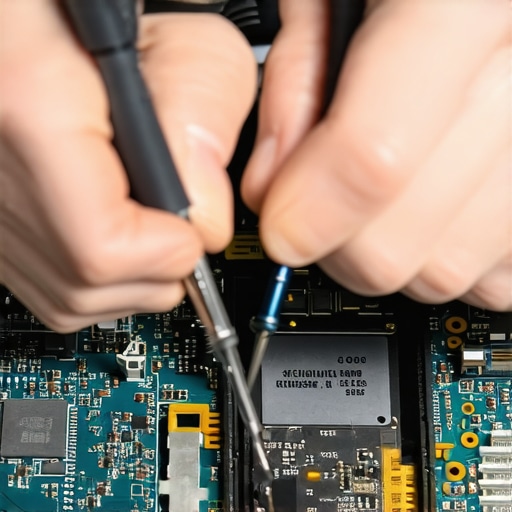
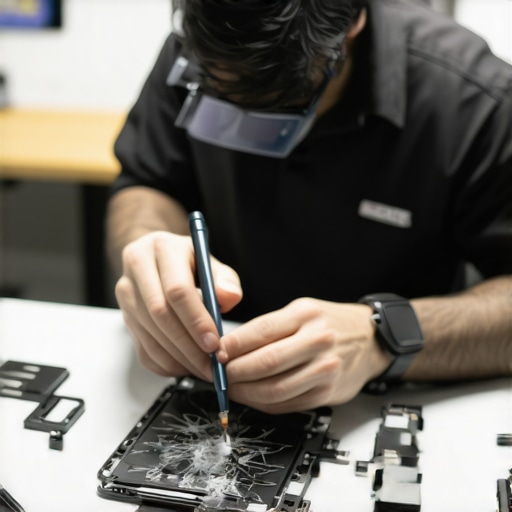
A true glass installer does not just smear some resin on the surface and call it a day. We use vacuum-pressure systems to evacuate the air from the rough opening of the crack. If air remains, the repair will be visible and structurally weak. We then inject a specialized UV-curable resin with a refractive index that matches the glass. This is technical work that requires an understanding of the glass’s chemical composition. We also look at the surrounding components. Is the weep hole clear? Is the sash properly aligned? If the window is not sitting correctly in the frame, the uneven pressure will make any chip repair futile. We often find that windows are poorly shimmed, leading to twisting forces that turn minor chips into major headaches.
Climate Logic: Northern Heat Loss and Expansion
In colder climates, the enemy is the U-Factor and the differential expansion between the inner and outer panes of an Insulated Glass Unit (IGU). When you have a chip on the outer pane, you have broken the primary defense against the elements. The U-Factor, which measures the rate of non-solar heat loss, is compromised as the thermal bridge becomes more pronounced at the site of the damage. If you have a Low-E coating on surface number three to reflect heat back inside, the presence of a crack on the outer pane can lead to condensation within the unit, eventually causing the desiccant in the spacer to saturate. Once that happens, you have ‘blown’ the seal, and the entire unit is garbage. Same-day chip repair is the only way to protect the argon or krypton gas fill that keeps your energy bills low.
“Surface temperature fluctuations of the glazing unit can lead to significant stress concentrations at the site of existing glass defects, necessitating immediate stabilization to prevent total failure.” – NFRC Technical Bulletin
The Mobile Service Advantage
Why do we emphasize mobile service? Because the glass is most vulnerable when it is in transit or exposed to the fluctuating temperatures of an open environment. A mobile glass installer brings the laboratory to you. We control the environment around the chip using heat shields and moisture-wicking tools. This ensures that the resin bonds to the silica at a molecular level. If you wait and drive the vehicle or leave the window exposed to a rainstorm, the debris and oils that enter the crack will prevent the resin from ever forming a perfect bond. You cannot simply ‘wash out’ a crack once it has been contaminated; at that point, the structural integrity is permanently diminished.
Maintenance Beyond the Repair
Once the chip is stabilized, the glazier’s job is to ensure the rest of the system is functioning. We check the flashing tape and the sill pan to ensure that if any water does manage to bypass the glazing bead, it has a clear path out through the weep hole. Many installers skip these steps, but in my 25 years, I have learned that water management is a science of the ‘shingle principle.’ Everything must overlap so that gravity is your friend, not your enemy. A same-day service call is an opportunity for a total system health check, preventing not just glass replacement but potential rot in the rough opening of your walls.