Why your phone touch is clicking on its own
The Ghost in the Machine: A Glazier’s Perspective on Mobile Glass
In the world of high-performance glazing, we often say that glass is a liquid that forgot how to flow. But when that glass is the interface of your smartphone, it becomes a complex multi-layered assembly that rivals any high-rise curtain wall in technical sophistication. When your phone starts clicking on its own, a phenomenon often called ghost touching, it is not a haunting. It is a mechanical and electrical failure of the glazing system. As a master glazier with 25 years in the field, I look at your mobile device and see a specialized Insulated Glass Unit (IGU) with a critical Rough Opening tolerance issue. Whether you are dealing with a microscopic chip or a delaminating digitizer, the physics remain the same as a failing window in a luxury penthouse.
The Condensation Crisis: A Narrative Autopsy
A homeowner called me in a panic because their new windows were ‘sweating.’ I walked in with my hygrometer and showed them the humidity was 60 percent. It wasn’t the windows; it was their lifestyle, specifically their penchant for indoor tropical plants and long steam showers. I see the same thing with mobile service calls. A client brought in a device that was performing random actions, opening apps and typing gibberish. They swore it had never been near water. I opened the casing and looked at the internal seals. The ‘Sill Pan’ of the device, the area near the charging port, showed clear signs of moisture ingress. The micro-climate inside their humid bathroom had reached the Dew Point inside the phone, causing the Indium Tin Oxide (ITO) layer to short-circuit. Like a window with a failed seal, the environment had won because the installation of the protective glazing bead had been compromised by heat and humidity.
“Installation is just as critical as the window performance itself. A high-performance window installed poorly will fail.” – AAMA Installation Masters Guide
The Physics of the Digitizer: Surface #2 and Surface #3
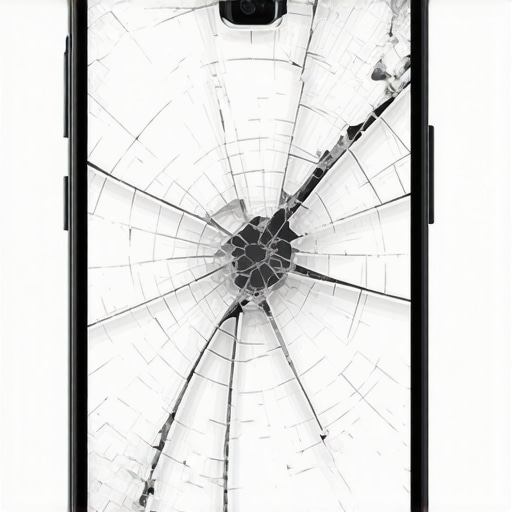
To understand why your touch screen is failing, we have to perform a ‘Glazing Zooming’ on the assembly. Your phone screen is not just one piece of glass. It is a laminate. The top layer is typically an aluminosilicate glass, chemically strengthened through an ion-exchange process where larger potassium ions replace smaller sodium ions. Beneath this is the digitizer, a grid of microscopic Indium Tin Oxide traces. In the glazing industry, we identify glass surfaces by number. Surface #1 is the exterior. Surface #2 is the underside of that top pane. This is where the magic happens. When you touch the glass, your finger creates a capacitive bridge. However, if there is a chip repair needed, that structural break interrupts the electrical field. A chip is not just a cosmetic flaw; it is a fracture in the structural integrity of the ‘sash’ assembly. In a Southern climate, like Texas or Florida, the Solar Heat Gain Coefficient (SHGC) is king. When your phone sits in a hot car, the aluminum frame (the Rough Opening) expands at a different rate than the glass. This thermal expansion puts pressure on the Glazing Bead, the adhesive holding the screen in place. If that pressure is uneven, it creates ‘parasitic capacitance,’ tricking the phone into thinking a finger is pressing down when it is actually just the frame pinching the glass.
The Installation Autopsy: Why Same-Day Repairs Matter
When you seek a glass installer for a mobile device, you are looking for more than just a part swapper. You are looking for someone who understands water management and structural tolerances. Most ghost touching issues stem from a ‘Pocket Replacement’ mentality where a cheap screen is slapped into a bent frame. If the Rough Opening is not perfectly plumb and square, the new glass will be under constant stress. This is why we use Shims in window installation, and why we must use precision gaskets in mobile repair. A tiny fragment of old adhesive left in the Sash will create a high point. This high point becomes a fulcrum. Every time the phone warms up, the glass flexes over that point, triggering a touch event. This is why professional mobile service requires a clean-room environment and surgical precision. The use of Flashing Tape in a window prevents water ingress; in a phone, we use Optically Clear Adhesive (OCA) to bond the layers. If this bond has even a microscopic void, moisture will find it, and the resulting change in the dielectric constant will lead to the ‘clicking on its own’ behavior you are experiencing.
“Proper sealing of the glazing perimeter is essential to prevent environmental ingress that degrades optical and functional performance.” – NFRC Performance Standards
The Solution: Beyond the Quick Fix
If your phone is acting possessed, stop looking for a software fix and start looking at the glazing. Check the perimeter for chips. A chip repair should be handled immediately to prevent the crack from migrating, much like a stone chip in a windshield or a crack in a storefront window. For those in high-heat environments, the Low-E coating on Surface #2 of some high-end screens can actually be damaged by internal overheating, leading to permanent digitizer failure. When you opt for same-day service, ensure the technician is not just performing a ‘caulk-and-walk.’ They must verify that the Weep Holes (the speakers and ports) are clear and that the new assembly is seated without tension. The ROI on a high-quality glass installation is measured in years of frustration-free use. Do not settle for subpar glazing in the most important window you own, the one that connects you to the world.