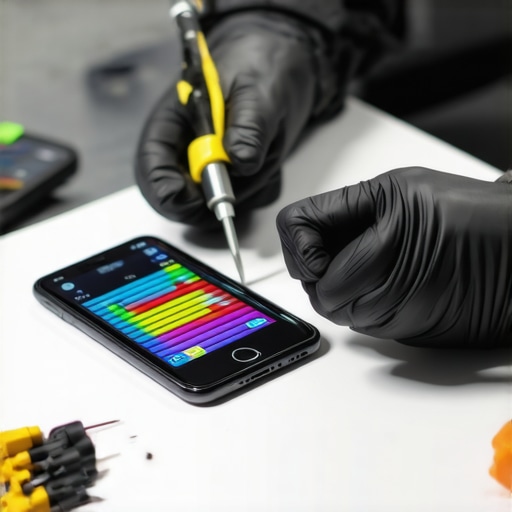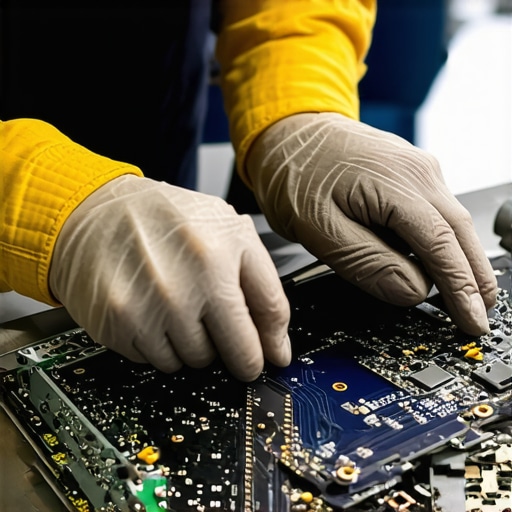
The reason your tech wears gloves during a screen swap
The moment a professional glass installer steps out of their mobile service van, you might notice a specific ritual. They reach for a pair of high-grip nitrile or specialized lint-free gloves before they even touch the frame of your window. This is not merely about keeping their hands clean or avoiding the occasional sharp edge of a glazing bead. It is a fundamental requirement of modern material science. When you request a same-day screen swap or a chip repair, you are witnessing a high-stakes interaction between human physiology and advanced chemical coatings. If an installer touches the surface of a high-performance Insulated Glass Unit (IGU) with bare hands, they are depositing lipids and acidic oils that can, over time, interact with the metallic oxides used in Low-E coatings or create a permanent ‘ghost’ image that only reveals itself during specific dew point conditions.
“Installation is just as critical as the window performance itself. A high-performance window installed poorly will fail.” – AAMA Installation Masters Guide
I recall a specific instance in the frozen suburbs of northern Wisconsin. A homeowner called me in a panic because their brand new, expensive windows were ‘sweating’ and showing strange, cloudy handprints every morning. They were convinced the vacuum seal had failed on day one. I walked into the living room with my hygrometer and a high-intensity thermal camera. The hygrometer showed the indoor humidity was hovering at 62 percent, which is far too high for a sub-zero environment. More importantly, the ‘clouds’ they saw were actually fingerprints left by a previous budget-rate installer who didn’t believe in gloves. Those oils had created a microscopic barrier that altered the surface tension of the glass, causing condensation to cling differently to those spots. It was not a mechanical failure of the window; it was a failure of the installation process. This is why I am so adamant about technical precision from the moment we arrive on-site.
The Molecular War on Surface Number Three
In colder northern climates, we prioritize the U-Factor, which measures the rate of non-solar heat loss. To keep a home warm during a brutal January, we often place the Low-E coating on Surface #3. In the world of glazing, we count surfaces from the outside in. Surface #1 is the exterior face, Surface #2 is the inner face of the outer pane, and Surface #3 is the outer face of the inner pane. By placing a microscopically thin layer of silver or tin oxide on Surface #3, we reflect the long-wave infrared radiation (your furnace’s heat) back into the room. However, these coatings are incredibly sensitive. Even though they are sealed inside the IGU, the handling of the glass during a repair or a screen swap requires total sterility. If a tech is performing a mobile service chip repair, they must ensure no skin oils contaminate the resin. The resin used for chip repair is engineered to match the refractive index of the glass perfectly. A single drop of sweat or oil can disrupt the polymerization process, leading to a repair that is visible to the naked eye or, worse, one that fails when the glass expands and contracts during a thermal shift.
Understanding the Physics of the Same-Day Chip Repair
Mobile service for glass is about more than just convenience; it is about stopping a crack before the stress of a temperature gradient turns a small chip into a full-length fracture. When we perform a chip repair, we are essentially performing surgery. We use a vacuum tool to extract the air from the ‘bullseye’ or ‘star’ break. This is a critical step because any trapped air will reflect light and make the repair visible. Once the air is removed, we inject a clear, UV-curable resin. The reason we emphasize the speed of same-day service is that the rough opening of a window or the structural integrity of an automotive windshield is under constant pressure. In a cold climate, the difference between the 70-degree interior and the sub-zero exterior creates a massive thermal load. If that chip is not filled with a resin that has a compatible expansion coefficient, the glass will eventually yield. This is also where the choice of materials matters. Cheap resins will yellow over time due to UV exposure, but professional-grade materials remain optically clear for the life of the glass.
“The NFRC provides consistent ratings on window, door, and skylight products which allow architects and homeowners to compare the energy performance of products.” – NFRC Performance Standards
Beyond the Glass: The Role of the Sash and the Weep Hole
While the glass gets most of the attention, a professional glass installer knows that the frame is the unsung hero of the thermal envelope. During a screen swap, we often inspect the sash and the weep holes. Many homeowners think the holes at the bottom of their window frames are manufacturing defects. In reality, they are weep holes designed to allow water to exit the glazing pocket. If these holes are clogged by debris or improperly painted over by a ‘caulk-and-walk’ contractor, water will back up into the rough opening. This leads to the exact scenario every homeowner fears: hidden rot in the header and the sill pan. When we handle a window, we check the shim placement to ensure the frame hasn’t bowed. A bowed frame prevents a proper seal, rendered even the most expensive triple-pane unit useless against a draft. We look at the glazing bead to make sure it is seated firmly against the glass, preventing air infiltration that can bypass the insulated unit entirely. Our goal is to manage the dew point. If we can keep the surface temperature of the interior glass above the dew point of the indoor air, condensation will never form. This is achieved through a combination of high-performance glass, warm-edge spacers, and an airtight installation that respects the physics of the wall assembly.
The True Cost of Mobile Service Excellence
When you hire a glass installer for a mobile service, you aren’t just paying for a piece of glass or a new screen. You are paying for the 25 years of experience that tells us exactly how much torque to apply to a mounting screw and why a specific type of flashing tape is required for a certain siding profile. We don’t just ‘fill the hole.’ We analyze the solar heat gain coefficient (SHGC) to determine if your west-facing windows need a different coating than your north-facing ones. We ensure the muntins are aligned and the operable parts of the window move without friction. Precision is the only way to guarantee that the energy savings promised on a sticker actually manifest in your monthly utility bill. The next time you see a technician pull on those gloves for a simple screen swap, remember that they are protecting the complex chemistry and physics that keep your home comfortable, dry, and efficient. We handle every pane as if it were a precision instrument, because in the world of high-performance glazing, it actually is.