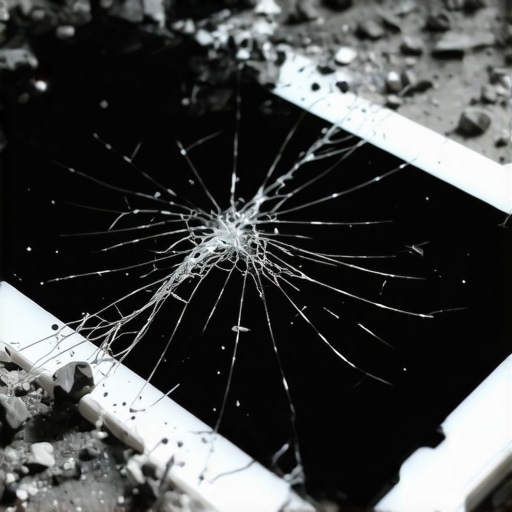
The hidden cost of ignoring a hairline crack on your tablet
The Deceptive Silence of a Glass Fracture
In my twenty-five years as a glass installer, I have seen the same mistake repeated from high-rise curtain walls to the delicate screens of mobile devices. A homeowner or professional looks at a hairline crack and sees a cosmetic annoyance. They see a thin, silver thread running across the surface and think they have time. As a master glazier, I see a structural failure. I see a compromise in the tension profile of the material that is actively fighting to expand. A window is a managed hole in a wall, and a tablet screen is a managed window into a device’s soul. When that glass is breached, the physics of your environment begin to work against you immediately.
A homeowner called me in a panic because their mobile device was ‘sweating’ on the inside of the glass. I walked in with my hygrometer and showed them the humidity in their office was sixty percent. It wasn’t that the tablet was defective; it was that they had ignored a microscopic chip near the bezel for three months. That chip had allowed the internal environment of the device to reach its dew point. It wasn’t the glass’s fault; it was their lifestyle and the failure to understand that glass is a sealed system. Once that seal is broken, you are no longer looking at a screen; you are looking at a localized weather system waiting to short out your motherboard.
“Installation is just as critical as the window performance itself. A high-performance window installed poorly will fail.” – AAMA Installation Masters Guide
The Physics of the Fracture: Why It Won’t Stay Small
To understand why you need same-day mobile service for a chip repair, you have to understand the molecular stress of chemically strengthened glass. Unlike the standard soda-lime glass I might put in a cheap basement window, tablet glass undergoes an ion-exchange process. Large potassium ions are forced into the surface to replace smaller sodium ions, creating a state of high compression. This compression is what makes the glass tough, but it also means the glass is a coiled spring. When you introduce a hairline crack, you create a stress concentrator. The tip of that crack is infinitesimally small, meaning the pressure applied to it—even from the simple thermal expansion of a hot afternoon—is multiplied by thousands. This is why a crack seems to ‘grow’ overnight while the tablet is just sitting on your nightstand.
If you are in a southern climate like Phoenix or Miami, your tablet is facing a constant battle with Solar Heat Gain. We talk about SHGC (Solar Heat Gain Coefficient) in the glazing industry because it dictates how much radiant energy passes through a pane. When your tablet sits in a car or near a sunny window, the frame—often aluminum or plastic—expands at a different rate than the glass. This is what we call a coefficient of thermal expansion mismatch. In a healthy device, the adhesive or the glazing bead absorbs this stress. However, if there is a crack, that expansion becomes a lever. The heat from the sun enters the glass (Surface #1) and, without a proper Low-E coating to reflect the long-wave infrared radiation, the internal components bake. This heat expansion pushes against the rough opening of the tablet frame, driving the crack further across the display.
The Hidden Danger: Capillary Action and Internal Rot
Most users don’t realize that a hairline crack is a vacuum for moisture. Through a process called capillary action, liquid—whether it is sweat from your hands or high humidity in the air—is sucked into the crack. Once the moisture is inside, it begins to corrode the delicate ribbon cables and the digitizer layer. I have performed many an installation autopsy where the glass was relatively intact, but the ‘insides’ were black with oxidation. This is why waiting even forty-eight hours to call a glass installer for a chip repair can be the difference between a sixty-dollar fix and a four-hundred-dollar replacement.
“Even minor surface imperfections can lead to catastrophic failure under cyclical thermal loading if the moisture barrier is compromised.” – ASTM E2112 Standard Practice
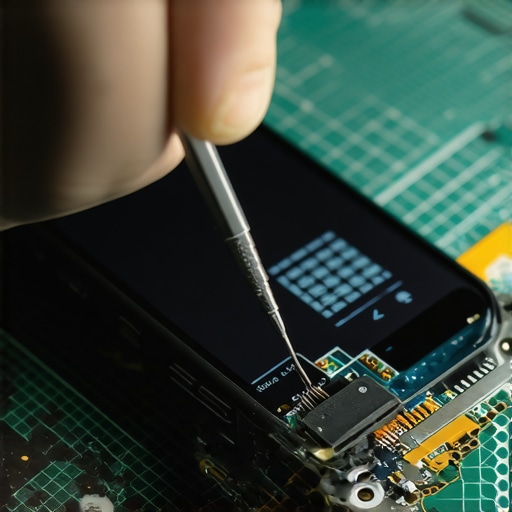
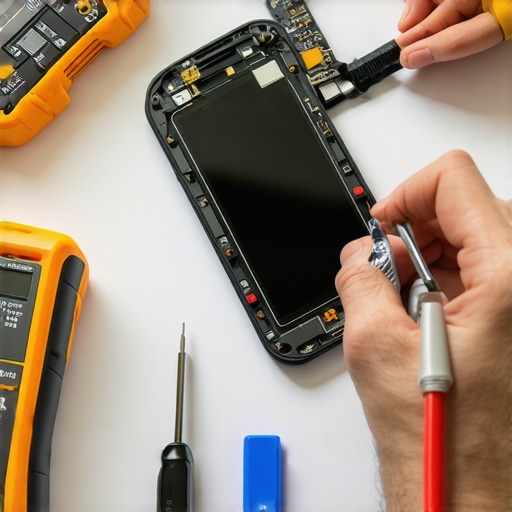
When I talk about a ‘sill pan’ in a window installation, I’m talking about a secondary defense against water. Your tablet doesn’t have a sill pan. The glass is the only line of defense. The moment that glass is compromised, the ‘rough opening’ of your device’s internal chassis is exposed. We use flashing tape and high-grade sealants in residential glazing to prevent this exact type of ingress, but on a tablet, you are relying on a micron-thin layer of adhesive. A professional mobile service can often perform a chip repair that fills the void with a UV-cured resin, effectively ‘glazing’ the wound and restoring the structural integrity of the tension layer.
Material Science: Vinyl vs. Fiberglass vs. Mobile Frames
In the window world, we choose frames based on stability. Vinyl is cheap but expands like crazy. Fiberglass is stable because it is made of glass fibers and moves at the same rate as the pane. Your tablet is likely a mix of aluminum and glass. Because these materials are so different, the ‘glazing bead’—the area where the glass meets the frame—is under constant stress. If you have a hairline crack, every time you pick up the device, you are applying torque. You are essentially shimming the crack open. A glazier knows that you never shim a window too tight, or the glass will crack. By using a cracked tablet, you are essentially doing the reverse; you are using the frame to put pressure on the glass, which will inevitably lead to a total ‘sash’ failure.
The ROI of Immediate Repair
The math is simple, though many high-pressure salesmen will try to tell you otherwise. The ROI (Return on Investment) for a same-day repair is nearly infinite because it prevents the total loss of the asset. We are not talking about triple-pane krypton-filled windows where the payback takes a century. We are talking about a twenty-minute mobile service visit that saves a thousand-dollar device. Do not wait for the crack to reach the edge of the frame. Once the crack reaches the ‘glazing bead’ or the bezel, the structural integrity is gone, and the glass will likely begin to flake, creating a safety hazard for your fingers and a clear path for debris to enter the electronics.
In the trade, we have a saying: ‘Water always wins.’ Whether it is a leak in a poorly flashed window or moisture entering a tablet screen, if you give nature a path, it will take it. Treat your mobile device with the same respect you would a high-performance window. If the seal is broken, the system is failing. Don’t be the person who ignores the hairline fracture only to find their device dead after a humid day. Get a professional glass installer to look at it, ensure the moisture barrier is intact, and keep your tech as clear and functional as a well-installed clerestory window.