Why professional glass techs use a primer before the glue
In the world of professional glass repair and installation, there is a massive divide between a handyman with a tube of silicone and a certified glass installer who understands the molecular physics of adhesion. When you call a mobile service for a same-day chip repair or a structural glass replacement, you might notice the technician meticulously applying a dark or clear liquid to the edges before any adhesive touches the surface. This isn’t just for show. This is the application of a primer, a critical chemical bridge that determines whether your glass stays bonded for twenty years or fails within twenty days.
“Installation is just as critical as the window performance itself. A high-performance window installed poorly will fail.” – AAMA Installation Masters Guide
I recall a specific case I handled three years ago. I was called out to perform a forensic inspection on a structural glazing failure at a mid-rise commercial site. The previous installer had skipped the primer step, relying on the ‘all-in-one’ promise of a cheap urethane. I pulled a section of the glazing bead away, and the glass literally fell out of the sash with almost zero resistance. The metal frame was clean, but the glass had zero bond. Why? Because the installer didn’t understand surface energy. They relied on the rough opening tolerances and the shim placement to keep things aligned, but the actual chemical bond was non-existent. The moisture in the air had infiltrated the interface, causing a complete adhesive failure. This is why I am intolerant of ‘caulk-and-walk’ contractors who ignore the chemistry of the trade.
The Molecular Science of Glass Priming
To understand why a primer is mandatory, you have to look at glass on a microscopic level. Glass is an amorphous solid, primarily composed of silica. It is naturally hydrophilic, meaning it loves water. In any environment with humidity, a thin, invisible layer of water molecules attaches to the glass surface. If you apply a standard adhesive directly to that moisture, you aren’t bonding to the glass; you are bonding to the water. A professional primer contains silane coupling agents. These molecules are bifunctional. One end of the molecule is designed to bond with the inorganic silica of the glass, while the other end is designed to cross-link with the organic polymers in the adhesive, such as polyurethane or silicone.
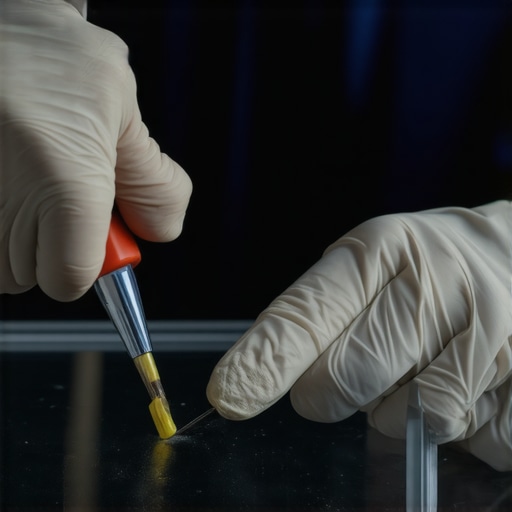
When a mobile service tech applies primer during a chip repair, they are essentially transforming the surface of the glass from a water-loving state to an adhesive-loving state. This process, known as ‘wetting,’ allows the adhesive to spread into the microscopic peaks and valleys of the glass surface. Without it, the adhesive sits on top of the surface like a bead of water on a waxed car. This is especially vital in same-day services where the glass might be exposed to the elements shortly after the repair. The primer accelerates the creation of a secure boundary layer that prevents the weep hole from backing up or moisture from migrating into the rough opening.
Environmental Variables: Why Climate Dictates Technique
The role of the primer changes depending on your local climate. In northern regions where heat loss and condensation are the primary enemies, the primer must maintain its integrity through extreme thermal expansion and contraction. Glass and aluminum frames expand at different rates. Without a primed, flexible bond, the sash will eventually pull away from the glass, creating drafts that no amount of flashing tape or a sill pan can fix. In these cold climates, we focus on the U-Factor and ensuring the bond prevents any warm air from hitting the cold glass surface, which would trigger the ‘Condensation Crisis.’
“The interface between the fenestration product and the rough opening must be sealed to prevent air and water infiltration, which is the primary cause of structural degradation.” – ASTM E2112 Standard Practice
Conversely, in hot southern climates, the enemy is Solar Heat Gain and UV degradation. The black primer you see on many glass installations is often a UV-rated frit primer. It blocks the sun’s ultraviolet rays from reaching the adhesive. Polyurethane is sensitive to UV; without that black primer layer, the sun would eventually ‘cook’ the glue, turning it brittle and causing it to release from the glass. This is why a glass installer will insist on a specific ‘black-out’ primer even if the glass is already tinted. It is about protecting the chemical bond from the radiant heat that can reach temperatures of 150 degrees Fahrenheit on a dark glass surface in July.
The Mobile Service Reality: Cleanliness vs. Speed
In a mobile service environment, the technician is fighting a battle against dust, wind, and humidity. This is why the cleaning and priming phase takes longer than the actual ‘gluing.’ A professional will use a specialized glass cleaner to remove oils and then apply the primer to ‘etch’ the surface slightly and provide a fresh, reactive layer. If you see a tech just wipe the glass with a dry rag and start pumping a caulking gun, you are looking at a future failure. The primer also serves as a flash-off agent, ensuring that any residual cleaning chemicals are evaporated before the adhesive is applied. In same-day chip repair, the resin used must have a refractive index matching the glass, and the primer ensures that the resin stays ‘anchored’ within the break, preventing the chip from spreading into a full-blown crack when the vehicle hits a pothole or experiences a sudden temperature shift.
The Shingle Principle and Water Management
Water management is a science of gravity and surface tension. In any window installation, whether it’s an operable casement or a fixed storefront, we follow the ‘Shingle Principle.’ This means everything must overlap so that water is always directed downward and outward. The primer-adhesive bond is the final line of defense in this system. If the bond at the top of the glazing bead fails, water will sit in the channel. If the weep hole is clear, it might drain, but if the bond is weak, that water will eventually find its way into the rough opening, rotting out the wood headers or corroding the steel studs. This is why the ‘Installation Autopsy’ almost always reveals a lack of proper surface preparation. Professionals don’t just ‘seal’ a window; they engineer a moisture-proof barrier that respects the laws of physics.