The best way to store a phone with a cracked screen safely
The Structural Reality of Compromised Glass
As a master glazier with over two decades in the field, I look at a cracked smartphone screen and I do not see a minor inconvenience; I see a structural failure in a high-tension membrane. Whether we are talking about a massive curtain wall on a skyscraper or the aluminosilicate glass on your mobile device, the physics of glass remain constant. When that surface is breached, you have transitioned from a controlled environment to a state of systemic instability. Most people assume that a crack is static, but any professional glass installer will tell you that glass is always in motion, reacting to thermal loads and mechanical stress. Storing a phone with a cracked screen safely requires more than just tucking it into a drawer; it requires an understanding of how moisture, temperature, and pressure interact with fractured edges.
The Condensation Crisis: A Master Glazier’s Perspective
A few months ago, I had a client come to me with a device that had been ‘stored’ in a basement after a minor drop. They were in a panic because the screen was ‘sweating’ from the inside, much like a poorly installed double-pane window with a failed seal. I pulled out my hygrometer and showed them that the ambient humidity in their storage area was hitting 65 percent. It was not a defect in the glass manufacture; it was a failure of the user to understand that a crack is an open weep hole into the sensitive electronics of the device. Just as I tell homeowners that high interior humidity will destroy their window sills, I told this client that their ‘safe’ storage spot was actually a slow-motion drowning for their phone’s motherboard. When the hermetic seal of the glass is broken, the dew point inside the phone changes. Moisture enters through the fracture via capillary action, and once it is behind the glazing bead or the bezel of the phone, it has nowhere to go but into the circuitry.
“Installation is just as critical as the window performance itself. A high-performance window installed poorly will fail.” – AAMA Installation Masters Guide
This industry standard applies perfectly to mobile glass. The ‘installation’ of your protective measures after a crack determines whether the device survives until a same-day repair can be scheduled. If you ignore the breach, you are essentially leaving a window sash open during a rainstorm and hoping the carpet stays dry.
Thermal Stress and Crack Propagation
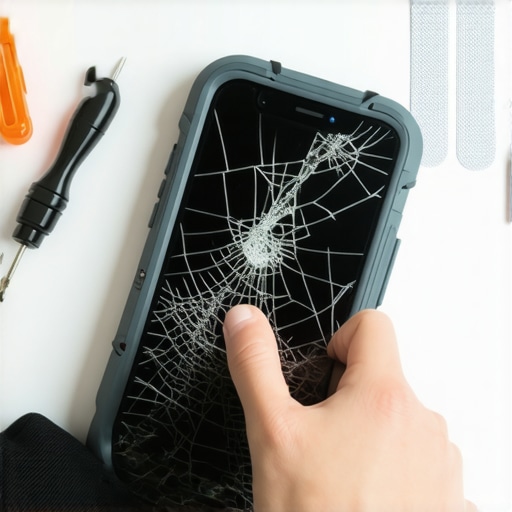
To understand why storage temperature matters, we have to look at the ‘Glazing Zoom’ of the material. Mobile screens are typically chemically strengthened through an ion-exchange process that creates a deep compression layer. This is why they are so tough, but also why they shatter so violently once the tension is released. If you store a cracked phone in an environment with high ‘Delta T’ (temperature difference), you are asking for trouble. In colder climates, such as those in the northern states, taking a phone from a warm house into a freezing car causes the glass to contract. Because the crack has already created a point of stress concentration, the thermal contraction is not uniform. The crack will ‘run’ just like a shim being driven into a tight rough opening. This is why mobile service technicians often see ‘spider-webbing’ occur overnight when a phone is left in a mailbox or a cold garage. You must maintain a stable, room-temperature environment to prevent the glass from migrating further across the display.
The Anatomy of a Temporary Seal
If you cannot get to a chip repair specialist immediately, your first goal is to stabilize the ‘glazing.’ In the window world, we use flashing tape to manage water excursion. For a phone, a high-quality clear packing tape or a dedicated screen shield acts as a temporary sill pan, catching any external contaminants before they reach the digitizer. However, do not mistake this for a permanent fix. Much like a ‘tin man’ salesman trying to sell you on the idea that a bit of caulk can fix a rotted muntin, anyone telling you that tape is a long-term solution is leading you toward a more expensive replacement. The tape is there solely to prevent skin oils and atmospheric moisture from entering the fracture site. I have seen countless DIYers try to use superglue, which is a disaster. Superglue has a different expansion coefficient than glass and can actually pull the glazing bead away from the frame as it cures, leading to a total loss of the LCD or OLED panel.
“Proper flashing and water management are the only defenses against structural rot in any fenestration system.” – ASTM E2112 Standard Practice
Why Professional Chip Repair is Essential
When we talk about chip repair, we are talking about refractive index matching. A professional glass installer uses a specific UV-curable resin that mimics the optical properties of the glass. This is not just about looks; it is about structural integrity. The resin is injected into the fracture, filling the microscopic voids and bonding the edges together to stop the crack from spreading. This is a mobile service that should be utilized the moment the damage occurs. Waiting even a few days allows dust and pocket lint to get into the crack, which prevents the resin from bonding properly, much like how dirt on a window frame prevents flashing tape from adhering. If you are looking for a same-day solution, you need to keep the phone in a lint-free, anti-static bag until the technician arrives.
Conclusion: Respect the Glass
In the end, glass is a liquid that acts like a solid, and it demands respect. Whether it is an operable window in your living room or the screen in your hand, once the integrity is compromised, the clock is ticking. Store the device in a dry, temperate location, apply a temporary surface seal to prevent contamination, and call a professional for a same-day mobile service. Don’t be the person who waits until the ‘rot’ sets in; treat your mobile glass with the same technical rigor you would apply to the windows of your home. A small chip is a manageable chip repair, but a neglected crack is a full-frame replacement waiting to happen.