The hidden reason your touch screen is ghost clicking
The Ghost in the Glass: A Master Glazier Perspective on Ghost Clicking
For over two decades, I have been the guy people call when glass fails. Usually, it is a foggy triple-pane window or a shattered storefront, but lately, the complaints have shifted. Homeowners and drivers are coming to me with a new kind of haunting: the ghost click. Your touch screen starts opening apps on its own, your car’s infotainment system recalibrates the GPS while you are driving, or your tablet acts like a poltergeist is at the helm. Most people assume it is a software bug, but after 25 years of looking at the way glass interacts with its environment, I can tell you the culprit is almost always physical. It is a failure of the glazing system, the adhesive, or the thermal management of the assembly.
A window, whether it is in your living room or on your dashboard, is a hole in a structure that must manage heat, light, and moisture. When that glass is also a touch interface, the tolerances for error drop to nearly zero. If the Rough Opening of the device frame puts even a millimeter of uneven pressure on the glass, or if the sealant has begun to degrade, you are going to see phantom inputs. This is not a digital glitch; it is a mechanical failure of the glass assembly.
The Condensation Crisis: A Case Study in Moisture Intrusion
I recall a specific incident where a client called me in a panic because the large-format touch display in their sunroom was ‘possessed.’ They had spent thousands on a custom installation, and now it was unusable. I walked in with my hygrometer and a thermal camera. I didn’t look at the code; I looked at the edges. I showed them that the local humidity in that room was peaking at 65%. It wasn’t a software error. I found that the installer had used a standard Glazing Bead that didn’t allow for proper expansion, and more importantly, they hadn’t accounted for the dew point. Microscopic amounts of moisture were condensing between the glass and the digitizer layer because the perimeter seal was compromised. The water molecules were conductive enough to fool the capacitive sensors into thinking a finger was present. It wasn’t the glass; it was the lifestyle of the room and the failure of the installer to create a moisture-proof seal.
“Installation is just as critical as the window performance itself. A high-performance window installed poorly will fail.” – AAMA Installation Masters Guide
The Physics of Thermal Expansion and Ghost Inputs
In hot climates, particularly in the South, the primary enemy is Solar Heat Gain. When a glass surface sits in the sun, it absorbs radiant energy. In a touch screen, this causes the glass and the underlying substrate to expand. The problem is that glass, plastic, and metal all have different coefficients of thermal expansion. If the glass is Shimmed too tightly into its frame without enough room for movement, the expansion creates localized pressure points. These pressure points change the electrical capacitance of the screen at that specific coordinate. To the device, that pressure looks exactly like a touch.
We see this constantly in mobile service calls for automotive glass. A car sits in the Texas sun, the dashboard reaches 150 degrees, and the screen delaminates. This is where same-day chip repair and glass replacement specialists often fail. If they use a cheap urethane or a Flashing Tape equivalent that cannot handle the thermal cycling, the bond breaks down. You need a thermally broken frame and adhesives that maintain their Elongation properties from sub-zero temperatures to the heat of mid-July.
The Science of the Surface: Why Coatings Matter
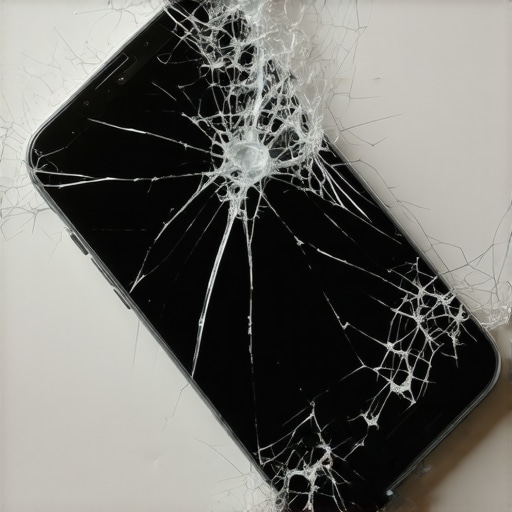
Most modern touch screens use a multi-layer glass sandwich. In the glazing world, we talk about Surface #1 (the exterior), Surface #2 (the inside of the first pane), and so on. In a touch screen, the Low-E coating logic is reversed. We are not just trying to reflect infrared radiation; we are trying to manage the electrical field. If a chip repair is done poorly, or if the Glazing Bead is damaged, contaminants can enter the layer between the glass and the sensor. Even a tiny crack can allow salts and oils to migrate through Capillary Action, creating a permanent bridge that triggers ghost clicks.
“Water penetration is the single most common cause of premature building envelope failure, and the same principles apply to any framed glass assembly.” – ASTM E2112 Standard Practice
The Same-Day Trap and Proper Curing
The industry is obsessed with speed. Everyone wants a mobile service that can do a chip repair or a screen replacement in an hour. But as a glazier, I know that chemistry cannot be rushed. Many of the high-performance adhesives used to bond glass to touch sensors require a specific humidity and temperature range to cure properly. When an installer does a ‘caulk-and-walk’ job, they leave behind tiny Weep Holes in the adhesive layer that shouldn’t be there. Over time, these voids fill with humidity, and the ghost clicking begins. A professional glass installer knows that the bond is only as good as the preparation of the Rough Opening. We clean with isopropyl, we use primers, and we ensure the Sash or frame is perfectly square before the glass ever touches the adhesive.
How to Diagnose Your Glass Poltergeist
If you are experiencing ghost clicks, stop looking at your settings and start looking at your glass. Is there a Sill Pan equivalent where moisture could be pooling at the bottom of the screen? Is the frame warped? If you apply light pressure to the edge of the glass, does the ghost clicking stop or move? This indicates a mechanical pressure issue. If the ghost clicking only happens when the device is hot, you have a thermal expansion failure. In these cases, a same-day chip repair won’t help; you likely need a full re-bond of the glass assembly using materials that can handle the local climate’s SHGC demands. Don’t let a salesman tell you it is a software issue. Physics doesn’t lie: if the glass isn’t stable, the interface won’t be either.