Why your mobile repair tech avoids working in the rain
The Moisture Conflict: Why Precision Glazing Demands Dry Conditions
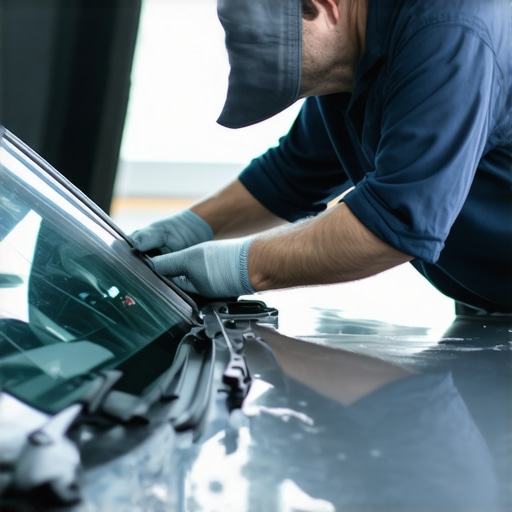
As a Master Glazier with a quarter-century in the field, I have seen every imaginable failure in glass installation and repair. From high-rise curtain walls to a simple residential sash, the enemy is always the same: moisture. When a homeowner or vehicle owner calls for a same-day chip repair or mobile service, there is often frustration when the technician postpones due to a light drizzle. This is not about the technician’s comfort; it is about the uncompromising physics of adhesion and the molecular behavior of glass surfaces. A window is a complex thermal barrier, and introducing water into a repair environment is a recipe for catastrophic delamination.
“Installation is just as critical as the window performance itself. A high-performance window installed poorly will fail.” – AAMA Installation Masters Guide
A homeowner called me in a panic because their new windows were ‘sweating.’ I walked in with my hygrometer and showed them the humidity was 60%. It wasn’t the windows; it was their lifestyle and the lack of proper ventilation. However, that same moisture that accumulates on the interior of a pane is the same antagonist that ruins a glass installer’s work during a mobile service. When we talk about chip repair, we are dealing with the refractive index of the glass and the structural integrity of the Polyvinyl Butyral (PVB) interlayer. If a single droplet of water enters that break, it occupies the space intended for the resin. Because water is incompressible and has a different surface tension than the acrylic resins we use, the bond will never achieve the necessary cross-linking to stabilize the glass.
The Science of Surface Tension and Adhesion
To understand why your glass installer stays in the van during a storm, we must zoom into the microscopic level of the glass. Glass is naturally hydrophilic, meaning it attracts water. When rain hits a damaged area, capillary action pulls that moisture deep into the fracture, reaching past the Surface #1 and into the laminate. If we attempt a same-day repair in these conditions, we are essentially trying to glue wet surfaces together. Most high-performance resins are hydrophobic; they are designed to repel water. If the technician injects resin into a damp Rough Opening of a chip, the resin will bridge over the moisture, creating a microscopic void. [image placeholder] This void is a ticking time bomb. As the sun comes out and the glass reaches its Dew Point, that trapped water expands, increasing the internal pressure on the crack and causing it to spider-web across the entire surface.
Thermal Expansion and the Coefficient of Failure
In the world of professional glazing, we constantly calculate the coefficient of linear thermal expansion. Glass expands and contracts at a different rate than the metal or vinyl frame it sits within. This is why we use a Shim and specific Glazing Bead techniques to allow for movement. In a chip repair, the resin must mimic the expansion rate of the surrounding glass. When rain is present, the evaporative cooling effect drastically lowers the surface temperature of the glass, causing it to contract. If a technician applies a hot resin to cold, wet glass, the thermal shock alone can finish the job the rock started, cracking the pane instantly. This is why a controlled environment is not a luxury; it is a technical requirement for any mobile service that prides itself on quality over speed.
“Standard practice for installation of exterior windows, doors and skylights requires that all surfaces be clean, dry, and free of frost or moisture to ensure proper sealant adhesion.” – ASTM E2112
The Role of the Sill Pan and Flashing Tape in Water Management
Even in architectural applications, the ‘shingle principle’ dictates our movements. We install every window with a Sill Pan and Flashing Tape to ensure that any water that does bypass the primary seal is directed back out through a Weep Hole. In a mobile repair scenario, we do not have the luxury of these secondary drainage systems. The repair itself must be the final barrier. If the sealant or resin is compromised by rain during the curing process, the structural integrity is lost. I have seen countless ‘caulk-and-walk’ jobs where a technician tried to beat the rain. The result is always the same: within six months, the resin yellows and pulls away from the glass because the anaerobic curing process was interrupted by H2O molecules.
Why Same-Day Service Requires Optimal Windows
We understand the urgency of a chip repair. It is a safety issue. However, a true glass installer knows that a same-day promise is secondary to the laws of chemistry. To provide a repair that lasts the lifetime of the glass, the environment must be stabilized. If we are working on an Operable sash or a windshield, we must ensure that the primers can ‘flash-off’ properly. This is the process where the solvent evaporates, leaving behind a bonding agent that allows the urethane or resin to grip the silicate structure of the glass. Rain increases the local humidity to 100%, effectively stopping the flash-off process. You end up with a ‘gummy’ bond that will fail the first time the vehicle hits a pothole or the house settles against the Rough Opening.
The Master Glazier’s Verdict on Rainy Day Repairs
Do not trust a service that claims they can perform a high-quality chip repair in a downpour without a sheltered bay. They are ignoring the fundamental requirements of the NFRC and AAMA standards. A professional will wait for a dry window of time or move the work to a controlled environment. This patience ensures that the Muntin bars remain aligned, the Sash stays seated, and the glass remains clear. When you choose a mobile service, you are paying for expertise, and part of that expertise is knowing when the physics of the world say ‘no.’ We prioritize the long-term safety of the installation over a convenient but flawed quick fix. True glazing is a science of managing the elements, not fighting them when the odds are stacked against a permanent bond.
{“@context”:”https://schema.org”,”@type”:”HowTo”,”name”:”How to Prepare for a Mobile Glass Repair Service”,”step”:[{“@type”:”HowToStep”,”text”:”Ensure the glass surface is completely dry and free from rain or dew.”},{“@type”:”HowToStep”,”text”:”Keep the vehicle or window sash in a shaded, dry area if possible.”},{“@type”:”HowToStep”,”text”:”Do not use any glass cleaners or chemicals on the chip before the tech arrives.”},{“@type”:”HowToStep”,”text”:”Check for internal moisture or fogging between the panes which may indicate a seal failure.”}]}