Why your phone screen has a permanent white spot
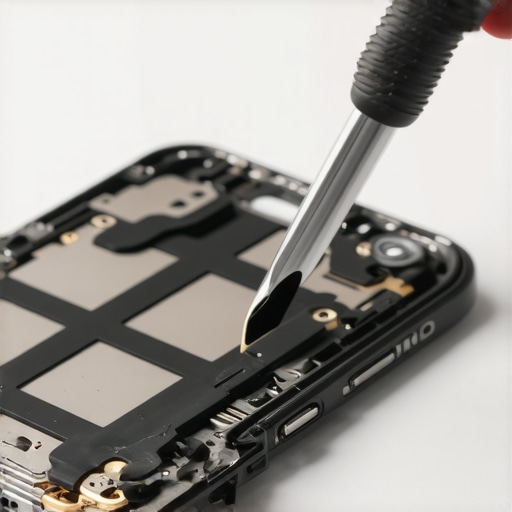
You look down at your device and see it: a stubborn, milky blemish that won’t wipe away. In my 25 years as a master glazier, I have seen this exact phenomenon across scales, from the microscopic layers of a smartphone display to the massive glass curtain walls of a downtown skyscraper. While a phone screen is a complex sandwich of liquid crystals and backlights, the physics of that permanent white spot often mirror the failures I see in high-performance residential windows. It is usually a result of localized pressure, moisture intrusion, or thermal stress that has permanently altered the material structure. As someone who has spent decades diagnosing why glass fails, I can tell you that whether it is a handheld screen or a double-pane IGU (Insulated Glass Unit), the culprit is almost always a breach in the system integrity.
The Anatomy of the Spot: A Narrative of Failure
A homeowner once called me in a panic because their brand-new, high-efficiency windows were ‘sweating’ and showing strange white, cloudy patches inside the glass. I walked in with my hygrometer and showed them the humidity in the room was a staggering 60 percent. It wasn’t the windows that were broken; it was their lifestyle and the lack of a proper ventilation strategy. I explained that the ‘white spot’ they were seeing was the beginning of desiccant failure. Inside the spacer bar of a window, there are small beads designed to soak up moisture. Once those beads are saturated, they can no longer hold water, and you get ‘silica haze’ or permanent mineral deposits on the glass. This is the same logic as a phone screen getting a spot from moisture; once the seal is compromised, the environment wins. In the world of high-speed mobile service and chip repair, people want a same-day fix, but as a master glazier, I know that true glass integrity starts at the installation phase, not the repair phase.
“Installation is just as critical as the window performance itself. A high-performance window installed poorly will fail.” AAMA Installation Masters Guide
The Physics of Pressure and Newton’s Rings
Why does a white spot appear when you press too hard on a screen? In the glazing industry, we call this deflection. When two panes of glass in an IGU are subjected to intense atmospheric pressure changes without proper capillary tubes, they can bow inward. If they touch, you get an optical phenomenon called Newton’s Rings, which looks like an oily or white spot in the center. In a phone, that pressure often comes from a bloated battery or an external impact that has compressed the layers of the display. This localized stress disrupts the alignment of the liquid crystals. In a window, this same pressure can lead to a ‘stress crack’ or a permanent haze. A mobile service glass installer might offer a quick chip repair for your car, but for your home, you need to understand the thermal stress involved. If you are in a southern climate like Phoenix or Texas, the Solar Heat Gain Coefficient (SHGC) is your primary enemy. High radiant heat causes the air inside an IGU to expand, putting immense pressure on the primary seal. If that seal fails, you’re looking at a permanent fog that no same-day service can simply wipe away.
The Installation Autopsy: Why Systems Fail
When I perform an installation autopsy on a leaking or spotted window, I start at the Rough Opening. A window is only as good as the hole it sits in. If the installer didn’t use a proper Sill Pan or failed to apply Flashing Tape in a shingle-lap fashion, water will eventually find its way behind the Nailing Fin. This is where the ‘caulk-and-walk’ installers fail. They rely on a bead of sealant to do the work of a mechanical flashing system. When water gets trapped against the Glazing Bead, it eventually works its way into the primary seal of the IGU. Once moisture hits the Low-E coating, which is typically a microscopically thin layer of silver on Surface #2, it begins to oxidize. That oxidation looks exactly like the white spots or ‘ghosting’ you might see on a damaged LCD screen. It is a chemical reaction that cannot be reversed. You can’t just call for a quick chip repair when your silver coating has turned into a clouded mess.
“The NFRC rating system provides the only reliable way to compare the energy performance of different window products.” NFRC Homeowner Guide
Climate Logic: Choosing the Right Shield
In hot, southern climates, we prioritize blocking the sun before it even enters the glass. This means placing the Low-E coating on Surface #2 (the inner face of the outer pane). This reflects long-wave infrared radiation back to the street. If you choose the wrong glass for your climate, the thermal expansion can be so violent that it causes the glass to ‘spall’ or flake. This is why I am skeptical of high-pressure salesmen who try to sell the same product in Maine as they do in Florida. A window in the South needs a low SHGC to prevent the ‘greenhouse effect’ inside the home. If your glass installer doesn’t talk about the ‘edge effect’ and the type of warm-edge spacer being used, they aren’t a glazier; they’re a laborer. The spacer is what keeps the panes apart and manages the thermal bridge between the Sash and the glass. If that spacer is a cheap aluminum U-channel, you will get condensation at the edges, leading to mold on the Muntin and eventual rot of the frame.
Water Management and the Shingle Principle
Every window installation must follow the ‘Shingle Principle’: materials must overlap so that water is always directed out and down. This starts with the Drip Cap at the top of the window and ends with the Weep Hole in the bottom of the frame. If a mobile service technician tells you they can fix a chip or a spot in your window without addressing the flashing, they are ignoring the root cause. When I see a white spot on a screen or a window, I see a failure of the barrier. In a window, the Operable parts must be perfectly aligned with a Shim to ensure the weatherstripping compresses evenly. If the window is out of square in the Rough Opening, one side will be too tight and the other too loose, allowing air and moisture to bypass the seals. This is the technical reality of glazing: it is a game of millimeters and moisture management.
Final Verdict from the Glazing Table
Whether you are dealing with a permanent white spot on your phone or a fogged-out pane in your living room, the lesson is the same: protection is cheaper than replacement. In the glazing trade, we don’t believe in miracles; we believe in ASTM E2112 standards and proper material science. Don’t be fooled by ‘same-day’ promises that don’t address the structural integrity of the seal. If you want glass that lasts 30 years, focus on the U-factor, the SHGC, and, most importantly, the person holding the caulking gun and the level.