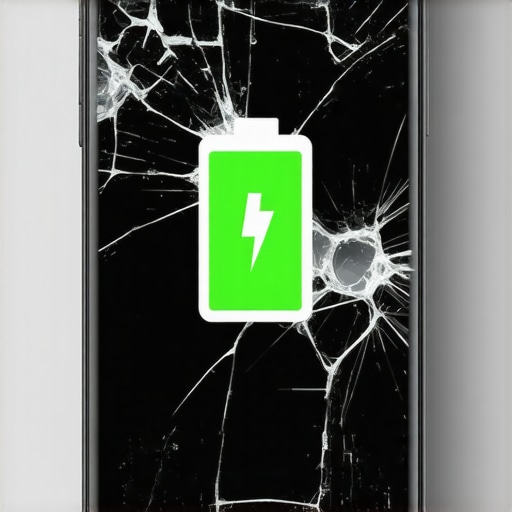
Why your phone battery drains faster after a screen drop
The Thermal Entropy of Cracked Glass
In my twenty-five years as a master glazier, I have seen every manner of window failure imaginable. From high-rise curtain walls that hum in the wind to historic wood sash units that have been painted shut for a century, the physics of glass remain constant. People often ask me about the technical parallels between different types of glass failure. Consider the modern smartphone. When you drop your phone and the screen shatters, you might notice the battery begins to drain at an accelerated rate. This is not a coincidence; it is a symptom of compromised system integrity. In the world of fenestration, a chip in your window or a failed seal in your insulated glass unit (IGU) acts exactly like that cracked phone screen. It is a breach in the thermal envelope that forces your HVAC system to work overtime, effectively draining your home’s energy battery.
A glass installer understands that glass is never truly solid; it is an amorphous solid that manages energy transfer. When a chip occurs, it creates a thermal bridge. In cold climates like Chicago or Minneapolis, where the interior is a hard-earned 70 degrees and the exterior is a brutal sub-zero, that tiny chip becomes a highway for molecular vibration. We talk about the U-Factor, which is the rate of heat loss. A lower U-Factor means better insulation. When that glass is compromised, your U-Factor spikes. You are no longer managing heat; you are losing the battle against entropy. This is why same-day mobile service for chip repair is not just about aesthetics. It is about stopping the bleed before the internal components of your home, your furnace and your cooling system, burn out from the strain.
“Installation is just as critical as the window performance itself. A high-performance window installed poorly will fail.” AAMA Installation Masters Guide
The Condensation Crisis: A Narrative of Failure
A homeowner called me in a panic because their new windows were ‘sweating.’ I walked in with my hygrometer and showed them the humidity was 60%. It was not the windows; it was their lifestyle, combined with a misunderstanding of how a sealed environment works. They had high-performance triple-pane units, but they were cooking without a vent hood and showering with the door open. The windows were so efficient that they were trapping every ounce of moisture inside. This is the irony of modern glazing. We build these incredibly tight envelopes using flashing tape and precise shims within the rough opening, but if the homeowner does not understand the dew point, they think the glass is failing. I had to explain that the condensation on the interior of the glass was actually proof that the windows were doing their job. They were holding the thermal line, but the air inside was over-saturated. When we see moisture between the panes, however, that is a different story. That is a total seal failure, usually caused by a poor glazing bead installation or a blocked weep hole that allowed water to sit against the primary seal for too long.
The Physics of the IGU: Argon, Krypton, and Surface #3
To understand why a chip or a crack is a disaster, you have to understand what is happening inside the glass. A standard double-pane window is not just two sheets of glass. It is a pressurized environment. Most high-end units are filled with Argon gas, which is denser than air and provides superior thermal resistance. When you have a chip, you are not just looking at a mark on the glass; you are looking at a puncture in a gas tank. Once the Argon escapes and is replaced by ambient, moisture-laden air, the window is dead. The desiccant inside the spacer bar will try to absorb the incoming moisture, but it has a finite capacity. Once it is saturated, you get that permanent fogging that no amount of cleaning can fix.
In northern climates, we focus heavily on the Low-E coating on Surface #3. For those who do not know, we count glass surfaces from the outside in. Surface #1 is the exterior face, Surface #2 is the inside of the outer pane, Surface #3 is the outside of the inner pane, and Surface #4 is the interior face you touch from your living room. By placing the Low-E coating on Surface #3, we reflect the long-wave infrared radiation (your heat) back into the house. If that pane is cracked, the coating is often compromised by oxidation. It is like the digitizer on your phone failing after a drop. The glass might still be there, but its ability to process and manage energy is gone. This is why mobile service technicians prioritize chip repair; it is a race against the oxidation of the metallic silver layers within the glass assembly.
The Anatomy of a Proper Installation
I am often called to inspect ‘failed’ windows only to find that the product is fine, but the installer was a ‘caulk-and-walk’ amateur. A window must be leveled with a precision shim and integrated into the house’s water management system. Every window needs a sill pan. Without a sill pan, any water that gets past the primary seals has nowhere to go but into your framing. I have seen rough openings that were rotted out entirely because the installer relied on a bead of cheap sealant instead of proper flashing tape and mechanical fasteners. The window is an operable part of the building, it moves, it expands, and it contracts. If it is pinned too tightly or not supported correctly, the glass will eventually stress-crack.
“The primary purpose of a window installation is to provide a weather-resistive barrier that integrates with the building envelope.” ASTM E2112 Standard
When we talk about chip repair and same-day service, we are talking about maintaining the structural integrity of the sash. A chip is a point of concentrated stress. As the sun hits the glass, the pane undergoes thermal expansion. The edges of the glass are usually cooler than the center, creating a temperature gradient. That gradient creates stress. In a perfect sheet of glass, the stress is distributed. In a chipped sheet, the stress finds the fracture and drives it across the pane. This is why a small stone chip on a cold morning becomes a massive crack by the afternoon. It is the same reason a phone screen can look fine after a drop, but a few hours later, the crack has traveled across the entire display. The physics of tension and compression do not care about your schedule.
Understanding the NFRC Label
If you are looking at replacement, do not listen to the salesman; look at the NFRC label. You need to understand the U-Factor and the Solar Heat Gain Coefficient (SHGC). In a cold climate, you want the lowest U-Factor you can afford, typically below 0.27. The SHGC is a bit of a balancing act. You want some solar gain in the winter to help heat the house, but too much will bake you in the summer. We look for a ‘tuned’ house where the south-facing windows have a different SHGC than the north-facing ones. A master glazier looks at the house as a machine, not just a series of holes to be filled with vinyl and glass. We consider the muntin placement, the glazing bead material, and the depth of the rough opening. Every detail matters because, just like your phone, once the glass fails, the whole system starts to degrade. Same-day repair is the only way to maintain the vacuum-like efficiency of a modern home. Do not let a small chip turn into a total system failure. Restore the seal, protect the Argon, and keep your thermal battery charged.