The truth about liquid screen protectors
The Science of Surface Hardness and Liquid Application
As a master glazier with a quarter-century in the field, I have seen every fad come and go, from the early days of basic annealing to the modern complexities of low-emissivity coatings. When people ask about the truth about liquid screen protectors, they often expect a simple yes or no. However, glass is never simple. A window is a complex thermal boundary, and your phone screen is no different. It is a substrate that must manage impact, abrasion, and clarity. To understand if a liquid wipe-on solution actually works, we have to look at the molecular level, much like we do when analyzing the performance of a high-performance storefront window. This is not just a thin film; it is a question of chemical bonding and surface tension.
A few years ago, I dealt with what I call the Condensation Crisis. A homeowner called me in a panic because their new windows were ‘sweating’ and the glass seemed to be failing at the edges. I walked in with my hygrometer and showed them the humidity was 60 percent. It wasn’t the windows; it was their lifestyle. They were using a humidifier at full blast while keeping the house at 75 degrees in the dead of winter. This relates directly to screen protectors because people often mistake surface behavior for structural integrity. They see water beading on a liquid protector and assume the glass is now invincible. Just like that homeowner, they are looking at the symptom, not the physics of the glass itself.
“Installation is just as critical as the window performance itself. A high-performance window installed poorly will fail.” AAMA Installation Masters Guide
Molecular Bonding vs. Physical Barriers
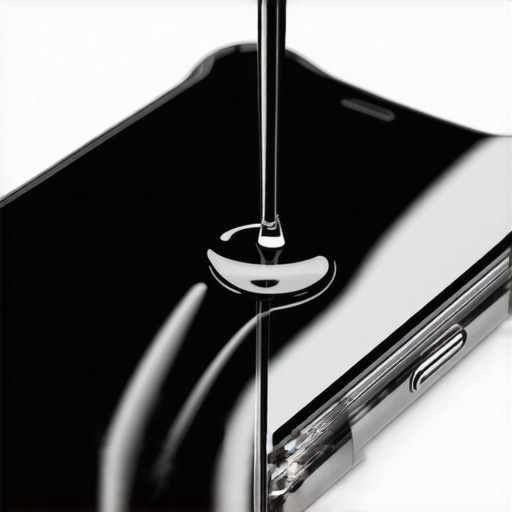
Liquid screen protectors are typically composed of Silicon Dioxide (SiO2). In the glazing industry, we use similar nanotechnologies for self-cleaning glass and hydrophobic coatings. The liquid fills the microscopic valleys that exist on even the smoothest glass surface. When you look at a screen under a microscope, it is not a flat plane; it is a series of peaks and valleys. By filling these, the liquid protector creates a smoother surface, which reduces friction. When an object strikes the glass, it is more likely to slide off rather than catch and create a chip. This is the same principle we use when we specify glass for high-wind coastal zones where debris is a constant threat.
However, do not confuse this with a sacrificial layer. A tempered glass protector is like a storm window; it takes the hit so the primary glass does not. A liquid protector is more like a high-end wax on a car. It hardens the surface slightly and provides scratch resistance against common elements like sand, which is primarily silica. But it does nothing to change the modulus of rupture of the base glass. If you drop your phone from six feet onto concrete, the liquid coating will not stop the structural failure of the pane. In our trade, we talk about the ‘Rough Opening’ of a window and how much tolerance it has for movement. Your phone frame is the same. If the frame flexes, the glass will break, regardless of how many layers of SiO2 you have wiped on the surface.
The Physics of Thermal Stress and SHGC
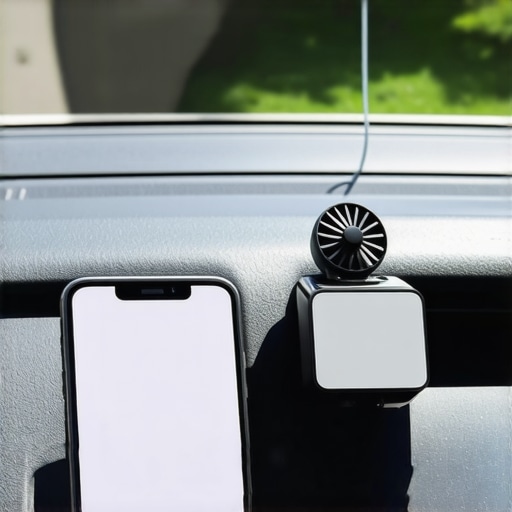
In hot climates like Phoenix or Texas, we focus heavily on the Solar Heat Gain Coefficient (SHGC). We want to block the sun’s infrared radiation before it enters the building. This is why we place Low-E coatings on Surface #2. For mobile devices, heat is a major enemy of glass longevity. A screen that sits in the sun on a dashboard can reach temperatures that cause the glass to expand within its ‘Sash’ or frame. If you have applied a liquid protector, you are adding a material with a potentially different coefficient of thermal expansion. While the layer is too thin to cause immediate cracking, the thermal stress can cause the oleophobic coating—the layer that repels finger oils—to degrade faster.
When we perform a chip repair on an auto windshield or a commercial window, we are injecting a resin that has a similar refractive index to the glass. Liquid screen protectors try to do something similar on a micro-scale. They improve the visible transmittance by reducing the light scattering that occurs in surface scratches. This is why your screen looks ‘newer’ after application. But as a professional glass installer, I tell clients that ‘same-day’ fixes for deep scratches are often cosmetic. To truly fix a chip, you need to bridge the gap in the glass’s structural matrix. A liquid wipe cannot do that.
“Standard Practice for Installation of Exterior Windows, Doors and Skylights requires precise adherence to perimeter sealing to maintain structural integrity.” ASTM E2112
Installation Reality: Shims, Beading, and Bubbles
The beauty of a ‘mobile service’ for glass repair is the expertise the tech brings to the ‘Rough Opening.’ When you apply a traditional glass protector, you have to worry about the ‘Glazing Bead’—the edge where the glass meets the frame. If a protector is not centered, it lifts. Liquid protectors eliminate this issue because they flow into every corner, much like a liquid applied flashing tape in a window installation. There are no bubbles because there is no adhesive layer to trap air. This is a significant advantage for curved screens where a standard ‘Sash’ fit is nearly impossible.
But there is a trade-off. Once applied, you cannot simply peel it off if you don’t like it. It has to wear off over time through abrasion. For a glass installer who values precision, this lack of reversibility is a concern. We use ‘Shims’ to perfectly level a window because we know that buildings settle. Glass protectors don’t need to settle, but they do need to be maintained. Most liquid protectors need a re-application every six to twelve months to maintain their hydrophobic properties. Without this, the ‘Weep Hole’ equivalent—the way the glass sheds oil and water—becomes clogged with skin cells and dirt.
The Final Verdict for the Consumer
Is the truth about liquid screen protectors that they are a scam? No. They are a highly specialized chemical treatment. They are excellent for preventing the micro-abrasions that occur from sliding a phone into a pocket with keys. They are superior for aesthetic maintenance. But they are not a replacement for the physical protection offered by a bulky case or a tempered glass sheet. If you are looking for ‘same-day’ peace of mind against a shattered screen, you are better off looking at the structural integrity of your case. If you want a screen that stays clean and resists the ‘haze’ of fine scratches, liquid glass is a technical marvel. Just remember: in the world of glass, there is no such thing as an unbreakable material. There is only glass that has been managed correctly for its environment and its expected impact. Always respect the physics of the substrate, and never trust a salesperson who says a liquid can make glass harder than diamond.